
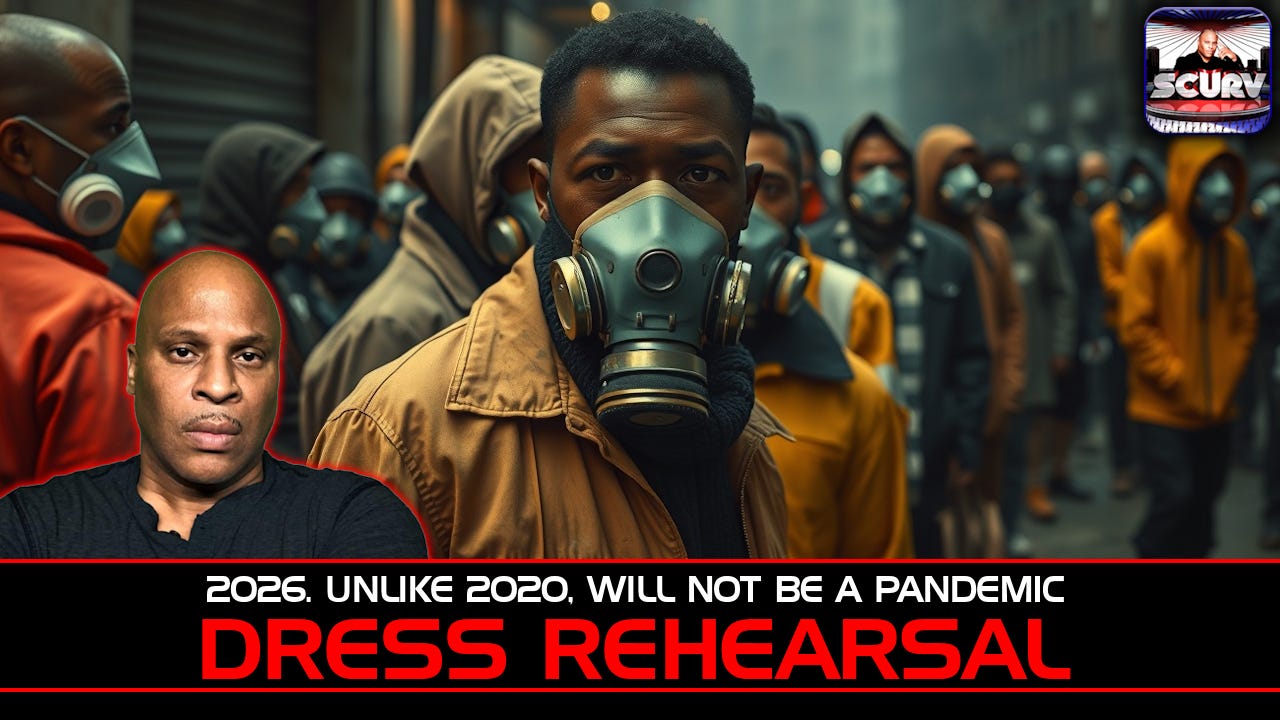
The last global health crisis changed how people see authority, science, freedom, and fear. For many, it was more than a medical emergency — it felt like a rehearsal. A moment that showed how fast everyday life can be shut down, rules rewritten, and behavior reshaped. Since then, one message keeps repeating across media, institutions, and global discussions: another outbreak is coming.
That message shows up everywhere. It is spoken calmly, confidently, and often with urgency. We’re told it may happen soon, that it could be worse, and that systems must be strengthened in advance. When a warning is repeated often enough, it stops sounding like speculation and starts sounding like preparation.
At the same time, many people are reporting waves of illness that don’t fit clean labels. Some test positive for known viruses, while others test negative for everything. Stories spread online of sudden sickness, long recovery times, and symptoms that feel unfamiliar. Official explanations often lag behind real-life experiences, creating confusion and distrust.
What stands out most is not just concern about health, but how the idea of “preparedness” is being redefined. Preparedness now means systems, tracking, coordination, and compliance. It sounds organized and responsible, but it also signals something deeper. It suggests a long-term structure, not a temporary response.
When you step back, a pattern begins to appear. Warnings are no longer framed as “if,” but “when.” Another outbreak is treated as guaranteed. The language feels rehearsed. The tone feels rehearsed. And repetition has a purpose — it conditions the mind to accept what comes next.
Preparedness today goes far beyond hospitals or medicine. It includes digital infrastructure, identity systems, global coordination, and shared standards. These tools are often presented as neutral or helpful, but they also change how people move through society. Access becomes conditional. Participation becomes trackable. Choice becomes managed.
Fear plays a major role in how this works. Fear lowers resistance. Fear creates urgency. Fear pushes people to accept systems they would normally question. History shows that fear has always been the fastest way to reshape behavior on a large scale.
Another pattern is the idea that past crises were “tests.” We are told lessons were learned, mistakes were corrected, and systems improved. Framing events this way quietly turns people into participants in an ongoing experiment. Each crisis becomes training for the next one.
At the same time, global cooperation is increasingly emphasized. Health is no longer treated as separate from the environment, animals, technology, or behavior. Everything is blended into one connected framework. On the surface, this sounds logical. But when everything is connected, control also becomes centralized.
Digital identity often appears inside this conversation. Sometimes directly, sometimes indirectly. It’s described as a tool for access, safety, or verification. Over time, it becomes normal. Once normalized, it becomes difficult to opt out. When access to travel, work, or services depends on digital approval, freedom quietly changes shape.
Another detail worth noticing is how coordinated the messaging feels. Similar phrases appear across different countries. Similar timelines are mentioned. Similar concerns are repeated. That level of alignment suggests planning, not coincidence.
Cultural conditioning plays a role too. Future crises are often introduced through interviews, books, reports, and forecasts long before they happen. These previews soften resistance. What once sounded extreme begins to feel familiar. Familiarity makes acceptance easier.
This doesn’t require secret meetings or cartoon villains. Systems evolve through incentives. Funding flows in certain directions. Media rewards certain narratives. Experts are elevated based on alignment. Over time, one worldview becomes dominant, while others fade out.
Meanwhile, regular people are left navigating uncertainty. Illness spreads. Information conflicts. Trust erodes. In the middle of that confusion, ready-made solutions appear — usually framed as necessary, urgent, and unavoidable.
What makes this moment different is how many forces are converging at once. Health fears, digital systems, economic pressure, climate messaging, and global coordination are all moving together. Each one alone might seem manageable. Together, they reshape daily life.
The real issue is not preparation itself. Preparation can be wise. The danger is when emergency thinking becomes permanent. When every season brings a new crisis. When questioning the system is labeled irresponsible. When compliance is framed as care.
People in their late twenties through forties are in a unique position. Old enough to remember life before constant digital monitoring. Young enough to be fully immersed in today’s systems. That perspective makes patterns easier to spot — if attention is paid.
The most important skill right now is discernment. Not panic. Not denial. Discernment. The ability to pause, observe, and ask honest questions. Who benefits? Who decides? What changes quietly become permanent?
History shows that major shifts rarely arrive with alarms blaring. They arrive wrapped in concern, safety, and good intentions. They arrive through repetition. Through messaging. Through normalization.
The story being told right now is clear: something is coming, and the world must be ready. The real work is learning how to hear that message without fear, think clearly about what it implies, and stay grounded while the next chapter unfolds.
…….and keep your head on a swivel.
SCURV