

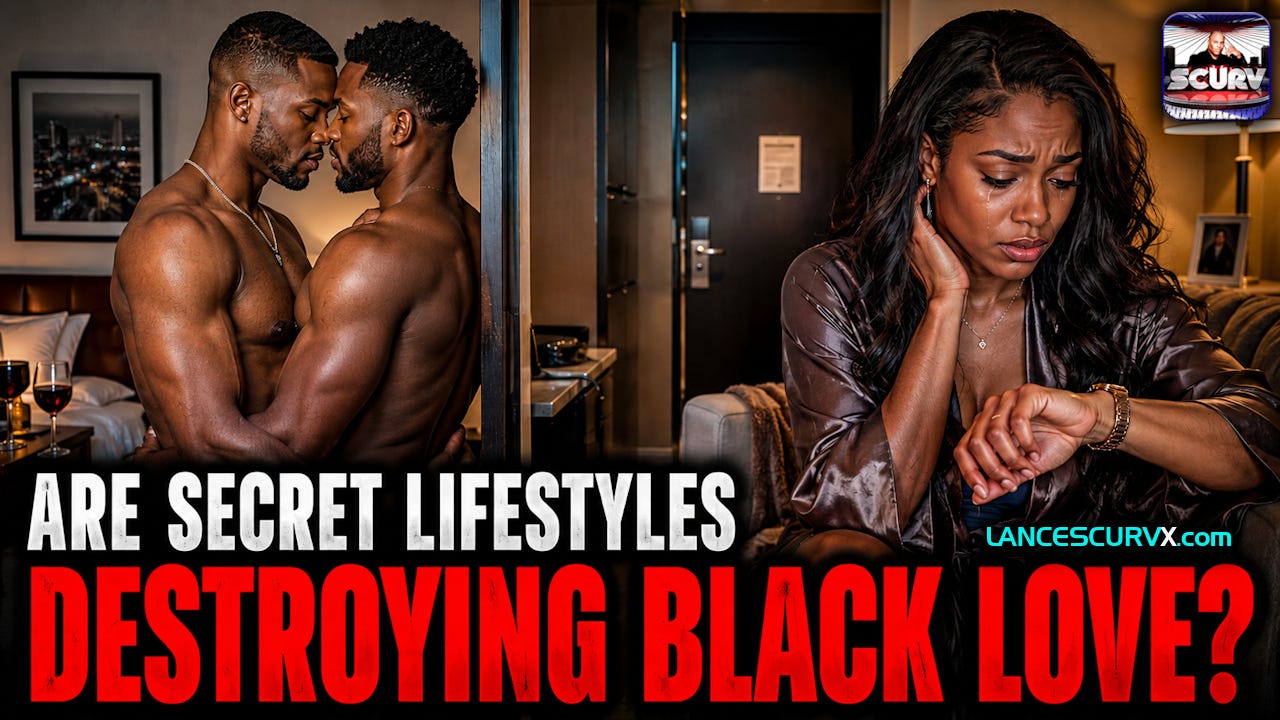
There was a time when many Black women approached relationships with hope, excitement, and dreams about building a family, growing old together, and creating a peaceful home filled with love. The questions women once asked a man were simple. Are you single? Do you have children? Are you employed? Are you faithful? Those questions were already difficult enough because dishonesty has always existed in dating. But now many women feel forced to ask another question that they never imagined would become so common. “Are you secretly involved with men?” That question alone shows how much the dating world has changed.
For many African-American women, the fear is not rooted in hatred toward anyone’s sexuality. The fear comes from secrecy, betrayal, emotional manipulation, and the possibility of serious disease being brought into a relationship without their knowledge. Many women feel that they are no longer only protecting their hearts from cheating, but also protecting their physical health and even their future. That emotional burden weighs heavily on many women who simply wanted a stable and honest relationship.
The pain becomes even deeper because many women say they invested years into relationships only to discover hidden lifestyles, secret encounters, double lives, and dangerous behavior happening behind closed doors. Some women found out after becoming sick. Some found out through rumors. Some found messages, hidden phones, strange behavior, or unexplained disappearances. Others never found proof but carried a constant anxiety because intuition kept whispering that something was not right. Living in suspicion can destroy a person emotionally even before the truth ever comes out.
This conversation is uncomfortable for many people because society has become extremely sensitive about discussing sexuality. But avoiding honest discussion does not make the fears disappear. It does not erase the experiences of women who suffered emotionally, mentally, financially, and physically after discovering secrets inside of their relationships. This issue exists in many races, many countries, and many cultures, but this article focuses on the African-American community because that is the lived reality many Black women are openly discussing today.
At the same time, this conversation must remain balanced and truthful. Not every Black man is secretly bisexual or secretly gay. Many Black men are faithful heterosexual husbands, fathers, and providers who are just as frustrated by the damage these hidden lifestyles have caused to trust within the community. But the fear has become powerful enough that many women now approach relationships guarded, skeptical, and emotionally exhausted before the relationship even begins.
THE COLLAPSE OF TRUST IN MODERN DATING
Trust is the foundation of any relationship. Once trust disappears, everything else slowly falls apart. Many African-American women now say that trust is becoming harder and harder to give freely. Social media has amplified every fear imaginable. Every week there are new stories, accusations, videos, rumors, and confessions exposing hidden relationships and double lives. The internet has become a nonstop stream of betrayal, and many women are mentally overwhelmed before they even go on a date.
Cities like Atlanta, Houston, Washington D.C., New York, and other major urban centers are often mentioned in conversations about men secretly living double lives. Whether every rumor is true or not, perception alone shapes behavior. If women repeatedly hear stories from friends, coworkers, family members, online discussions, podcasts, and personal experiences, eventually fear becomes normalized. Women begin looking at every relationship possibility through a lens of suspicion.
Many women now describe dating as emotional detective work. They watch body language. They study speech patterns. They question habits. They investigate social media. They examine friendships. They pay attention to strange gaps in communication. They analyze everything because they feel they cannot afford to ignore warning signs anymore. This level of hypervigilance creates stress, anxiety, and emotional burnout.
Some women openly admit they are afraid of intimacy now. They fear wasting years of their lives with someone who was never truly attracted to them emotionally or physically. They fear becoming emotionally attached only to discover they were being used as a cover to appear heterosexual. That emotional devastation can damage a woman’s self-esteem deeply because she may begin questioning her own value, attractiveness, and judgment.
The term “beard” has become more widely understood in recent years. Many people now recognize that some individuals enter heterosexual relationships mainly to protect their public image, satisfy family expectations, avoid judgment, or maintain status within religious communities, workplaces, or social circles. A woman may believe she is building a real romantic future while the man sees the relationship as protection from suspicion. That imbalance creates emotional cruelty because one person is emotionally invested while the other person may only be performing a role.
At the same time, it must also be acknowledged that some women hide their sexuality as well. There are women secretly involved with women while maintaining heterosexual relationships publicly. There are also couples who knowingly accept bisexuality within their relationship structure. Some relationships are honest and consensual about these realities. The true issue is not orientation itself. The issue is deception, dishonesty, manipulation, and the denial of informed choice.
Many African-American women feel angry because they believe they were not given the truth needed to make decisions about their own bodies and lives. Nobody wants to feel tricked into emotional risk or health risk. Nobody wants to discover years later that they were living inside an illusion carefully designed to protect someone else’s secrets.
THE HIV FEAR THAT MANY PEOPLE AVOID DISCUSSING
One of the most painful aspects of this conversation is the fear surrounding HIV and other sexually transmitted diseases. This topic carries emotional weight because many women personally know someone who became infected after trusting a partner who lived a secret life. That reality has created lasting trauma inside many communities.
The fear becomes stronger because secrecy prevents protection. A woman who believes she is in a faithful heterosexual relationship may not feel the need to question certain risks. But if her partner secretly engages in unprotected sexual activity outside the relationship, especially while hiding that behavior completely, her ability to make informed health decisions is stolen from her.
This is why many women now insist on testing, transparency, and difficult conversations before becoming intimate. Some people view those conversations as offensive, but many women see them as necessary survival tools in today’s dating environment. The emotional innocence that once existed in dating has been replaced with caution and self-protection.
At the same time, this conversation should not become a weapon to spread hatred toward gay or bisexual people. HIV is not limited to one community, one race, or one sexual orientation. Anyone engaging in unsafe sexual behavior can spread disease. The larger issue being discussed here is secrecy and dishonesty inside relationships. That distinction matters.
Still, many Black women feel emotionally abandoned because they believe their concerns are often dismissed or silenced. Some women say they are shamed for even raising questions about hidden lifestyles. Others say they are told they are being judgmental when in reality they are expressing fear rooted in real experiences they have personally witnessed. That emotional conflict leaves many women feeling unheard.
WHY SOME WOMEN ARE LOOKING OUTSIDE OF AMERICA
An increasing number of African-American women are now traveling, relocating, or seeking relationships outside of the United States. Some women openly say they feel more emotionally relaxed dating men from cultures where they believe traditional gender roles and heterosexual family structures are more strongly valued.
Places in Africa, the Caribbean, South America, and other regions have become attractive to some women searching for what they believe is a more grounded relationship experience. Ghana in particular has attracted many Black American expatriates who describe feeling emotionally safer, more appreciated, and more connected culturally.
However, reality must still remain balanced. Hidden sexuality and secret relationships exist all over the world. No country is completely free from deception. Human beings are human beings everywhere. The danger comes when people romanticize another culture as perfect while ignoring the complexity that exists beneath the surface. Secrecy can happen anywhere shame exists.
What many women are truly searching for is not perfection. They are searching for honesty, emotional safety, transparency, stability, and peace of mind. They want to feel desired genuinely instead of feeling like placeholders in someone else’s hidden story. They want to feel emotionally secure enough to love without fear constantly hanging over their heads.
THE EMOTIONAL DAMAGE BEING DONE TO BLACK WOMEN
Many African-American women are emotionally exhausted. They already carry enormous pressure within society. Many are raising children, managing careers, surviving financial stress, dealing with beauty standards, battling loneliness, and navigating social disrespect. Adding fear and suspicion into dating only increases emotional fatigue.
Some women are now choosing celibacy. Others are walking away from dating entirely. Some are focusing only on friendships and personal growth because relationships no longer feel emotionally safe. Others still desire marriage deeply but admit they no longer know who they can trust.
This emotional climate is also affecting how younger generations view love. Many younger women are growing up hearing stories of betrayal, secret lifestyles, disease, emotional manipulation, and broken trust. Instead of seeing relationships as hopeful, they often see them as dangerous emotionally. That shift changes the future of family structures and long-term commitment.
At the same time, many Black men feel unfairly judged because of the actions of others. Some heterosexual Black men say they are frustrated by constantly being viewed suspiciously before even having the opportunity to prove themselves trustworthy. This creates tension between Black men and Black women at a time when unity and healing are desperately needed.
The gender war happening online has only made matters worse. Social media profits from division, outrage, humiliation, and emotional conflict. Every negative story becomes fuel for more distrust between Black men and Black women. The algorithms reward pain, conflict, and shock value instead of healing conversations.
WHERE DO WE GO FROM HERE?
The only path forward is honesty. Real honesty. Not performance. Not manipulation. Not pretending. If a person is bisexual, homosexual, questioning, or living any lifestyle outside of heterosexuality, honesty must exist before involving another person emotionally and physically. Adults deserve informed choice.
The Black community cannot heal through silence. Difficult conversations must happen without hatred, cruelty, or denial. Women deserve to express their fears without being attacked. Men deserve the opportunity to defend their integrity without automatically being condemned. Truth must exist on both sides.
Relationships built on deception eventually collapse under the weight of lies. No amount of image management, church attendance, social media appearances, marriage certificates, or family photos can replace authentic truth. Sooner or later hidden realities surface, and when they do, entire families can be emotionally destroyed.
Many Black women still desire love deeply. They still desire partnership, children, family traditions, peace, laughter, intimacy, loyalty, and emotional safety. Beneath the frustration and fear is still hope. But hope cannot survive where honesty does not exist.
The future of Black relationships depends on courage. Courage to tell the truth. Courage to stop living double lives. Courage to respect people enough to give them informed choice. Courage to build relationships based on reality instead of performance. Because without truth, there can never be real love, and without real love, the emotional foundation of the community continues to weaken generation after generation.
Sincerely,
SCURV