

THE LIFE YOU’RE LIVING...DID YOU REALLY CHOOSE IT?
Most people wake up every morning believing they are in complete control of their own lives. They believe every decision they make belongs entirely to them. The job they chose, the house they dream of owning, the car they hope to drive, the clothes they wear, the people they admire, and even the goals they spend decades chasing all appear to be deeply personal decisions. That belief feels natural because it has been repeated so often that very few people ever stop long enough to question it. But what if that confidence is nothing more than an illusion? What if many of the things we proudly call “our choices” were quietly planted inside us long before we believed they were ours?
This is not about conspiracy theories or imaginary forces controlling humanity from some secret room hidden beneath the earth. Reality is far more subtle and, because of that, far more dangerous. The greatest influence over human behavior rarely comes through force. It comes through repetition. It comes through culture. It comes through advertising. It comes through entertainment. It comes through social pressure. It comes through carefully crafted expectations that slowly become so familiar that they feel like common sense. Eventually we stop asking why we want what we want because wanting it has become normal.
That silent process has created an entire generation of people who spend their lives climbing ladders they never built toward destinations they never truly selected. Many eventually reach what society calls success only to discover an unsettling truth waiting for them at the top. They have accumulated possessions, status, and accomplishments, yet something inside still feels painfully unfinished. The emptiness remains. The anxiety remains. The constant search for “what’s next” never seems to end because the destination itself was never designed to satisfy the human spirit. It was only designed to keep the journey going.
One of the greatest mistakes of modern society is believing that progress automatically creates happiness. We have more technology than any civilization in history. We have instant communication, artificial intelligence, limitless entertainment, and access to more information than previous generations could have imagined. Yet depression continues to rise. Anxiety has become almost ordinary. Loneliness has become an epidemic. Millions of people report feeling emotionally exhausted while living in the most technologically advanced age mankind has ever known. Something isn’t adding up, and pretending otherwise only allows the problem to grow larger.
Perhaps the most uncomfortable realization of all is that the modern world has become incredibly skilled at answering questions nobody should be asking first. We constantly learn how to become more productive, more efficient, more competitive, and more profitable. Yet almost nobody teaches us how to determine whether the destination we’re racing toward is worth reaching in the first place. We have become experts at movement while remaining strangers to meaning. That may be the greatest crisis of our time.
THE INVISIBLE YARDSTICK
There is an invisible measuring stick operating in modern society, and most people never realize it exists. It quietly evaluates nearly every part of our lives. It determines who receives admiration, who is considered successful, who deserves respect, and even whose opinions seem worthy of being heard. It influences the careers we pursue, the neighborhoods we hope to live in, the relationships we value, and the dreams we convince ourselves we must achieve before calling our lives worthwhile.
The remarkable thing about this invisible yardstick is that almost nobody voted for it. It wasn’t debated in public squares. It wasn’t chosen by ordinary people sitting around family dinner tables. Instead, it slowly emerged through generations of economic priorities, cultural expectations, media messaging, and institutional habits until it became so deeply embedded within society that questioning it almost feels rebellious.
This measuring system rarely asks whether something is meaningful. Instead, it asks whether it is useful. It rarely asks whether something enriches the soul. Instead, it asks whether it produces measurable results. It rarely asks whether an action deepens our humanity. Instead, it asks whether it improves our market value.
That subtle shift changes everything.
People begin evaluating themselves the same way businesses evaluate investments. Time becomes something to maximize. Relationships become opportunities to leverage. Education becomes little more than job training. Rest becomes something that must somehow improve future productivity. Even hobbies are expected to become side businesses capable of generating income.
Little by little, human beings stop seeing themselves as living souls and begin viewing themselves as ongoing projects requiring constant upgrades.
WHEN LIFE BECOMES A PERFORMANCE
Look around almost anywhere today and you’ll see people performing versions of themselves. Social media has accelerated a process that began long before smartphones existed. People increasingly feel pressured to display success rather than experience fulfillment. Image often matters more than peace of mind.
The result is exhausting.
Many individuals spend enormous amounts of emotional energy managing appearances. Vacations become photo opportunities instead of moments of rest. Meals become content. Friendships become networking opportunities. Acts of kindness become public performances seeking digital approval. The private life slowly disappears because everything becomes potential material for public consumption.
Ironically, the more connected society claims to become, the more isolated many people actually feel.
Why?
Because genuine connection requires authenticity, while performance requires constant editing. One nourishes the soul. The other slowly drains it.
This helps explain why so many people report feeling emotionally depleted despite receiving thousands of likes, followers, or online compliments. External validation can temporarily soothe insecurity, but it can never replace genuine inner peace. The applause eventually fades, requiring another performance tomorrow.
That cycle becomes a prison without visible bars.
THE SUCCESS THAT NEVER SATISFIES
One of the cruelest tricks modern culture plays on people is convincing them that satisfaction always exists just beyond the next achievement.
Get the promotion.
Buy the house.
Earn more money.
Purchase the luxury vehicle.
Grow your audience.
Increase your income.
Expand your influence.
Then you’ll finally be happy.
Yet countless people have reached those milestones only to discover that fulfillment never arrived with them. Instead, every accomplishment simply introduced another target waiting farther down the road. Success became an endless treadmill rather than a meaningful destination.
This isn’t because ambition is wrong. Human beings naturally seek growth, challenge, and accomplishment. The problem appears when success becomes disconnected from purpose.
Without purpose, achievement becomes addiction.
Without meaning, accomplishment becomes another appetite that refuses to stay satisfied.
Without reflection, progress simply becomes motion without direction.
Many people spend decades becoming extraordinarily successful at things that ultimately fail to answer the deepest questions of the human heart. They become experts in earning a living while remaining complete beginners at understanding what makes life worth living.
That silent contradiction explains why wealth alone has never guaranteed peace, why fame has never guaranteed contentment, and why recognition has never guaranteed fulfillment.
The world teaches us how to win.
Far fewer voices teach us how to know whether the game itself deserves to be played.
That question changes everything.
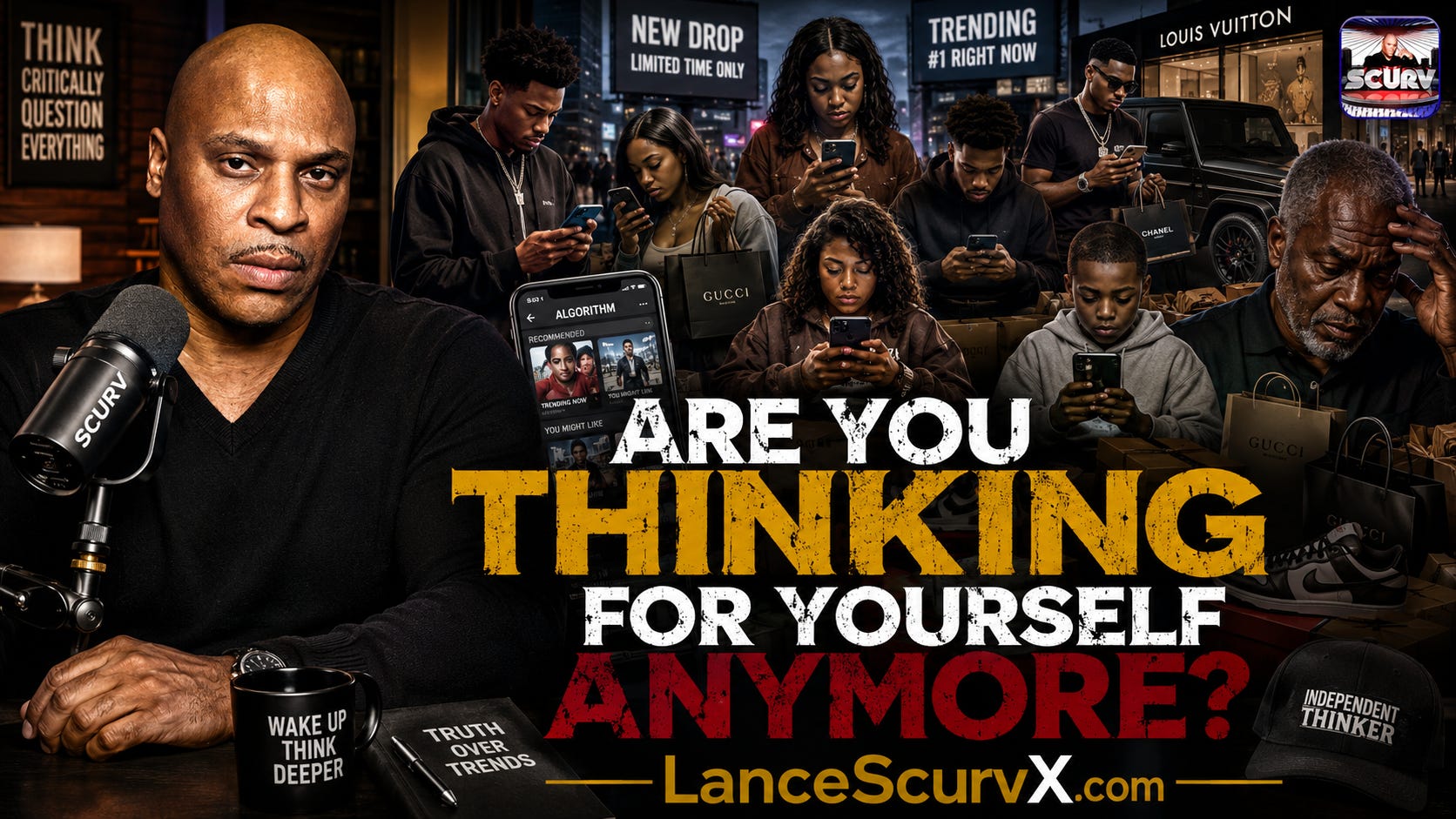
THE MOST POWERFUL PRISON IS THE ONE YOU NEVER SEE
The greatest forms of control rarely announce themselves. They do not arrive wearing uniforms or carrying weapons. They don’t need to. History has shown that while force can control bodies, influence controls minds, and a mind that willingly cooperates is far easier to manage than one held against its will.
That is why the modern world has become so remarkably effective at shaping human behavior. It doesn’t have to command millions of people to think the same way. It only needs to surround them with the same messages every single day until those messages begin to feel like common sense. Once that happens, people start policing themselves. They begin chasing goals they never questioned and defending systems they never examined because those systems have become part of their identity.
This process begins almost from birth. Long before children understand the value of money, they are already learning the value of approval. They discover that praise follows certain behaviors while disappointment follows others. As they grow older, those lessons become more sophisticated. Schools reward measurable performance. Employers reward productivity. Society rewards visibility. Advertisers reward insecurity by promising that the next purchase will finally make someone complete.
None of these influences appear particularly dangerous when viewed individually. Together, however, they create an environment where questioning the larger picture becomes increasingly rare. People become so occupied with succeeding inside the system that they never stop to ask whether the system itself deserves their unquestioning loyalty.
This is why so many people spend years feeling exhausted without understanding exactly why. Their bodies are tired, but so are their minds. Their spirits have been carrying expectations that never truly belonged to them.
PRODUCTIVITY HAS BECOME A NEW RELIGION
There was a time when work existed to support life. Today, life often seems to exist to support work.
Listen carefully to the conversations happening around you. Nearly every discussion revolves around being busy. People wear exhaustion almost like a badge of honor. They proudly announce how little sleep they got. They compete over who works the longest hours. Rest is treated like a guilty pleasure instead of a basic human necessity.
Somewhere along the way, productivity stopped being a useful tool and quietly became a measure of personal worth.
If someone spends a quiet afternoon reading a thoughtful book, many immediately ask what practical benefit will come from it. If another person spends the same afternoon answering emails, attending meetings, or building another revenue stream, society usually applauds the effort. Yet one activity may enrich the mind while the other simply extends the cycle of constant labor.
This way of thinking has transformed nearly every corner of modern life.
Even relaxation has become scheduled.
Even exercise becomes another statistic.
Even meditation becomes another goal to accomplish.
Even vacations become opportunities to produce photographs proving that relaxation occurred.
Nothing simply exists anymore. Everything must justify itself through measurable output.
That constant pressure slowly changes the way people see themselves. They stop asking, “Who am I?” and begin asking, “What am I producing?”
The difference is enormous.
One question seeks identity.
The other seeks performance.
WHEN EVERYTHING BECOMES A TRANSACTION
Perhaps one of the saddest developments of modern life is the way the language of business has quietly invaded the language of the human heart.
People now speak about relationships as though they were financial investments. They ask whether someone is worth their time. They wonder whether friendships provide enough value. They measure success by asking what they receive in return rather than what they are able to give.
There is certainly wisdom in avoiding unhealthy relationships. No one should willingly remain in situations that involve abuse, manipulation, or constant emotional harm. But something very different happens when every human interaction is automatically evaluated through the lens of personal gain.
Real love does not begin with calculation.
Real friendship does not begin with negotiation.
Real compassion does not ask for a receipt.
The moment every interaction must produce measurable returns, people stop seeing each other as fellow human beings and begin seeing one another as opportunities, liabilities, or resources.
That subtle shift damages far more than relationships.
It damages character.
When usefulness becomes the highest standard, people begin fearing the day they are no longer useful. Aging becomes terrifying because productivity often declines. Illness becomes frightening because efficiency disappears. Retirement becomes an identity crisis because many people have spent decades defining themselves entirely through work.
A society built exclusively upon usefulness inevitably teaches people to fear becoming unnecessary.
But every human life possesses value that cannot be measured by productivity.
That truth deserves to be repeated until it becomes impossible to forget.
THE BUSINESS OF KEEPING YOU DISTRACTED
One of the most profitable industries in the modern world is not entertainment itself.
It is distraction.
Think about how many businesses compete for your attention every single second of every day. Your phone vibrates. Your television recommends another series. Streaming platforms automatically begin the next episode before you’ve had time to think. Social media never truly ends because another video always waits beneath the last one.
None of this happens by accident.
Entire industries employ psychologists, behavioral scientists, marketing experts, and data analysts whose job is to understand how long they can keep your eyes focused on a screen.
Your attention has become one of the world’s most valuable commodities.
Companies no longer compete only for your money.
They compete for your awareness.
The longer they keep you watching, clicking, scrolling, reacting, and consuming, the more profitable their businesses become.
The danger isn’t that entertainment exists. Human beings need recreation, laughter, music, storytelling, and moments of joy. Those things have always been part of healthy civilization.
The danger appears when entertainment replaces reflection.
When every quiet moment is immediately filled with another notification, another video, another advertisement, or another opinion, something important quietly disappears.
Silence.
And without silence, people rarely hear themselves think.
Without uninterrupted reflection, individuals slowly lose the ability to examine their own lives.
Instead of deciding what truly matters, they simply react to whatever appears next on the screen.
THE ALGORITHM DOESN’T KNOW YOUR SOUL
Technology has become incredibly sophisticated.
It can predict your shopping habits.
It can estimate your political preferences.
It can recommend movies you’ll probably enjoy.
It can suggest music that matches your mood.
It can even finish your sentences before you’ve finished typing them.
But there remains one thing no algorithm can genuinely determine.
It cannot tell you why your life matters.
It cannot tell you what kind of person you should become.
It cannot define your purpose.
Those answers remain deeply human.
Unfortunately, many people have unknowingly allowed technology to become something far greater than a tool. It has become an authority. If an app recommends it, many assume it must be right. If a trend becomes popular, millions instinctively follow it. If enough strangers approve something online, it suddenly feels more legitimate.
Little by little, independent judgment weakens.
People become increasingly comfortable allowing machines to organize not only information but attention, priorities, emotions, and eventually identity itself.
That is an extraordinary surrender of freedom.
Real freedom has never meant having unlimited choices between products.
Real freedom means possessing the courage to choose your own direction even when the crowd walks another way.
That kind of freedom cannot be downloaded.
It cannot be purchased.
It cannot be streamed.
It must be cultivated from within.
The modern world offers countless conveniences, but convenience should never be confused with wisdom. The easier life becomes technologically, the more intentional we must become spiritually, emotionally, and intellectually. Otherwise, convenience slowly transforms into dependence, and dependence quietly becomes control.
Perhaps the greatest victory any person can achieve today is not accumulating more possessions or attracting more attention. Perhaps the greatest victory is reclaiming ownership of their own mind.
Because once a person begins thinking independently again, they begin asking different questions. They stop measuring success solely by income. They stop chasing approval from strangers. They stop allowing every trend to dictate their values. They begin defining life according to principles instead of popularity.
That is where genuine freedom begins—not outside of us, but within us.
And once that inner freedom awakens, no marketplace, no algorithm, no cultural trend, and no manufactured expectation can completely silence it again.
WHEN YOU BECOME A COG IN SOMEONE ELSE’S MACHINE
There was a time when people could easily recognize themselves in the work they performed. A carpenter could stand back and admire a table built with his own hands. A farmer could watch the crops mature after months of labor and know exactly where his efforts had gone. A craftsperson could hold a finished piece and see not only skill but also purpose reflected in the final product. There was a direct relationship between effort and outcome, between the worker and the work itself. That connection gave labor a human dimension that reached far beyond earning a paycheck.
For millions of people today, that connection has almost completely disappeared. Modern work is often divided into countless small pieces, leaving individuals responsible for only a tiny fragment of a much larger operation. One person spends the day entering numbers into spreadsheets. Another answers customer emails. Someone else reviews reports or updates databases. A programmer writes a few lines of code that become one small part of a system so enormous they may never fully understand it. At the end of the day, many workers cannot clearly explain how their contribution fits into the finished product, much less how it improves the lives of others.
This growing separation between people and the meaning of their work has created a quiet emotional crisis. Many individuals feel increasingly interchangeable, as though their presence matters only until someone else is ready to occupy their chair. Whether that fear is entirely accurate is almost beside the point because the feeling itself changes how people experience their lives. Instead of believing they are building something meaningful, they begin to see themselves as simply maintaining a machine that would continue operating with or without them. That realization leaves behind an emptiness that no paycheck, promotion, or annual bonus can permanently erase. Financial security is certainly important, but money alone cannot provide purpose. Purpose comes from believing that your existence contributes something worthwhile beyond simply surviving another workweek.
THE BUSINESS OF SELLING YOU AN IDENTITY
Perhaps one of the greatest accomplishments of modern marketing has been convincing people that identity itself can be purchased. Every day we are surrounded by carefully designed messages suggesting that who we are depends upon what we own. Advertisements rarely focus on the practical value of a product anymore. Instead, they sell an image, a lifestyle, a feeling, or an identity. A pair of shoes becomes confidence. A luxury vehicle becomes success. A certain neighborhood becomes prestige. A smartphone becomes creativity. Coffee becomes sophistication. Vacations become social status. Gradually, people stop purchasing products and begin purchasing carefully manufactured versions of themselves.
The remarkable part of this process is that it never allows anyone to arrive. Every season introduces a new trend. Every year presents another definition of success. Every product launch promises a better version of the person you already are. Satisfaction becomes the one outcome the marketplace cannot afford because a person who genuinely feels complete is far less likely to continue buying unnecessary solutions to problems they never actually had. The finish line keeps moving farther away, ensuring that millions remain trapped in an endless cycle of wanting more.
Yet beneath every purchase lies a far deeper question that no product can answer. Who are you when everything you own is taken away? Strip away the expensive clothes, the luxury car, the impressive job title, the social media following, and the carefully constructed public image. What remains? That answer cannot be found inside a shopping mall or on an online marketplace. It can only be discovered through honest reflection, because genuine identity is never something you buy. It is something you gradually uncover.
EDUCATION OR CONDITIONING?
Education has always possessed the extraordinary power to transform human lives. At its highest level, learning expands the imagination, sharpens judgment, strengthens character, and equips individuals to think independently about the world around them. Education should never exist solely to prepare people for employment. Its greater purpose is preparing people for life itself.
Unfortunately, much of modern education has drifted toward a very different objective. Increasingly, students are taught how to perform rather than how to think. They spend years memorizing information that often disappears shortly after examinations are completed. Success becomes measured almost entirely through grades, standardized tests, certifications, salaries, and career advancement. Along the way, one of humanity’s greatest strengths begins to fade. Curiosity slowly gives way to compliance.
Children naturally ask endless questions about everything they see. They are fascinated by how the world works and rarely fear looking foolish. Adults, however, often stop asking questions altogether. Somewhere between childhood and professional life, many people learn that following instructions receives greater rewards than challenging assumptions. That should concern every one of us because societies filled with people who no longer question accepted ideas become remarkably easy to influence.
Independent thought requires patience, humility, courage, and time. It demands the willingness to examine deeply held beliefs and to follow evidence wherever it leads, even when doing so feels uncomfortable. Yet uninterrupted time for reflection has become increasingly rare. People move from meetings to deadlines, from emails to notifications, from one obligation to the next without allowing themselves enough quiet space to determine what they genuinely believe. Information continues to accumulate, but without thoughtful reflection it rarely becomes wisdom.
THE HIGH COST OF CONSTANT COMPARISON
Comparison has always been part of human nature, but never before has it surrounded us every hour of every day. Modern technology places an endless stream of carefully edited lives directly into our hands. Every swipe reveals another person’s vacation, another family’s celebration, another business success, another luxury purchase, another physical transformation, or another achievement worthy of admiration. Rarely do we witness the private disappointments, the sleepless nights, the strained relationships, the financial struggles, or the emotional battles hidden behind those carefully selected moments.
As a result, millions of people find themselves comparing their ordinary daily experiences with everyone else’s carefully polished highlights. Gratitude quietly begins to disappear. Instead of appreciating what they have already been given, they become increasingly focused on everything they believe they lack. Envy grows while contentment slowly fades. Peace becomes harder to maintain because there is always another person who appears to be living a better life.
The tragedy is that comparison offers no finish line. No matter how much someone accomplishes, there will always be another individual with greater wealth, greater influence, greater beauty, greater recognition, or greater visibility. A life built upon comparison eventually becomes a life built upon permanent dissatisfaction. Genuine freedom begins only when we stop measuring our journey against someone else’s destination and begin appreciating the unique purpose our own lives are capable of fulfilling.
WHEN THINKING BECOMES AN ACT OF REBELLION
One of the strangest realities of modern civilization is that genuine thinking has become increasingly rare, even while information has become unlimited. There is an enormous difference between possessing information and engaging in thoughtful reflection. Information fills the mind. Thinking examines it. Intelligence solves problems. Thinking questions whether those problems deserve solving in the first place. Knowledge collects facts. Thinking searches for truth.
Today’s culture celebrates immediate reactions. Speed is rewarded. Strong opinions receive attention. Outrage spreads rapidly. Yet authentic understanding has never developed at the speed of a social media feed. Real thinking requires patience. It welcomes uncertainty and refuses to accept easy answers simply because they are popular. It follows difficult questions wherever they lead, even when the conclusions challenge deeply held assumptions or social expectations.
Nearly every lasting breakthrough in human history began with someone willing to pause long enough to question what everyone else accepted without examination. That same opportunity still belongs to every one of us. Each time we refuse to surrender our judgment to popular opinion, we strengthen our intellectual independence. Each time we choose understanding instead of emotional reaction, we reclaim another small piece of our freedom. The ability to think for ourselves remains one of the greatest forms of resistance available in a world increasingly driven by distraction.
THE LOST ART OF CONTEMPLATION
Perhaps the greatest casualty of modern life is not attention itself but contemplation. Contemplation asks nothing more than our willingness to remain present. It invites us to observe without rushing toward conclusions, to listen without interrupting, to read without constantly reaching for our phones, to walk without headphones, and to sit quietly without feeling guilty for doing nothing measurable. In today’s culture, that almost feels revolutionary.
Many people have become uncomfortable with silence because they have forgotten what silence offers. The moment stillness appears, they instinctively search for another distraction. Yet life’s deepest insights rarely arrive during constant noise. Wisdom usually whispers rather than shouts. Purpose often emerges only after the distractions fade. Conscience patiently waits until the mind becomes quiet enough to hear it.
Perhaps this explains why so many people possess unlimited information while still feeling directionless. Information alone cannot organize the human soul. Only thoughtful reflection can accomplish that. The world constantly urges us to move faster, produce more, and consume endlessly. Real growth often begins by slowing down long enough to ask one profoundly honest question: “Whose life am I really living?” Once that question is sincerely asked, it becomes almost impossible to return completely to autopilot. The search for its answer marks the beginning of genuine freedom, and genuine freedom has never been something handed to us. It is discovered one thoughtful decision at a time.
RECLAIMING OWNERSHIP OF YOUR LIFE
If there is one lesson we desperately need to recover in our modern age, it is the understanding that no system, no institution, no corporation, and no algorithm can define the purpose of a human life unless we willingly surrender that responsibility. The world is filled with voices eager to tell us what should matter, what success should look like, how quickly we should move, and what goals deserve our attention. Yet none of those voices can answer the most important question we will ever face: “Why am I here?” That answer cannot be manufactured in a boardroom, programmed into an application, or delivered through an advertising campaign. It is a deeply personal discovery that requires courage, patience, and an unwavering commitment to honesty.
The uncomfortable truth is that many people spend years living according to expectations they never consciously accepted. They inherit definitions of success from parents, schools, employers, celebrities, influencers, and society itself. They become so accustomed to chasing approval that they eventually lose sight of their own convictions. Somewhere beneath the endless deadlines, financial obligations, and daily routines, the authentic self quietly waits to be rediscovered. It has not disappeared. It has simply been buried beneath years of noise, distraction, and relentless expectation.
Reclaiming ownership of your life does not require abandoning your responsibilities or rejecting every aspect of modern society. It does not demand moving to a remote mountain or withdrawing completely from the world. Instead, it begins with something far simpler and, perhaps because of its simplicity, something far more powerful. It begins with deciding that you will no longer allow other people to determine what gives your life meaning. That single decision changes everything because it shifts the center of authority back where it belongs—within your own conscience.
THE COURAGE TO DEFINE YOUR OWN PURPOSE
Purpose is often misunderstood. Many people imagine it as one dramatic moment of revelation, a lightning bolt that suddenly explains everything. More often than not, purpose develops quietly through consistent reflection, honest self-examination, and the willingness to ask difficult questions without demanding immediate answers. It grows stronger each time we choose principles over popularity and conviction over convenience.
Modern culture encourages us to pursue goals that are easily measured because measurable achievements are easier to celebrate. Salaries can be compared. Job titles can be admired. Awards can be displayed. Social media followers can be counted. Yet the qualities that give life its deepest meaning rarely fit inside a spreadsheet. Compassion cannot be measured with perfect accuracy. Integrity cannot be quantified. Wisdom has no numerical value. Love cannot be reduced to statistics. Character does not fluctuate according to market conditions.
That is why so many people experience profound emptiness after reaching goals they once believed would complete them. They discover that achievement and meaning are not the same thing. One can fill a bank account while leaving the soul completely untouched. The pursuit of purpose requires us to reverse the order that modern society has established. Instead of asking how much something pays, we must first ask what kind of person it allows us to become. Instead of asking whether an opportunity increases our status, we should ask whether it strengthens our character. Instead of allowing money to determine the direction of our lives, we must place money back into its proper role as a tool rather than a master.
THE POWER OF ASKING BETTER QUESTIONS
The quality of our lives is often determined by the quality of the questions we are willing to ask. Unfortunately, many people spend years asking questions that never lead them toward genuine freedom. They ask how to become more successful without asking why success matters. They ask how to earn more money without asking what they truly need it for. They ask how to become more productive without asking whether they are producing anything that genuinely enriches their lives or the lives of others.
There comes a point when every thoughtful person must stop running long enough to examine the direction of their own journey. Am I pursuing dreams that truly belong to me? Have I confused popularity with purpose? Have I mistaken constant activity for meaningful progress? What would remain of my identity if every title, possession, accomplishment, and public recognition disappeared tomorrow?
These are not comfortable questions, but comfort has never been the birthplace of transformation. Honest questions disturb us because they force us to confront realities we have carefully avoided. Yet they also liberate us because every sincere answer removes another layer of illusion. Little by little, we begin seeing our lives with greater clarity. We become less interested in impressing strangers and more interested in becoming people of substance. We stop chasing appearances and begin cultivating authenticity.
RESISTING THE PRESSURE TO CONFORM
One of the greatest acts of courage in any generation is refusing to surrender your independent judgment to the crowd. Human beings naturally desire acceptance. We want to belong. We want to feel understood. Those desires are healthy and deeply human. The danger arises when acceptance becomes more important than truth. Throughout history, societies have often rewarded conformity while quietly discouraging thoughtful dissent. The pressure may not always be spoken aloud, but it is felt nonetheless.
Today that pressure often arrives through different channels than in previous generations. It comes through social media trends, public opinion, viral outrage, celebrity influence, and the subtle fear of being criticized for thinking differently. Many people silence themselves long before anyone else has the opportunity to disagree with them. They gradually surrender their own voice because maintaining approval feels safer than pursuing truth.
Yet every meaningful advancement in human civilization has depended upon individuals willing to question what everyone else accepted without examination. Progress has always belonged to those courageous enough to think independently while remaining humble enough to continue learning. Genuine wisdom is never arrogant because it recognizes how much remains unknown. It asks questions instead of demanding applause. It values truth more than popularity.
THE QUIET REVOLUTION THAT CHANGES EVERYTHING
Real transformation rarely begins with dramatic public events. It begins quietly, almost invisibly, inside the private decisions we make every single day. It begins when someone chooses to spend an evening reading instead of endlessly scrolling through distractions. It begins when a family decides to have honest conversations without every phone demanding attention. It begins when an individual takes a walk without headphones simply to think. It begins when we learn to sit comfortably in silence instead of constantly searching for another source of stimulation.
These small decisions may appear insignificant, but they gradually rebuild something modern life has steadily eroded—our capacity to think independently. Every moment spent reflecting instead of reacting strengthens the mind. Every hour invested in meaningful conversation strengthens relationships. Every opportunity to practice gratitude weakens the endless appetite for comparison. Over time, these seemingly ordinary habits become extraordinary acts of resistance against a culture that constantly encourages speed, distraction, and consumption.
Perhaps that is the quiet revolution our world needs most. Not louder arguments. Not greater outrage. Not endless division. What we need are individuals willing to reclaim ownership of their own minds and hearts. People who refuse to allow every trend to dictate their values. People who understand that fulfillment cannot be purchased, purpose cannot be outsourced, and wisdom cannot be downloaded. Such people become increasingly difficult to manipulate because they no longer depend upon the approval of the crowd to determine their direction.
MY CLOSING PERSPECTIVES…
The greatest deception of modern life is not that people work hard or pursue success. It is that so many have been convinced that achievement alone is enough to satisfy the deepest longings of the human spirit. We have built remarkable technologies, expanded economies, and connected the world in ways previous generations could scarcely imagine. Yet amid all this progress, millions continue searching for something they cannot quite name because the hunger they feel is not material. It is existential. It is the longing to know that life possesses meaning beyond accumulation, performance, and endless consumption.
If there is hope to be found, it begins with recovering the courage to pause. In a culture obsessed with speed, slowing down becomes an act of wisdom. In a world consumed by distraction, contemplation becomes an act of freedom. When every institution competes for our attention, choosing where to place that attention becomes one of the most important decisions we will ever make. Every thoughtful question we ask, every assumption we examine, and every moment we spend cultivating our inner life strengthens our ability to live intentionally rather than automatically.
The path forward is neither mysterious nor impossible, but it does require honesty. It asks us to examine whether we are living according to convictions we have personally embraced or simply repeating expectations that others handed to us. It challenges us to remember that money is a wonderful servant but a terrible master, that productivity should enhance life rather than replace it, and that success without purpose eventually becomes another form of emptiness.
Perhaps the most valuable freedom any human being can ever possess is the freedom to determine what makes life worth living. No marketplace can sell it. No algorithm can calculate it. No institution can define it on our behalf. That responsibility belongs to each of us alone. The moment we accept that responsibility, we begin reclaiming something priceless—the ability to live deliberately instead of merely existing.
The modern world will continue offering countless distractions, endless comparisons, and new definitions of success. Those voices are unlikely to disappear. But neither will the quiet voice within each of us that continues asking the question so many have forgotten: “What is all of this really for?” As long as we continue asking that question with honesty and courage, we preserve something that no system can ever fully control. We preserve our humanity. And in an age where everything seems designed to reduce people to numbers, consumers, and data points, remaining fully human may be the greatest act of resistance of all.
Thank you for taking the time to absorb my expressions, you are appreciated.
Sincerely,
SCURV