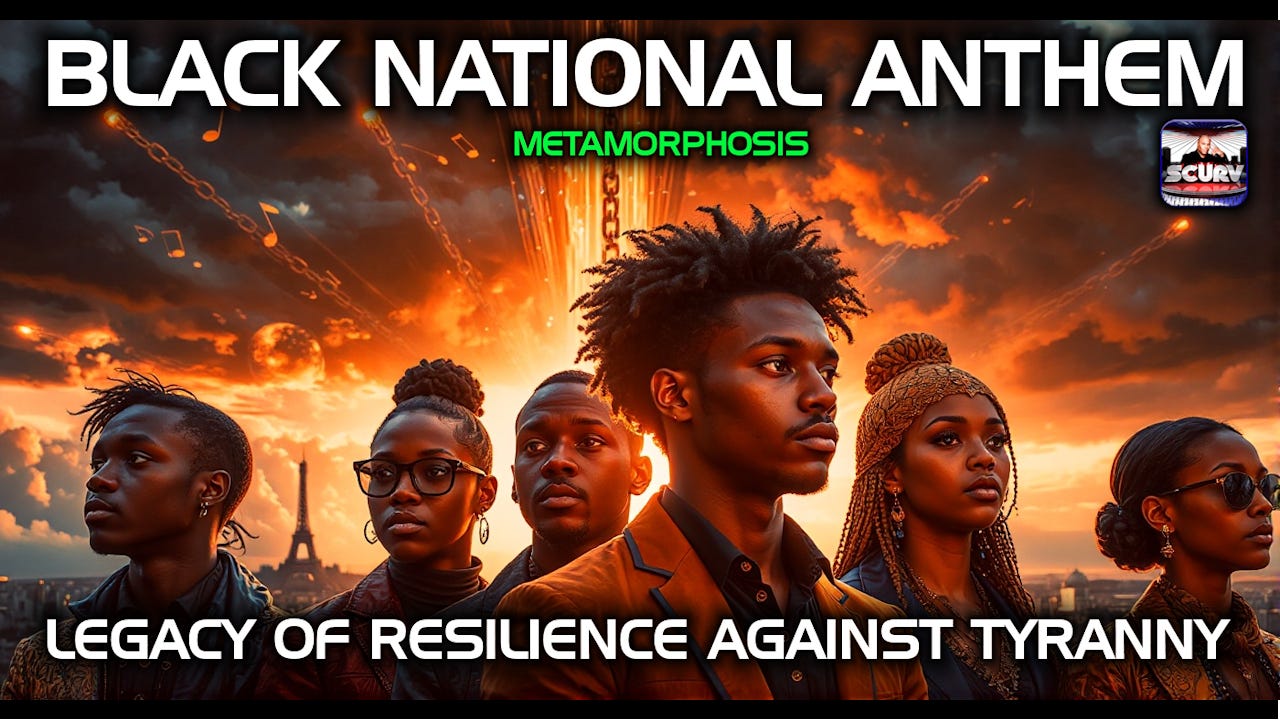

THE SOUND OF A PEOPLE WHO REFUSED TO BREAK
There are songs that entertain, and there are songs that carry the weight of a people’s survival. The Black National Anthem is not just music. It is memory. It is struggle. It is faith wrapped in melody. It is the sound of a people who refused to break under pressure that would have crushed others.
For many African Americans, this anthem is more than tradition. It is history set to rhythm. It speaks of a time when freedom was not promised, when justice was delayed, and when simply existing in Black skin could be dangerous. Yet in the middle of all that pain, a song rose.
That song is Lift Every Voice and Sing, written by James Weldon Johnson and composed by his brother J. Rosamond Johnson. What began as a poem in 1900 became a powerful declaration of hope. It was first performed by Black schoolchildren in Jacksonville during a celebration of Abraham Lincoln’s birthday. But it would soon grow far beyond that moment.
By 1919, the NAACP officially named it the “Negro National Anthem.” This was not about separation. It was about recognition. It was about a people who had survived slavery, lynching, segregation, and daily humiliation standing up and saying, “We are still here.”
When we sing it today, we are not just honoring the past. We are connecting to the strength that carried our grandparents and great-grandparents through storms that many cannot imagine.
BORN IN THE SHADOW OF SLAVERY
The anthem came only 35 years after the end of slavery in the United States. Think about that. Many of the people alive when it was written had either been enslaved or were the children of those who were. The scars were fresh. The system had changed its name from slavery to segregation, but the oppression remained.
This was the era of Jim Crow. Black communities were terrorized. Lynching was common. Voting rights were stolen. Schools were underfunded. Economic opportunity was limited on purpose. Tyranny did not disappear after the Civil War. It simply wore a new mask.
In that climate, Lift Every Voice and Sing was an act of courage. The lyrics speak of a “stony road” and a “bitter chastening rod.” Those are not poetic decorations. They are descriptions of real life. They reflect chains, whips, broken families, and laws designed to keep Black people at the bottom.
But the song does not end in despair. It rises. It calls for faith. It calls for unity. It calls for marching on “till victory is won.” That line alone tells you everything about the spirit of the people who embraced it. Victory was not guaranteed. But the march would not stop.
THE ANTHEM OF THE CIVIL RIGHTS MOVEMENT
As the decades passed, the song traveled through churches, schools, and community gatherings. It became a foundation in Black life. During the Civil Rights Movement of the 1950s and 1960s, it stood beside speeches and protests as a source of strength.
When activists faced fire hoses, police dogs, and jail cells, they sang. When children walked into newly integrated schools under angry stares, they sang. The anthem was not about revenge. It was about resilience. It reminded people that their struggle was part of a longer story.
The song does not call for hatred. It calls for faith in God and commitment to freedom. It asks that our feet not stray from the places where our ancestors died. That is deep. It means remember the cost. Remember the blood. Remember the sacrifice.
Even today, when it is performed at public events, it carries that history. Some people misunderstand it. Some try to politicize it. But for those who know its roots, it is not about division. It is about survival and dignity.
A GLOBAL LESSON IN RESILIENCE
While the anthem was born from the African American experience, its message reaches beyond one group. Around the world, people have faced tyranny. They have been colonized, silenced, exploited, and dehumanized. The anthem speaks to anyone who has had to fight to be seen as fully human.
For the global audience, understanding this song means understanding a key part of American history. It means seeing how a people used culture, faith, and unity to push back against systems built to crush them. It shows that resistance is not always loud. Sometimes it is steady. Sometimes it is sung.
For African Americans in their late 20s to 60s, this song is both inheritance and responsibility. It reminds us that comfort came at a cost. The rights we exercise today were paid for by those who endured threats, jail time, and worse. The anthem is a bridge between generations.
When we sing it, we are not stuck in the past. We are drawing strength from it. We are reminding ourselves that no matter what form tyranny takes, resilience is in our DNA.
THE RESPONSIBILITY OF REMEMBRANCE
In a time when history is often rewritten or watered down, holding on to the meaning of the Black National Anthem matters. It is not just a ceremonial song. It is a testimony. It is proof that even when laws were unfair and systems were stacked against us, the spirit of the people remained unbroken.
We live in a different era now, but challenges still exist. Economic gaps remain. Social tensions continue. Voices are still dismissed. The anthem teaches that resilience is not optional. It is necessary. It teaches that faith and action must walk together.
We must also pass the story on. Our children and grandchildren should know why this song exists. They should understand that it was born from pain but carried by hope. They should feel pride, not confusion, when they hear it.
The Black National Anthem stands as a legacy of resilience against tyranny. It is a reminder that oppression can delay progress, but it cannot destroy a determined people.
As long as there are voices willing to lift and sing, the story continues. And as long as we remember where we have been, we will know how to face whatever comes next.