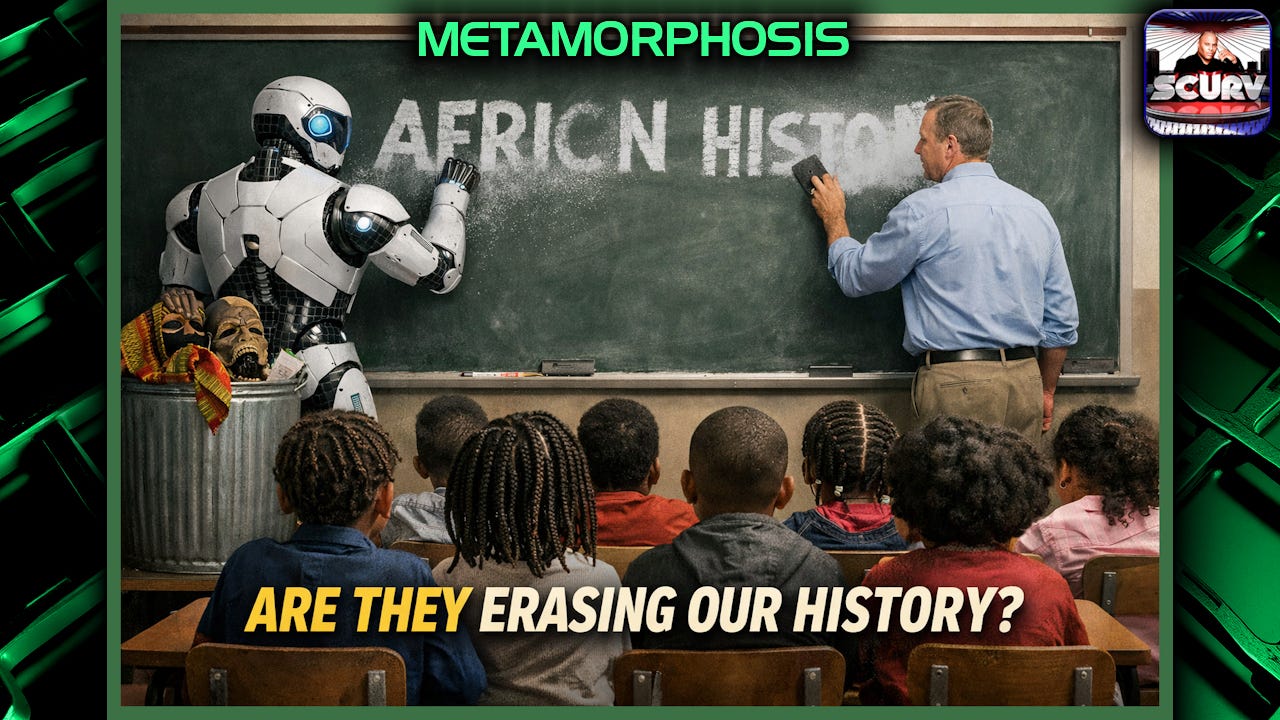

We are living in a time where truth is being edited, repackaged, and quietly erased right in front of our eyes. What we once thought was solid ground is now shifting beneath our feet, especially when it comes to education. The question is not just what is being taught, but what is being deliberately left out. That silence speaks louder than any lesson plan ever could.
Critical Race Theory, often shortened to CRT, has become a lightning rod in public debate. Many people talk about it, but few truly understand what it is. At its core, CRT examines how laws, systems, and institutions have shaped racial inequality over time. It is not about blaming individuals. It is about exposing patterns that have been built into society for generations.
Now here’s the uncomfortable truth: these patterns are not just history. They are alive. They show up in schools, in neighborhoods, in job opportunities, and in how knowledge itself is distributed. And when we talk about education, we must understand that what is taught in the classroom shapes how future generations see the world—and themselves.
But something deeper is happening right now. There is a growing push to water down, remove, or completely erase certain historical truths, especially those connected to African people and their descendants. This is not random. It is calculated. It is strategic. And it is dangerous.
At the same time, new systems are emerging—Alpha Schools, artificial intelligence, automated learning platforms. These tools promise efficiency and innovation. But the real question is: who controls the narrative inside these systems? Because if the foundation is flawed, the future will be even more distorted.
WHAT CRT REALLY IS AND WHY IT MATTERS
Critical Race Theory is not a weapon. It is a lens. It allows us to see how history didn’t just happen—it was structured. It shows how power moves, how it protects itself, and how it shapes what is considered “normal.” Without that lens, many people walk through life blind to the forces that shape their reality.
When CRT is removed from conversations, what replaces it is a shallow version of history. A version that avoids discomfort. A version that tells you just enough to function, but not enough to question. And when people stop questioning, systems stay in place.
This doesn’t only affect one group. When African history is erased or minimized, everyone loses. Because the story of African people is not separate from the story of the world—it is central to it. Science, mathematics, architecture, agriculture, medicine—these foundations were influenced by African civilizations long before modern systems took credit for them.
If young minds grow up without that knowledge, they inherit a distorted reality. They begin to believe that progress came from only one direction. That greatness belongs to only one group. And that belief shapes how they see themselves and others for the rest of their lives.
Now imagine that distortion being programmed into AI systems. Imagine digital teachers, automated curriculums, and learning platforms that are fed incomplete or biased data. The machine doesn’t question what it is given. It amplifies it. That means the erasure becomes faster, deeper, and harder to detect.
ALPHA SCHOOLS, AI, AND THE QUIET SHIFT
Alpha Schools represent a new model of education. Faster learning, personalized pacing, heavy reliance on technology. On the surface, it sounds like progress. And in many ways, it is. But progress without truth is just a more efficient way to spread misinformation.
Artificial intelligence is already shaping how students learn. It selects what content is shown, how it is explained, and what is emphasized. If those systems are built without a full and honest historical foundation, then we are not educating—we are programming.
And here’s the danger: once something is normalized through technology, it becomes harder to challenge. People trust systems more than they trust each other. So if the system says something is true, most will accept it without question.
If African history is gradually removed from traditional classrooms, and then never fully integrated into AI-driven education, it doesn’t just disappear—it becomes forgotten. And once something is forgotten, it is much easier to deny it ever existed.
This is how legacy is erased. Not in one loud moment, but in a thousand quiet edits.
THE REAL CONSEQUENCES OF ERASURE
If this continues, the long-term effects will be devastating. Young people will grow up disconnected from truth. They will lack a full understanding of the world and how it came to be. That creates confusion, division, and a weakened sense of identity.
For those of African descent, the impact is even deeper. When your history is removed, your sense of worth is attacked. When your contributions are ignored, your potential is questioned. And when that message is repeated through every system you interact with, it becomes internalized.
But let’s be clear—this is not just about one group. A society built on incomplete truth cannot stand strong. When people are misinformed, they make poor decisions. When they don’t understand history, they repeat its worst parts.
Erasing truth does not create unity. It creates ignorance.
WHAT WE MUST DO RIGHT NOW
We cannot sit back and watch this happen. Awareness is the first step, but action must follow. We must demand full, honest education that includes all contributions, not just the convenient ones. We must question what is being taught and what is being left out.
Parents, educators, and communities must take an active role. Don’t rely solely on institutions to educate the next generation. Teach at home. Read deeper. Challenge narratives. Build knowledge outside of controlled systems.
We must also pay attention to how technology is being used. AI is not neutral. It reflects the data it is given. If we want a fair future, we must push for systems that include complete and accurate history.
This is not about going backward. It is about moving forward with truth.
CLOSING
The battle for education is a battle for reality itself. What we teach today becomes what people believe tomorrow. And what people believe shapes the world they create.
If we allow history to be erased, we are not just losing the past—we are losing control of the future. Because a people who do not know their history are easier to control, easier to mislead, and easier to divide.
We must stand firm in truth, even when it makes others uncomfortable. Especially when it makes others uncomfortable. Because growth does not come from comfort—it comes from confrontation with reality.
The future of education is being written right now. Not just in classrooms, but in algorithms, in software, in systems we cannot always see. That is why we must be more vigilant than ever.
This is bigger than a curriculum. This is about identity, legacy, and truth. And if we don’t protect it, no one else will.
The time to act is now.