



There are certain individuals in American history whose lives are so extraordinary that simply reading their accomplishments does not do justice to the circumstances that produced them. Their stories require us to examine the world they entered, the obstacles they encountered, the decisions they made, the people they influenced, and the consequences of their actions. Booker T. Washington was one such individual. Born into slavery in Virginia, he would eventually become an educator, institution builder, author, political strategist, businessman, presidential adviser, and one of the most influential African Americans of the nineteenth and early twentieth centuries. His journey was extraordinary, but the story behind that journey is considerably more complicated than the inspirational version many people have been taught.
Washington’s life unfolded during one of the most turbulent periods in American history. He witnessed the end of slavery, the promise and collapse of Reconstruction, the emergence of Jim Crow segregation, the growth of Black educational institutions, the rise of racial violence, and the struggle to determine what freedom would actually mean for formerly enslaved people and their descendants. He did not merely observe these developments. He attempted to influence them, sometimes successfully, sometimes controversially, and sometimes in ways that created lasting disagreements within the Black community. Understanding Washington requires us to examine both the world he was fighting against and the philosophy he developed to navigate it.
What makes his story particularly fascinating is that he became a powerful national figure without ever having enjoyed the advantages that normally help produce powerful people. He did not inherit wealth, attend an elite university as a young man, or grow up surrounded by influential political connections. His earliest years were defined by poverty, physical labor, racial restrictions, and the absence of basic educational opportunities. Yet he developed an extraordinary determination to learn, organize, persuade, and build. His rise was not simply the result of personal ambition. It was also connected to his ability to recognize opportunities, cultivate relationships, understand political realities, and create institutions that others could participate in.
But we cannot examine Booker T. Washington honestly without discussing the controversy surrounding his philosophy. His emphasis on vocational education, economic independence, property ownership, and gradual advancement earned him powerful supporters. His willingness to accommodate certain aspects of segregation and postpone direct demands for political and social equality also attracted criticism. Some regarded him as a practical strategist who understood the dangerous circumstances facing Black Americans. Others believed that he gave too much legitimacy to a system that had never intended to treat Black citizens equally. His disagreements with other Black leaders were not minor personality conflicts. They represented competing visions of freedom, education, political power, and the future of an entire population.
This is the story of a man whose life cannot be reduced to a single speech, a single philosophy, or a single historical judgment. We are going to examine the child who was born enslaved, the young man who traveled hundreds of miles to obtain an education, the educator who established Tuskegee, the businessman who built relationships with wealthy industrialists, the political operator who worked behind the scenes, the husband and father who experienced personal loss, and the controversial public figure whose ideas continue to generate debate. Above all, we are going to examine the human being behind the historical image and ask what his extraordinary life can teach us about education, independence, leadership, and the difficult relationship between economic progress and genuine freedom.
BORN INTO A WORLD THAT CONSIDERED HIM PROPERTY
Booker Taliaferro Washington was born on April 5, 1856, in Franklin County, Virginia, near the community of Hale’s Ford. He was born on the plantation of James Burroughs, where his mother, Jane, was an enslaved woman who worked primarily as a cook. His father was a white man whose identity Washington never established with certainty. Washington later explained that he knew very little about him and that his father lived on a neighboring plantation.
That detail is important because it reminds us that Washington entered the world under circumstances that denied him the protections and privileges normally associated with family. His mother had no legal power to determine the future of her children in the way a free parent would. His father did not acknowledge or raise him. His childhood was shaped by a system that treated human beings as property and placed the interests of enslavers above the rights of families.
Booker lived with his mother, his older brother John, and his sister Amanda. Their living conditions were extremely poor. Their small log cabin also served as the plantation kitchen, meaning the place where the family lived was connected directly to his mother’s labor. There was little privacy, few comforts, and no guarantee that the family would remain together.
Washington later described the crude clothing, inadequate food, and exhausting labor that characterized his early years. He did not grow up with the childhood experiences that many people associate with education, recreation, and personal development. He grew up watching adults work under conditions they had not chosen and understanding that the decisions of other people could determine the direction of his life.
His earliest experiences also shaped his understanding of labor. He saw the relationship between work and survival long before he understood the larger economic and political systems that controlled the plantation. His mother worked because she was enslaved, not because she had freely entered an employment agreement. Her children inherited the consequences of that arrangement simply because they had been born into it.
Washington would later recall that he had no formal schooling while enslaved. He remembered seeing other children going to school and feeling an intense desire to experience the world of books and learning. In his autobiography, he described the schoolroom as something almost heavenly. Education represented a world that had been placed beyond his reach, and that very denial helped create his lifelong determination to obtain it.
It is worth remembering that Washington was born in 1856, only a few years before the American Civil War. The institution of slavery was still deeply embedded in the economy and political structure of the Southern states. The nation was moving toward a conflict that would eventually destroy legal slavery, but the people living under that system had no way of knowing exactly when freedom would arrive or what their lives would look like afterward.
EMANCIPATION DID NOT MEAN THAT THE STRUGGLE WAS OVER
The Civil War ended in 1865, and the Thirteenth Amendment formally abolished slavery later that year. Washington was approximately nine years old when his family experienced emancipation. He remembered the announcement of freedom and the uncertainty that followed it.
For his family, freedom meant leaving the Burroughs plantation and attempting to establish a life outside the direct control of their former enslavers. His mother moved the children to Malden, West Virginia, where her husband, Washington Ferguson, was living and working.
The move was not a journey into prosperity. Formerly enslaved people had not been given a general distribution of land, money, or resources that would allow them to begin their lives on equal terms. They had to find employment in an economy that continued to depend heavily upon their labor while often denying them fair compensation and opportunities.
The family needed income, and young Booker became part of the workforce. He worked in the salt industry, packing salt and performing physically demanding labor. He also worked in coal mining and domestic service during different periods of his youth.
Imagine being a child who desperately wants to attend school but knows that the family needs the money you earn. That was the reality Washington faced. His desire for education had to compete with the immediate needs of survival.
He eventually arranged to attend school while continuing to work. He would rise early, perform his labor, attend classes, and return to his responsibilities. The arrangement was demanding, but he refused to abandon his educational ambitions.
His experiences in Malden introduced him to the importance of determination and discipline. They also showed him that emancipation alone could not solve the problems created by centuries of slavery. A person could be legally free and still be economically dependent, poorly educated, socially restricted, and vulnerable to exploitation.
This distinction would become central to his later philosophy. Washington believed that freedom needed an economic foundation. He did not want Black Americans to remain permanently dependent upon employers, institutions, or individuals who could use their economic position to control their lives.
THE JOURNEY TO HAMPTON: A BOY SEARCHING FOR A DIFFERENT FUTURE
One of the most important events in Washington’s early life was his discovery of the Hampton Normal and Agricultural Institute in Virginia.
The institution had been established by General Samuel Chapman Armstrong in 1868. Its purpose included educating formerly enslaved people and preparing African Americans to become teachers and skilled workers.
Washington heard about Hampton and became determined to attend. The problem was that the institution was hundreds of miles away, and he had very little money.
In 1872, at approximately sixteen years old, he began the journey. He traveled by available transportation when he could afford it and walked considerable distances when his money ran out. He experienced hunger, exhaustion, and uncertainty along the way.
When he finally arrived, he was not greeted with an automatic place in the classroom. He had to demonstrate that he was suitable for admission and that he could contribute to the institution despite his poverty.
He was given a classroom cleaning assignment. Washington approached the task with such care that the school officials were impressed. He was accepted, and he eventually supported his education through work at Hampton.
This incident became one of the defining stories of his autobiography. It demonstrates something important about his character: he understood that opportunity might not arrive in the form he expected, but he was prepared to work with whatever opportunity was available.
At Hampton, Washington came under Armstrong’s influence. Armstrong believed in education that combined academic instruction, practical training, personal discipline, and character development. Washington embraced much of this philosophy and later used it as the foundation for his own educational institution.
He graduated in 1875. His achievement was especially significant because he had entered the world without the educational privileges that many students took for granted.
After graduation, he returned to West Virginia and began teaching. He wanted to bring education to people whose circumstances resembled those he had experienced.
He later attended Wayland Seminary in Washington, D.C., from 1878 to 1879. His education was therefore not limited to a single institution or experience. He continued developing his knowledge and understanding of educational work.
In 1879, he returned to Hampton as an instructor. He had gone from being a poor young student seeking admission to becoming someone trusted to teach others.
That progression would eventually lead to the most important opportunity of his professional life.
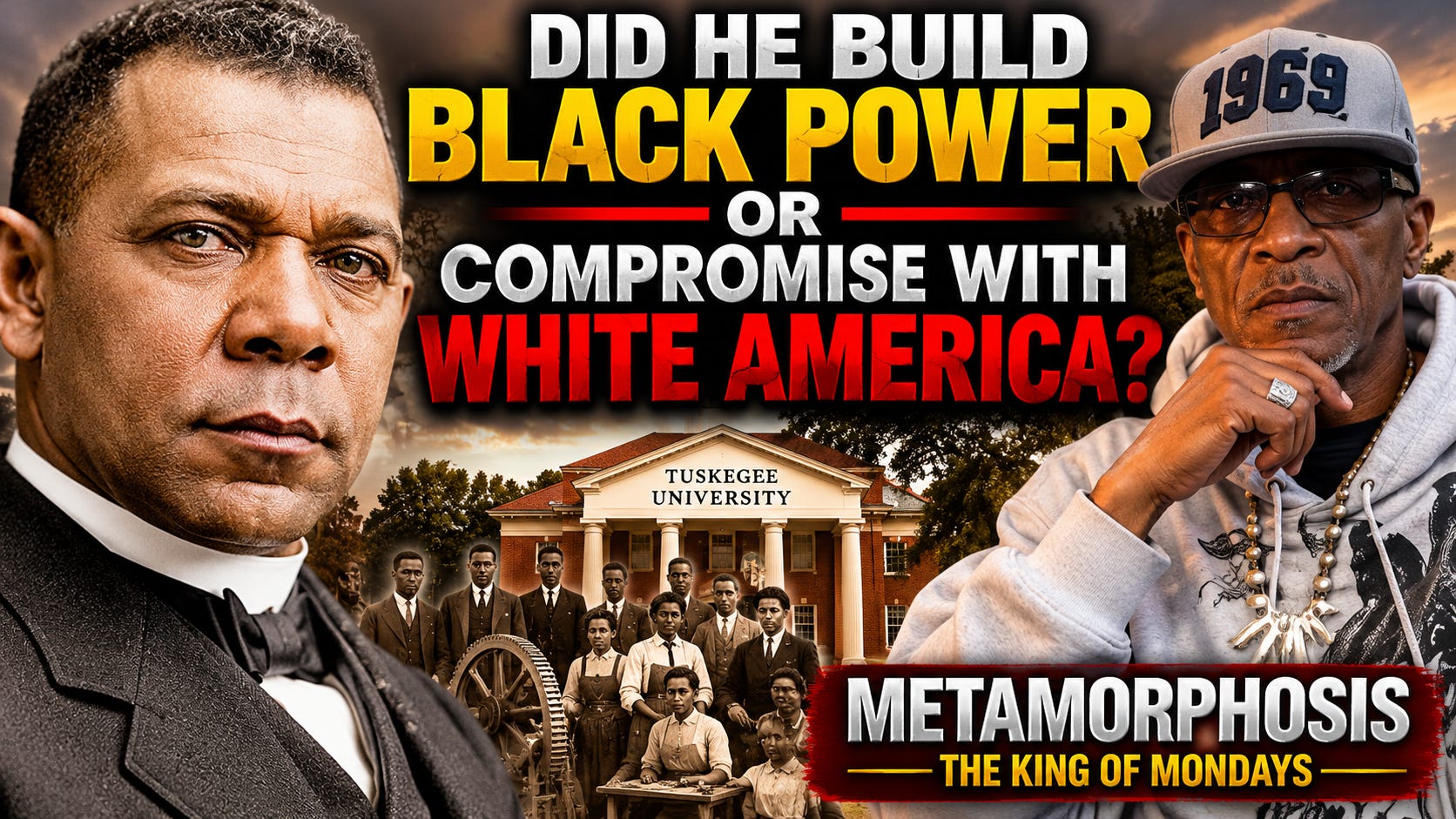
THE BIRTH OF TUSKEGEE: BUILDING SOMETHING FROM ALMOST NOTHING
In 1881, Washington received an invitation to establish a school for African Americans in Tuskegee, Alabama. The state had authorized funding for a normal school intended to train Black teachers, but the institution had almost no physical infrastructure.
Washington arrived in Alabama and discovered that he would have to build the school from the ground up.
The Tuskegee Normal School opened on July 4, 1881, with approximately thirty students. Its early classes were held in a small building that had previously been used for church purposes. Washington had no impressive campus, no collection of completed buildings, and no large organization waiting to support him.
He began recruiting students and seeking the assistance of local residents. He traveled through surrounding communities, learning about their needs and explaining what the school hoped to accomplish.
The students themselves became part of the construction process. They cleared land, worked on buildings, developed agricultural areas, and helped create the physical institution in which they would receive their education.
This was not an educational model in which students simply paid tuition and waited for someone else to provide every resource. Washington wanted them to understand the relationship between knowledge, labor, responsibility, and ownership.
The institution gradually expanded. Students received instruction in agriculture, carpentry, brickmaking, printing, shoemaking, mechanical skills, and other trades. They also received academic instruction and teacher training.
Washington believed that Black communities needed people who could perform essential work, establish businesses, improve agriculture, build homes, teach children, and develop local institutions.
He understood that a population denied access to economic opportunity needed practical ways to create its own opportunities.
Tuskegee eventually became one of the most recognized Black educational institutions in the country. It developed a reputation for industrial education, agricultural instruction, teacher preparation, and institutional discipline.
But the growth of Tuskegee was not the achievement of Washington alone. It depended upon students, teachers, administrators, local supporters, donors, and the work of people whose names did not always receive the same public attention.
Washington’s leadership was central, but the institution was built through collective effort.
That is an important distinction because one of the dangers of historical storytelling is that we sometimes allow the famous individual to overshadow the many people who helped make the accomplishment possible.
THE EDUCATIONAL PHILOSOPHY THAT MADE HIM FAMOUS
Washington’s educational philosophy was built around the belief that practical knowledge could create economic independence.
He believed that Black Americans needed access to trades, agriculture, business development, and technical training. He wanted students to graduate with abilities that could be used to earn a living, establish enterprises, and improve their communities.
He also believed that education should develop character, discipline, cleanliness, responsibility, and respect for work.
His approach was influenced heavily by his experience at Hampton. He believed that a school should prepare students for the realities of the world in which they would have to live.
But his philosophy was not simply that Black people should become laborers. Tuskegee offered academic instruction, and Washington understood the importance of teachers and educated leadership. His emphasis on industrial education was based on the economic conditions he believed Black Americans faced.
The question was whether this approach should become the primary educational model for Black Americans.
His supporters believed that practical education was necessary because Black communities needed economic resources immediately. His critics believed that emphasizing vocational training too heavily could restrict access to higher education, professional careers, and intellectual leadership.
This disagreement would eventually become one of the most important debates in African American history.
GEORGE WASHINGTON CARVER AND THE EXPANSION OF TUSKEGEE
One of the most important people associated with Tuskegee was George Washington Carver.
Carver joined the institution in 1896 and became its leading agricultural scientist and educator. He had developed a strong interest in agriculture and scientific research, and Washington recognized that his abilities could help strengthen the institution.
Carver conducted research into soil improvement, crop rotation, and agricultural products. He encouraged farmers to diversify their crops rather than depend entirely upon cotton, which had depleted the soil in many Southern communities.
His work with peanuts, sweet potatoes, and other crops became widely recognized. He explored alternative uses for agricultural materials and promoted methods that could improve farming conditions.
Carver’s achievements were his own, and it is important to recognize his independent intellectual contribution. Washington provided the institutional setting, but Carver brought his scientific abilities, research interests, and dedication to agricultural education.
Their association demonstrated the possibilities of an educational institution that connected scientific knowledge to the practical needs of ordinary people.
Tuskegee was becoming more than a school. It was developing into a center of research, teacher training, agricultural improvement, and Black institutional development.
THE ATLANTA EXPOSITION SPEECH: THE MOMENT THAT CHANGED EVERYTHING
On September 18, 1895, Washington delivered the speech that would establish him as a national figure.
The occasion was the Cotton States and International Exposition in Atlanta, Georgia. The event was designed to showcase the economic development of the American South and attract investment and attention.
Washington was invited to speak before an audience that included white business leaders, politicians, and members of the public.
The significance of this invitation cannot be overstated. Black Americans were living under increasing racial restrictions, and the political gains made during Reconstruction had been weakened or destroyed in many Southern states.
Washington used the opportunity to present his philosophy of economic advancement and cooperation.
He encouraged Black Americans to develop practical skills, establish businesses, purchase property, improve agriculture, and become economically productive.
He argued that Black and white Southerners had economic interests that could be served through cooperation.
His most famous image compared the two races to fingers of one hand. They could remain socially separate while working together in matters essential to economic progress.
He also encouraged Black Americans to cast down their buckets where they were, meaning that they should recognize and develop opportunities within their immediate surroundings.
The speech became known as the Atlanta Exposition Address. Its critics later popularized the term Atlanta Compromise.
The reaction was enormous. Many white business leaders and politicians praised Washington because his message appeared to offer economic cooperation without directly challenging segregation.
Many Black Americans also appreciated his emphasis on education and economic advancement.
But other Black leaders were deeply troubled.
They believed Washington had given too much ground to the white political establishment. They questioned whether a strategy that postponed demands for equality could ever produce genuine freedom.
The speech became the foundation of his national reputation and the source of one of the greatest controversies of his career.
WHAT WAS THE ATLANTA COMPROMISE REALLY ABOUT?
To understand Washington’s position, we must examine the conditions of the 1890s.
Reconstruction had ended in 1877. Southern states were increasingly restricting Black voting rights, enforcing segregation, and creating legal and social systems designed to maintain white political control.
Lynching and racial violence were widespread. Black landowners and businesspeople faced discrimination, intimidation, and sometimes deadly attacks.
Washington believed that Black Americans needed to strengthen their economic position in order to survive and advance.
He thought that building businesses, acquiring property, learning trades, and establishing educational institutions could provide a foundation for greater influence.
But his public message also suggested that Black Americans should not make social equality the immediate center of their struggle.
This was the source of the controversy.
His critics argued that political rights and economic opportunity could not be separated. A person could become wealthy and still be denied the right to vote. A business owner could be successful and still be excluded from public facilities. A skilled professional could be qualified and still face discrimination because of race.
They believed that economic development without political protection could leave Black Americans vulnerable to the same forces that had oppressed them for generations.
There is a serious question here that deserves examination: Can a population achieve genuine independence when another population controls the laws, courts, political institutions, and major economic structures?
Washington believed economic development could eventually change those relationships. His critics believed the demand for equality had to be made directly.
The disagreement was not simply about personality. It was about the meaning of freedom itself.
W. E. B. DU BOIS AND THE BATTLE OVER THE FUTURE OF BLACK AMERICA
One of Washington’s most important critics was W. E. B. Du Bois.
Born in 1868 in Great Barrington, Massachusetts, Du Bois had a different educational and social background. He attended Fisk University and Harvard University and became a scholar, historian, sociologist, writer, and civil rights advocate.
Du Bois believed that Black Americans needed full political rights, higher education, and direct opposition to racial discrimination.
He strongly disagreed with Washington’s willingness to postpone certain demands for equality.
In 1903, Du Bois published The Souls of Black Folk, which included his criticism of Washington’s philosophy.
He believed that education should develop the full intellectual abilities of Black Americans rather than concentrate too heavily on preparing them for manual occupations.
His idea of the Talented Tenth emphasized the development of highly educated Black leadership capable of helping guide the wider population.
Washington and Du Bois were not enemies because one supported education and the other opposed it. Both believed education was essential. Their disagreement concerned the purpose of education, the priority of political rights, and the methods that should be used to challenge racial inequality.
Washington believed economic development could create a foundation for greater freedom.
Du Bois believed that political freedom and intellectual development could not be postponed without serious consequences.
Both men were responding to an unjust society, but they had different ideas about how to confront it.
The disagreement became a defining debate within Black American leadership.
WILLIAM MONROE TROTTER AND THE GROWING OPPOSITION
Another important critic was William Monroe Trotter, a Black newspaper editor and activist who believed that Washington’s approach was too accommodating.
Trotter was willing to challenge racial discrimination directly. He believed that Black Americans should not have to accept inferior treatment in exchange for economic opportunities.
His criticism reflected a broader frustration among Black intellectuals, journalists, and activists who believed that Washington’s growing influence was limiting the range of acceptable political positions.
Washington’s financial relationships gave him considerable influence over institutions and individuals. He could help direct money toward educational projects, support newspapers, and influence the careers of people who depended upon his network.
His critics worried that this power could discourage disagreement.
This is an important issue in any discussion of leadership. A leader may accomplish extraordinary things, but the concentration of influence can create problems when people become afraid to challenge that leader.
Washington believed he was protecting the work he had built. His critics believed the community needed more freedom to question his direction.
THE NIAGARA MOVEMENT AND THE ROAD TO THE NAACP
In 1905, Du Bois and other Black leaders organized the Niagara Movement.
The movement demanded full civil rights, equal treatment, voting rights, educational opportunity, and an end to racial discrimination.
Its members believed that Black Americans had already waited too long for the promises of freedom to be fulfilled.
The movement was an important challenge to Washington’s public philosophy.
In 1909, the National Association for the Advancement of Colored People was established. The organization brought together Black and white reformers who wanted to challenge racial discrimination through legal action, public pressure, journalism, and organized activism.
The NAACP represented a different approach to the struggle than Washington’s emphasis on gradual economic development.
It is important to recognize that Black Americans were never united behind a single strategy. Different communities faced different circumstances, and leaders had different assessments of the risks and opportunities available.
Some believed in economic self-help as the foundation of progress. Others believed that direct political action was essential. Many understood that both were necessary.
The emergence of the Niagara Movement and the NAACP demonstrated that Washington could not speak for every Black American, regardless of how influential he had become.
THE NATIONAL NEGRO BUSINESS LEAGUE: BUILDING AN ECONOMIC NETWORK
In 1900, Washington organized the National Negro Business League.
The organization was designed to encourage Black entrepreneurship, business development, professional relationships, and economic cooperation.
Washington understood that successful individuals could help create opportunities for others. He wanted Black business owners to communicate, exchange ideas, establish relationships, and develop stronger commercial networks.
The league brought together merchants, farmers, entrepreneurs, professionals, and other businesspeople.
This was an important development because Black Americans frequently faced barriers to financing, property ownership, commercial opportunities, and access to mainstream business institutions.
Washington believed that Black communities needed their own economic foundations.
He understood that political influence was often connected to financial resources. A community with successful businesses and property ownership could potentially create more opportunities for its members.
His emphasis on entrepreneurship remains one of the most important parts of his legacy.
THE WHITE HOUSE DINNER THAT SHOCKED AMERICA
In October 1901, President Theodore Roosevelt invited Washington to dine at the White House.
The invitation was extraordinary because racial segregation was deeply embedded in American society.
Washington became the first prominent African American to dine socially with a sitting American president at the White House.
The reaction among many white Southerners was furious. They considered the invitation a violation of racial customs and an unacceptable challenge to white social dominance.
The controversy demonstrated how deeply racism had shaped American public life.
Washington had become a nationally respected educator, but sharing a meal with the president was enough to provoke outrage.
Roosevelt continued consulting Washington on racial issues and political appointments. Washington had access to a level of political influence that very few Black Americans could reach at the time.
However, access to the president did not mean that the entire political system was prepared to provide equal treatment to Black citizens.
Washington’s relationship with Roosevelt was useful, but it also showed the limits of personal influence within a deeply unequal political structure.
WASHINGTON’S RELATIONSHIP WITH PRESIDENTS AND POLITICAL POWER
Washington’s political influence was not limited to Theodore Roosevelt.
He had developed relationships with influential individuals in business, government, education, and philanthropy.
He understood that political appointments could affect the conditions under which Black communities lived.
He used his relationships to advocate for Black federal appointments and support for educational institutions.
He also developed a network of contacts who could provide financial assistance and political access.
This network became so influential that Washington was sometimes described as having enormous control over Black political and institutional life.
Some historians have referred to his influence as a political machine.
That description reflects the power he accumulated through relationships, money, appointments, and institutional connections.
His supporters viewed this as an effective way to obtain resources and protect Black interests.
His critics worried that too much influence was concentrated in the hands of one individual.
The important question is whether Washington’s power was used primarily to strengthen the community or whether it sometimes limited the independence of other Black leaders.
The answer requires examining the historical record rather than accepting either the praise of his supporters or the criticism of his opponents without question.
THE PRIVATE POLITICAL WORK THAT COMPLICATED HIS PUBLIC IMAGE
One of the most interesting discoveries in the historical record concerns Washington’s private activities.
Although his public speeches often emphasized cooperation and gradual advancement, his private correspondence reveals that he supported certain political and legal efforts against racial discrimination.
He quietly encouraged and financed selected legal challenges to segregation and voter suppression.
He also supported Black newspapers and other activities that were not always consistent with the public image of accommodation associated with his Atlanta speech.
This creates a more complicated picture.
Washington understood that openly challenging powerful white political interests could threaten his educational institution and his ability to raise money.
He therefore sometimes worked quietly, using private relationships and financial resources to support activities that he might not publicly endorse in the same way.
Was this political wisdom? Was it an effort to protect Tuskegee? Was it a compromise forced upon him by the dangerous circumstances of his time?
These questions deserve serious consideration.
His private actions demonstrate that his beliefs and strategies were more complicated than the simplified image of a man who simply accepted segregation.
But they also raise questions about the relationship between public leadership and private political activity.
A leader’s public words influence the community, while private actions may reveal additional intentions that the public does not fully understand.
Washington’s life reminds us that historical figures must be examined through their complete records, not merely their most famous statements.
THE POWERFUL PHILANTHROPISTS WHO HELPED BUILD HIS INFLUENCE
Washington understood that building Tuskegee required money, and he became an extraordinarily effective fundraiser.
He developed relationships with some of the wealthiest industrialists and philanthropists in America.
Among his supporters were Andrew Carnegie, John D. Rockefeller, and Julius Rosenwald.
Carnegie provided financial assistance to Tuskegee and supported educational development.
Rockefeller also contributed to educational causes and institutions connected to Black advancement.
Rosenwald later became especially important in supporting the construction of schools for Black children throughout the South.
The relationship between Washington and Rosenwald was particularly significant because it helped encourage the development of a major school-building effort.
The Rosenwald school program eventually supported thousands of educational facilities serving Black communities in Southern states.
These schools provided educational opportunities in places where public resources were often inadequate or discriminatory.
Washington’s fundraising abilities helped create opportunities that extended beyond Tuskegee itself.
However, the relationship between wealthy donors and Black educational institutions also raises important questions.
When an institution depends upon wealthy benefactors, how much independence does it really possess?
Donations can create opportunities, but they can also influence priorities.
Washington had to maintain relationships with people whose political and social views did not necessarily match the aspirations of the Black communities he wanted to serve.
His ability to negotiate those relationships was one of his greatest political skills.
THE MAN BEHIND THE PUBLIC FIGURE: HIS MARRIAGES AND FAMILY
Washington’s personal life was not without its own difficulties.
He married three times, and each marriage involved a woman who had educational interests and connections to his work.
His first wife was Fannie N. Smith, whom he married in 1882. They had one daughter, Portia. Fannie died in 1884, leaving Washington to continue his educational responsibilities while raising a young child.
In 1885, he married Olivia A. Davidson. She was an educator who became an important contributor to Tuskegee’s development.
Olivia was not simply a supportive wife standing behind a famous husband. She had her own educational abilities and played an important role in the institution’s work.
They had two sons, Booker T. Washington Jr. and Ernest Davidson Washington.
Olivia died in 1889.
In 1893, Washington married Margaret James Murray, an educator who had also been involved in the work at Tuskegee.
Margaret became an important partner in his later life and helped manage the responsibilities associated with the institution and its expanding influence.
The family lived within the demanding world of educational leadership, public appearances, fundraising, and institutional responsibilities.
Washington’s work often required travel and long periods away from home. His public life was enormous, and his family had to exist alongside those responsibilities.
It is important to humanize these experiences because famous historical figures are sometimes presented as if they had no ordinary personal concerns.
Washington experienced marriage, parenthood, bereavement, responsibility, and the demands of family life.
His accomplishments did not remove him from the emotional realities of being human.
UP FROM SLAVERY: THE BOOK THAT INTRODUCED HIS STORY TO THE WORLD
In 1901, Washington published his autobiography, Up From Slavery.
The book described his childhood under slavery, his experiences after emancipation, his education at Hampton, and his efforts to establish Tuskegee.
It became one of the most influential autobiographies written by an African American during that period.
The book helped introduce Washington’s personal story to a wide audience.
His readers encountered a man who had experienced extraordinary hardship and developed a philosophy based upon discipline, work, education, and self-improvement.
The autobiography also helped establish his public image as a self-made man.
But it is important to read an autobiography with an understanding that it represents the author’s own memories and choices about what to emphasize.
Washington was presenting his life to an audience, and he understood the importance of communicating his experiences in a way that could influence public opinion.
The book remains an important historical document, but it should be examined alongside his correspondence, speeches, institutional records, and other historical sources.
He also wrote The Future of the American Negro and Working with the Hands.
His writings reveal his commitment to economic development and his belief that education should improve the practical circumstances of people’s lives.
THE RACIAL TERROR THAT SURROUNDED HIS LEADERSHIP
Washington’s rise took place during an era of extraordinary racial violence.
The end of slavery had not ended white supremacy.
Black Americans faced lynching, mob attacks, voter suppression, segregation, and economic intimidation.
The Wilmington coup of 1898 was one example of organized white political violence. In Wilmington, North Carolina, white supremacists overthrew a legally elected local government, destroyed Black political influence, and attacked the Black community.
The Atlanta race massacre of 1906 was another horrifying example.
Black residents were attacked by white mobs, and Black businesses and homes were targeted.
These events demonstrated that economic progress did not guarantee physical safety.
A successful Black business owner could still become a target. A property owner could still face intimidation. An educated person could still be denied equal treatment.
Washington understood the dangers of the period, and his cautious political strategy was shaped partly by those conditions.
But critics believed that his national influence gave him an opportunity to speak more forcefully against racial terror.
They questioned why he did not use his access to powerful political leaders more publicly and consistently to demand stronger protection for Black citizens.
This criticism remains one of the most serious aspects of his legacy.
His ability to build educational institutions was extraordinary, but the question of how he used his influence against racial violence cannot be ignored.
THE CONTROVERSY OVER VOCATIONAL EDUCATION AND HIGHER LEARNING
Washington’s emphasis on vocational education became a major point of disagreement.
His critics believed that Black students needed access to the full range of educational opportunities, including liberal arts, advanced scholarship, law, medicine, science, and political leadership.
They worried that a system focused too heavily on manual training could reproduce the economic hierarchy that had existed during slavery.
They argued that Black students should not be educated only for occupations that white society was willing to accept.
This was a serious concern.
Education should expand possibilities, not restrict them.
At the same time, Washington’s supporters pointed out that many Black communities needed immediate access to practical education.
People needed teachers, farmers, builders, mechanics, business owners, and skilled workers.
The debate was therefore not simply between practical education and intellectual education.
It was about whether Black Americans should be encouraged to pursue every educational opportunity available to them or whether economic conditions required a more focused approach.
The strongest conclusion is that a community needs both.
It needs people who can build, repair, cultivate, manufacture, and operate businesses. It also needs people who can research, teach, practice law, develop scientific knowledge, lead institutions, and challenge unjust systems.
No community should be forced to choose between intellectual development and economic independence.
THE LAST YEARS OF BOOKER T. WASHINGTON
By the early twentieth century, Washington had become an internationally recognized figure.
He continued leading Tuskegee, raising money, delivering speeches, and maintaining relationships with political and business leaders.
His schedule was demanding, and the responsibilities of his position required constant attention.
He remained a powerful figure even as younger activists and new organizations challenged his philosophy.
His health eventually began to deteriorate.
Washington died on November 14, 1915, at the age of fifty-nine, after becoming seriously ill.
He returned to Tuskegee before his death and was buried on the grounds of the institution he had spent so much of his life building.
His death marked the end of an extraordinary personal journey.
He had entered the world enslaved, experienced poverty and difficult labor, struggled to obtain an education, and eventually became one of the most influential Black men in America.
Tuskegee continued after his death, and his influence remained deeply connected to its development.
HOW SHOULD WE JUDGE BOOKER T. WASHINGTON TODAY?
The most responsible way to examine Washington is to recognize both his accomplishments and his limitations.
He was an extraordinary institution builder.
He understood the importance of education, property ownership, skilled labor, entrepreneurship, and economic organization.
He helped establish an institution that educated generations of Black students and influenced educational development throughout the South.
He created relationships that brought resources into Black communities.
He also developed a national platform that allowed him to influence political discussions and public attitudes toward Black advancement.
These accomplishments should not be minimized.
But his public accommodation of segregation created a serious problem.
His philosophy risked suggesting that Black Americans should accept an unequal political and social position while concentrating on economic development.
His critics understood that economic success without political protection could remain vulnerable.
They also believed that a population should not have to prove its economic usefulness before receiving the rights of citizenship.
That criticism remains valid.
Washington’s life demonstrates that economic independence is essential, but it is not a replacement for equal rights.
It also demonstrates that leadership is complicated. A person can build something extraordinary while making decisions that deserve criticism.
We should not erase his accomplishments because of his compromises, and we should not excuse his compromises because of his accomplishments.
THE LESSONS HIS LIFE LEAVES FOR FUTURE GENERATIONS
One of the most important lessons from Washington’s life is that education must be connected to opportunity.
Knowledge is powerful, but people also need the resources and freedom to use what they have learned.
Economic independence matters because people who have no control over their financial circumstances can become vulnerable to exploitation.
Strong institutions matter because they create opportunities that can survive beyond the lives of individual leaders.
Washington understood these principles and spent much of his life trying to put them into practice.
But his life also teaches us that economic development must be accompanied by political awareness and the protection of civil rights.
A successful community cannot afford to ignore the laws, institutions, and political forces that affect its future.
It cannot build businesses while remaining indifferent to the policies that determine who can own property, obtain financing, vote, and receive equal protection.
It cannot educate its children while accepting a system that restricts their opportunities because of race.
A strong community must develop economic resources and defend its rights at the same time.
THE MAN, THE MOVEMENT, AND THE MEANING OF FREEDOM
Booker T. Washington’s life is one of the most remarkable examples of personal transformation in American history. He began life in slavery, experienced the hardships of poverty, worked in exhausting labor conditions, and fought for access to education. His determination eventually carried him into positions of national influence that would have seemed impossible during his childhood. His journey deserves to be remembered because it demonstrates what determination, discipline, education, and institution building can accomplish under extraordinarily difficult circumstances.
But his story also forces us to examine the difference between individual achievement and collective liberation. A person can become successful while the larger population remains oppressed. A school can become nationally respected while the society surrounding it continues to deny equal rights. Financial success can improve people’s lives, but it cannot automatically eliminate discrimination or guarantee political freedom. These are separate struggles that must be addressed together.
I believe the most important question surrounding Washington is not whether he was entirely right or entirely wrong. The more important question is what his life teaches us about the decisions leaders must make when their people are living under unjust conditions. His strategy emphasized building economic power and institutions within a hostile environment. His critics insisted that the demand for equal citizenship could never be postponed. History gives us reasons to understand both positions, while also recognizing the limitations of each approach when considered alone.
We should also remember that Black history has never depended upon one individual or one philosophy. Washington, Du Bois, Trotter, Carver, and countless other men and women contributed to the development of Black America in different ways. Some built schools, some challenged unjust laws, some developed businesses, some conducted scientific research, and others organized communities. The strength of a population comes from the development of many abilities and many forms of leadership working toward a common future.
Ultimately, Booker T. Washington leaves us with a complicated but valuable legacy. He demonstrated that people can build institutions even when they begin with almost nothing. He demonstrated the power of education and economic organization. He also reminds us that no amount of personal success should require a population to surrender its demand for dignity, equal treatment, and freedom. His life should encourage us to build, question, organize, educate, and think independently. We can respect what he accomplished without surrendering our right to examine what he believed. That is how history should be studied, and that is how future generations should learn from the people who came before them.
