

THE DAY GHANA DECIDED TO ASK FOR MORE
Ladies and gentlemen, what I’m about to share with you is not just another story about politics or business. This is a story about power. It’s about money. And it’s about what really happens when an African nation decides to stand up and ask for a bigger share of the wealth sitting under its own soil.
What just happened in Ghana is shaking more than the mining industry. It is exposing the uncomfortable truth about global partnerships and who really benefits when Africa opens its doors to the world. Because the moment Ghana decided it wanted a larger share of its own gold profits, something very interesting happened.
Countries that normally argue about everything suddenly found something they could all agree on.
Stop Ghana.
Now think about that for a moment. Nations that compete with each other politically, economically, and even militarily suddenly moved in the same direction when Ghana touched the money flowing from its gold.
And that right there tells you everything you need to know about how the world really works.
GOLD: THE BACKBONE OF GHANA’S ECONOMY
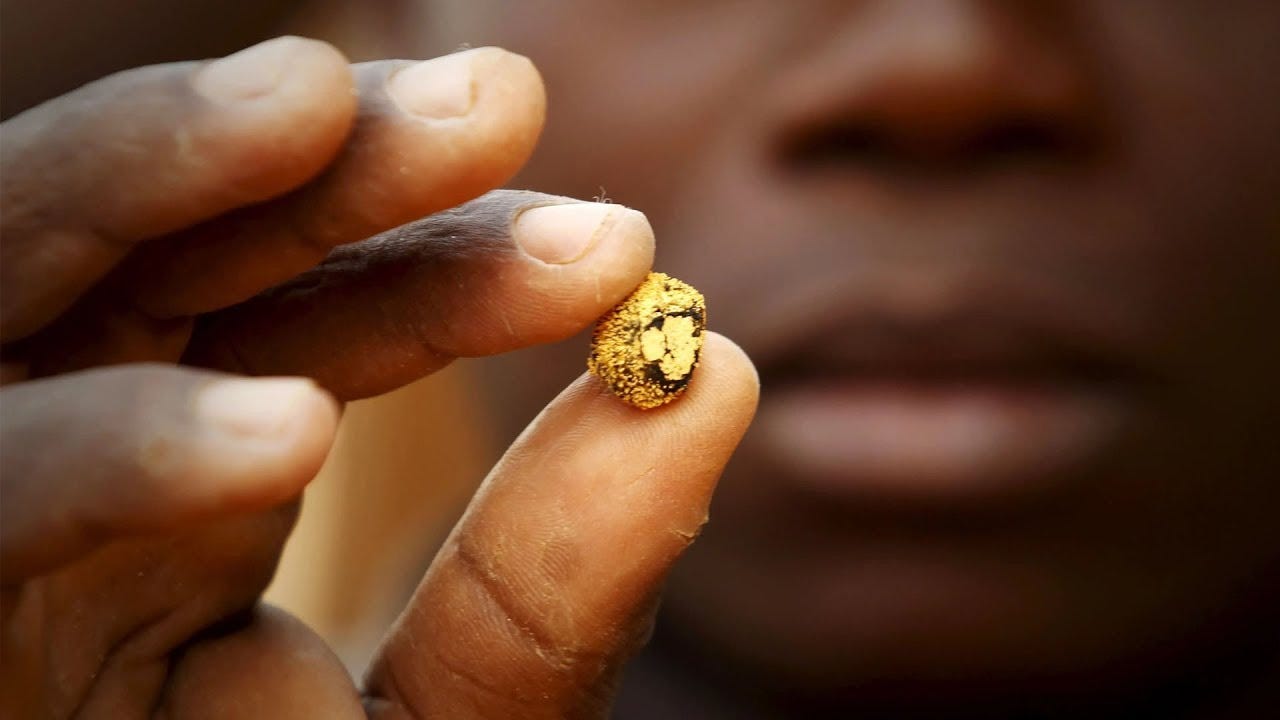
Ghana is not a small player when it comes to gold. This country is the largest gold producer in Africa and one of the biggest producers on the planet. Gold is not just another export for Ghana. It is one of the main pillars holding up the entire economy.
For years, mining companies have been paying royalties to the Ghanaian government for the privilege of digging gold out of Ghanaian land. Those royalties have usually ranged between three and five percent. That number was designed years ago when gold prices were far lower than they are today.
Back around 2015, gold sold for roughly eleven hundred dollars an ounce.
Today the price has exploded. Gold has surged into the four thousand dollar range per ounce and even crossed higher peaks in some markets. That means the value of gold has multiplied dramatically while the percentage Ghana receives from its own resource has stayed almost the same.
Let that sink in.
The price of gold has nearly quadrupled, but the country where the gold comes from has not seen the same rise in its share.
And that is where the story takes a powerful turn.
WHEN GHANA SAID ENOUGH IS ENOUGH
Ghana’s leadership decided it was time to adjust the system. Instead of keeping royalties locked in an outdated range, the country proposed a sliding scale that rises as gold prices rise.
Under this proposal, royalties could climb from five percent up to twelve percent when gold prices reach certain levels.
That might sound reasonable to most people.
After all, if the price of a resource skyrockets, shouldn’t the country that owns the resource receive a bigger share?
But the reaction from the global mining world was immediate and intense.
Powerful governments began speaking with one voice.
Suddenly diplomats were meeting with Ghanaian officials. Documents were being delivered. Concerns were being raised about how the new royalty system could affect mining operations.
But let’s be honest about what this really means.
When billions of dollars are at stake, the pressure starts coming fast.
WHEN FRIENDS BECOME PRESSURE
Now here is where the story gets interesting.
Countries that usually compete with each other suddenly showed unity when Ghana touched the profit margins tied to its gold.
Think about that carefully.
These same nations often disagree about trade, military strategy, and global politics. But when it came to the possibility of Ghana increasing its share of mining wealth, those differences seemed to disappear.
The message was clear.
Do not change the terms too much.
That moment should wake up anyone paying attention to global economics. Because it shows that when natural resources are involved, friendships between nations can quickly turn into negotiations driven by profit.
And Ghana found itself right in the middle of that pressure.
THE LESSON AFRICA IS WATCHING
This situation is not just about Ghana.
The entire African continent is watching.
Across Africa there is a growing conversation about who truly benefits from the continent’s natural wealth. Gold, oil, lithium, cobalt, diamonds, and other resources have powered global industries for decades.
But the countries where these resources are located often receive only a small piece of the overall value.
That reality has led many African nations to rethink old agreements and reconsider how their resources are managed.
Some countries have started rewriting mining laws. Others have renegotiated contracts. Some have even taken stronger steps to regain control of key assets.
Ghana’s current situation is now part of that larger conversation.
Because when a country decides it wants a bigger share of its own wealth, the world pays attention.
THE REAL QUESTION: WHO CONTROLS THE WEALTH?
The deeper issue here is not just royalties.
It is control.
Who controls the extraction?
Who controls the processing?
Who controls the profits that flow from those resources?
When a nation relies heavily on outside companies to extract its natural wealth, its ability to set the rules becomes complicated. Investors want stability. Governments want revenue. Communities want development.
Balancing those interests is never easy.
But what Ghana is doing right now is testing an important idea.
Can a country adjust the rules in its favor without facing overwhelming pressure from global players?
That question is bigger than gold.
It is about sovereignty.
A MOMENT THAT COULD SHAPE THE FUTURE
This moment could become a turning point.
If Ghana successfully moves forward with reforms, it could inspire other resource-rich nations to review their own agreements.
If the country backs down under pressure, it may send the opposite message.
That is why this situation matters far beyond Ghana’s borders.
The entire continent is watching to see whether an African nation can redefine the terms of its resource wealth.
Because at the end of the day, gold is not just jewelry.
Gold represents power, security, and economic influence in a world filled with uncertainty.
And Ghana happens to be sitting on a lot of it.
GHANA STANDS AT A CROSSROADS
Right now Ghana stands at an important crossroads.
The country has shown a willingness to question old arrangements and push for a greater share of its natural wealth. That alone is significant.
But the pressure from global interests is also very real.
When billions of dollars are involved, negotiations rarely stay simple. Governments, corporations, and financial markets all have stakes in the outcome.
And that is why the world is paying close attention to what Ghana does next.
Because this decision could echo far beyond one nation’s borders.
THE BIGGER LESSON
If there is one lesson in this entire situation, it is this.
Being friendly with everyone does not always mean everyone will support your interests.
Global partnerships are often built on mutual benefit. But when those benefits start shifting, relationships can change quickly.
That is not necessarily good or bad. It is simply the reality of international economics.
And Ghana is now experiencing that reality firsthand.
THE WORLD IS WATCHING
As the debate continues, one thing is certain.
This is not just a local issue anymore.
This is a global conversation about resources, sovereignty, and fairness in the modern economy.
The outcome will reveal how much power resource-rich nations truly have when they decide to reshape the rules.
And if Ghana holds firm, it could send a powerful message.
That African nations are ready to play a stronger role in determining how their wealth is shared.
Because in the end, the question is simple.
Will the owners of the gold decide its value…
or will others continue deciding for them?
The time to stand firm for our best interest is now!
Sincerly,
SCURV
407.590.0755 (WhatsApp Text)
