

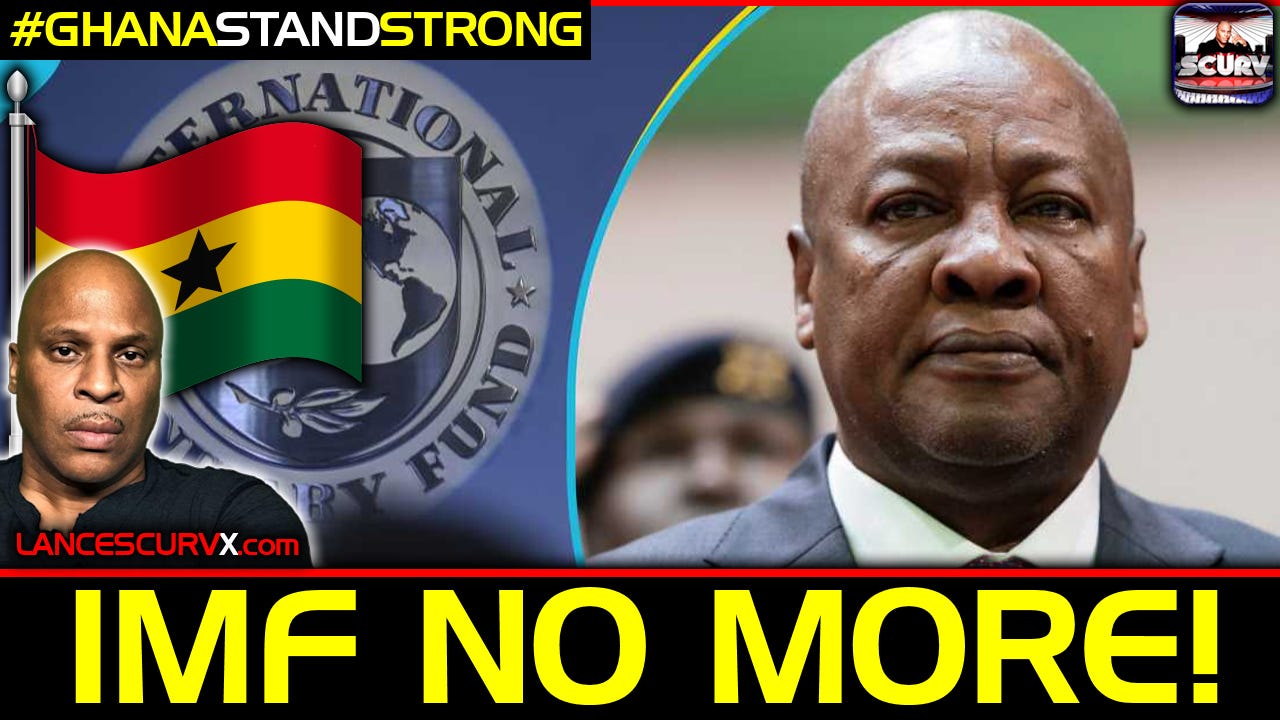
What if one of Africa’s most watched economies just made a quiet but powerful move that could change its future? That is exactly what Ghana’s president has announced. Ghana is officially beginning the process of exiting its International Monetary Fund program. This decision comes after years of economic pain, strict reforms, and national sacrifice.
Only a short time ago, Ghana was fighting to survive. Inflation was rising fast. The currency was losing value. Debt was crushing the economy. Confidence was disappearing, both at home and abroad. In 2023, the government turned to the IMF during one of the darkest economic moments in recent history.
The IMF program was never just paperwork. It was a lifeline, but also a leash. The money came with conditions. Spending cuts. Tax increases. Debt restructuring. Painful reforms that touched everyday life. For many households, the cost of stability was personal and immediate.
Now the government says that phase is over. Inflation has slowed. The currency has stabilized. Government finances are tighter and more controlled. Ghana believes it is ready for the next chapter, one without IMF supervision.
But this decision raises a serious question. Is Ghana’s exit from the IMF a sign of true recovery and confidence? Or is it a risky move that could expose the country to new shocks and renewed instability? The answer to that question will define Ghana’s future.
Countries do not go to the IMF when things are going well. They go when options have run out. By late 2022 and early 2023, Ghana was under intense pressure. Inflation was climbing at alarming speed. Public debt had become unmanageable. Investors were pulling back, and borrowing from global markets became nearly impossible.
For ordinary Ghanaians, the crisis was not an abstract idea. It was felt at the market, at the fuel pump, and at home. Food prices surged. Transportation costs rose. Businesses struggled to stay open. Household budgets were stretched thin, and uncertainty became part of daily life.
With global lenders unwilling to take the risk, the IMF became the last resort. In 2023, Ghana entered an IMF program under the Extended Credit Facility. The goal was clear: stabilize the economy, restore confidence, and prevent total collapse.
But IMF support is never free. The money comes with strict conditions designed to force discipline. Government spending had to be cut. Subsidies were reduced. Taxes were raised. Budget controls became tight and unavoidable. On paper, these were technical adjustments. In real life, they were painful.
Some people lost jobs. Many paid more in taxes. Public spending was restricted. The cost of living increased. This is why IMF programs are deeply unpopular. People feel them directly, not through policy documents, but through everyday survival.
Debt restructuring became the hardest part. Ghana owed money to domestic bondholders, foreign creditors, and international institutions. Renegotiating those debts was explosive. Local investors took losses. Pension funds were affected. Trust inside the country was shaken. Yet without restructuring, IMF funds would not be released.
This is how IMF programs work. They are strict. They are painful. They focus on stability, not comfort. And over time, something began to change.
Inflation slowed. The currency stabilized. Government finances became more controlled. IMF reviews were completed one by one, and funds were released in stages. Progress was slow, but it was real.
By 2024 and moving into 2025, the language shifted. Officials stopped speaking in crisis terms. Survival talk gave way to recovery talk. Then came something even more important. Exit talk.
IMF programs are not meant to last forever. Staying too long signals weakness. Leaving too early risks collapse. Timing matters. When Ghana announced plans to exit, it sent a message that leaders believe the worst is over.
The government points to several reasons. First, economic stability. The currency is no longer in free fall. Inflation remains high, but the rapid acceleration has slowed. That matters because stability allows planning. Businesses can forecast. Households can budget. Governments can manage revenue and spending with more certainty.
Second, fiscal discipline. Under IMF oversight, spending controls became strict. Waste was reduced. Projects were delayed or canceled. Revenue collection improved. These measures were unpopular, but they worked. Leaders argue that discipline is now internal, not enforced from outside.
Third, debt management. While debt has not disappeared, restructuring reduced immediate pressure. Payments became more manageable. Default risk declined. This gave the government breathing room and time to stabilize.
Fourth, economic resilience. Despite restrictions, the economy kept moving. Agriculture continued. Mining remained active. Services adapted. Gold exports stayed strong. Oil production continued. Growth was modest, but it existed. The belief is that if the economy survived under IMF limits, it can perform better without them.
Politics also plays a role. IMF programs are associated with hardship. As elections approach, pressure grows to show strength and independence. Exiting the IMF allows leaders to tell a story of endurance, recovery, and national pride.
But this is where risk enters the picture. The IMF acts like a strict referee. Once the referee leaves, discipline must come from within. History shows that when oversight disappears, spending can rise, debt can grow, and inflation can return.
Exiting the IMF offers real advantages. Policy independence allows the government to set priorities without external approval. Spending can shift toward infrastructure, education, healthcare, and industrial development. Delayed projects can restart.
National image matters too. IMF programs signal trouble to investors. Exiting changes the narrative from crisis to recovery. Confidence attracts investment, partnerships, and long-term planning.
There is also political capital at home. Citizens endured hardship. Leaving the IMF allows leaders to say the sacrifice mattered. This can rebuild trust and ease frustration.
But freedom without discipline is dangerous. The biggest risk is a return to old habits. Election pressure can lead to populist spending. Borrowing can increase. Debt can rise again, especially from expensive commercial lenders.
Market confidence is fragile. Investors react quickly to signs of instability. If confidence fades, currency pressure returns, inflation rises, and the cost of living increases almost immediately.
External shocks remain a threat. Oil prices, gold prices, and global interest rates are outside Ghana’s control. Under IMF programs, emergency support exists. Outside them, Ghana stands alone.
Credibility is also at stake. If Ghana exits the IMF only to return later, the damage will be severe. Borrowing costs will rise. Trust will weaken. Recovery will become harder.
Social pressure adds another layer. Citizens expect relief. Lower taxes. Lower fuel prices. More support. Meeting those expectations without harming stability will be difficult.
This is why Ghana’s IMF exit is being watched across Africa. Many countries face similar choices. The question is not just whether Ghana can leave the IMF, but whether it can stay out.
MY CLOSING PERSPECTIVES…
Ghana’s decision to exit the IMF is not a simple win or loss. It is a moment of transition. A test of discipline, leadership, and long-term vision.
The IMF helped stabilize the economy, but it came at a high cost. Exiting offers freedom, confidence, and opportunity, but also removes a critical safety net.
The real challenge begins now. Discipline must come from within. Spending must remain controlled. Debt must be managed carefully. Confidence must be protected.
If Ghana succeeds, it sets a powerful example for Africa. It shows that recovery is possible and independence can be sustained.
If it fails, the cost will be high. That is why this moment matters. Ghana’s future is no longer supervised. It is self-directed. And the world is watching.

I was supposed to relocate to Ghana last October. But my life planner stopped me just when I was about to ship my car and belongings ing a 40ft container. He said wait til April this year. Im not sure now if im still coming. Im not sure if the economy is stable enough after reading about this IMF stuff you just wrote🥺