


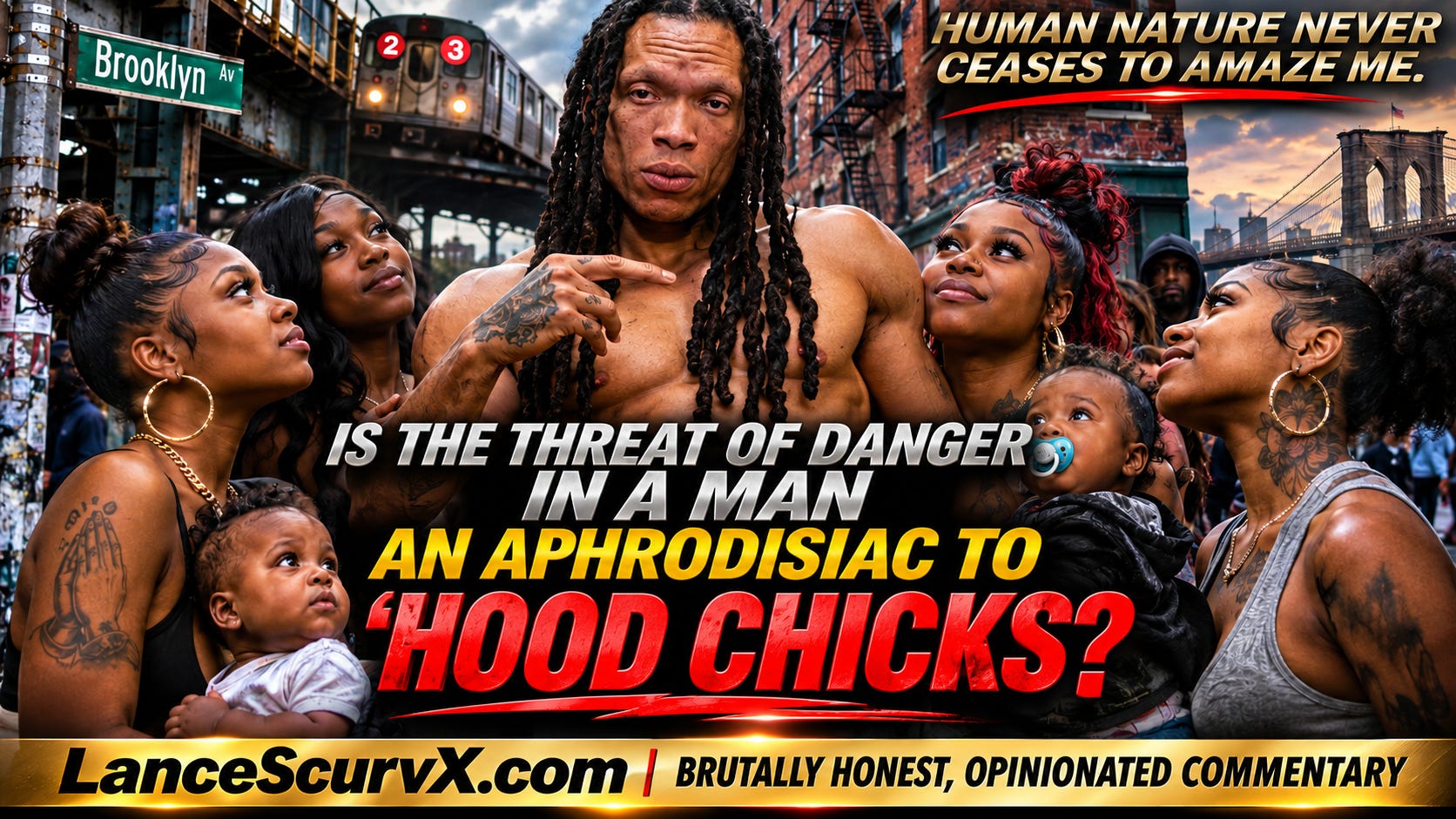
When I look at the direction that this thing called hip-hop has taken over the years, I can’t help but think back to 1989, 1990. I saw this coming. I saw the direction it was heading, and I knew that something wasn’t right about the way this music was being packaged and sold to our people.
From the year 2000, through the 2010s, and now into 2020 and beyond, I’ve watched the transformation take place right before our eyes. And I have to tell you, I believe I was right about what I saw all those years ago. This thing has been working its way into the minds of our people, and the consequences are becoming harder and harder to ignore.
Now, look at this new corporate puppet to flood the scene, Jay Bay Animal. J-A-Y-B-A-Y. Have you seen this dude?
He’s out here rapping about violence, threatening people, carrying on like he’s got a problem with the whole world. And every now and then, you see those red eyes, looking like something demonic is going on behind them. I’m watching this guy, and I’m thinking to myself, man, this is the kind of dude you see walking down the street, acting a fool, always angry at somebody, always ready to go off.
You know the type I’m talking about.
The kind of guy you see coming toward you on the sidewalk, and you’re already thinking about whether you should cross the street. The kind of guy you don’t necessarily want sitting next to you on the subway, because you don’t know what he’s going to do next.
And listen, I know what I’m talking about because I’ve seen these people firsthand.
Back when I was coming home through Brooklyn on the A train, heading toward Queens, LeFrak Boulevard, I knew certain stops where you could almost expect somebody to get on who was going to disturb the peace. You knew what kind of ride you might be in for. A lot of times, these characters would get off around Broadway Junction. But you had to be mindful of what was happening all the way from lower Manhattan, around Jay Street–Borough Hall, because you never knew who was going to get on that train.
And I’m not talking about somebody who simply looked different from everybody else. I’m talking about people who were genuinely unpredictable, people who could make an ordinary ride home feel like you were walking into a situation you didn’t ask to be a part of.
Now, a lot of those real street characters from back in the day? Many of them are dead. Some are locked up. Others are drugged out of their minds. And I’m looking at the way this new generation is being marketed, and I see something that concerns me.
Because I believe this music is being packaged to appeal to a certain kind of anger. The anger of a man who’s been to prison, who’s come home and doesn’t have much to look forward to. A man who feels like the world has turned its back on him, who doesn’t have many options, and who might be walking around with a whole lot of resentment bottled up inside him.
And here comes somebody like Jay Bay, giving that anger a soundtrack.
He’s giving that man something to identify with. He’s giving him a character to look up to, somebody who seems to understand what he’s been through. And the more that anger is celebrated, the more it becomes something that people begin to admire.
But here’s where I want to take this conversation a little deeper.
Because I’ve been watching something else happen in these neighborhoods for a very long time. And it has to do with the way some of our women respond to these kinds of men.
Now, I remember a time when love was a much simpler thing. A man might walk down the street, see a flower growing somewhere, pick it, and bring it home to the woman he loved. He was trying to make her smile. He was trying to show her that he was thinking about her.
That was his way of saying, “I love you.”
But somewhere along the way, something changed. And I’m not talking about every woman, because I know there are plenty of women who want nothing to do with this kind of behavior. I’m talking about a particular mindset that I’ve seen in the streets for decades.
The kind of woman who gets excited when a man comes home with money that he didn’t earn honestly.
Now, let’s talk about that for a minute.
You have a man who goes out and robs a store or a gas station. He comes home with a pocket full of money, and he hands some of it to his woman. And she’s looking at him like he’s just done something wonderful for her.
“Baby, you did all that for me?”
And in her mind, that becomes a sign of love. She starts feeling like this man is willing to risk everything just to make sure she has what she wants.
And for some women, that kind of danger becomes part of the attraction. The fact that he could get hurt, get killed, or go to prison doesn’t necessarily turn them away. Sometimes, it seems to make the whole thing even more exciting.
…a morally upright man could never have that paralyzing effect on her!
Now, I want you to think about that for a moment.
What kind of message are we sending when a man can go out and commit a crime, come home with the proceeds, and have that interpreted as an act of love?
What are we teaching our young men when they begin to believe that the more dangerous they are, the more desirable they become?
And what are we teaching our young women when they begin to associate a man’s willingness to put his freedom on the line with how much he cares about them?
Because here’s the part that really bothers me.
What happens when that man gets caught?
What happens when he gets locked up?
What happens when the woman who was so excited about the money he brought home now has to figure out how she’s going to raise a child without him?
Because that’s where the real tragedy begins.
You have a baby coming into this world, and that baby never gets to know its father the way a child should. Daddy is in prison. Daddy is somewhere else. Daddy is no longer available to be a part of that child’s everyday life.
And the child is left to deal with the consequences of decisions that were made before they even had a chance to take their first breath.
Now, I’m not saying that every woman who gets involved with a dangerous man is looking for trouble. I know life is complicated. I know that people come from broken homes, difficult circumstances, and situations that can make it hard to recognize what a healthy relationship is supposed to look like.
But I also know what I’ve seen with my own eyes.
And when I look at a character like Jay Bay, I can’t help but wonder how many young women are going to look at this man and see something attractive about the very behavior that could eventually destroy their lives.
How many young men are going to look at him and think, “That’s the kind of man I need to be”?
How many people are going to mistake his anger for strength, his aggression for courage, and his willingness to threaten people for some kind of masculine achievement?
And how many children are going to be born into the aftermath of that fantasy?
Because that’s what I believe we’re looking at here. A fantasy being sold to people who may already be struggling with the realities of their lives.
And the people selling that fantasy are making money while somebody else has to live with the consequences.
That’s what bothers me about this whole thing.
You have an entertainment industry that can take the most destructive aspects of street life, put a beat behind them, dress them up in expensive clothing, and make them look like something worth aspiring to.
And meanwhile, the people who actually live in these neighborhoods are still dealing with the poverty, the broken families, the violence, and the absence of fathers.
Now, I want you to understand something. I’m not saying that every rapper is responsible for what happens in the streets. I’m not saying that every woman is attracted to a man who behaves like this. And I’m certainly not saying that every young man who listens to this music is going to become a criminal.
But I am saying that when you repeatedly market a certain engineered image of Black manhood, you have to ask yourself what that toxic image is doing to the people who consume it.
Because I remember when we had different images of what it meant to be a man.
I remember when a man could earn respect by being a good father, a responsible husband, a provider, and somebody who could be counted on when things got difficult.
And I remember when a man didn’t have to walk around looking like he was ready to kill somebody just to convince people that he was somebody worth respecting.
So when I see this guy, Jay Bay, I don’t just see another rapper.
I see a cultural message that I believe we’ve been watching develop for decades.
And I see a lot of young people who may not understand the difference between being entertained by a dangerous character and actually wanting that character to become a part of their lives.
Because there’s a big difference between watching somebody act out a fantasy on a screen and having to deal with that same behavior in your home.
And if we don’t start having some honest conversations about that difference, we’re going to continue watching the same cycle play out over and over again.
A man gets caught up in the streets. A woman gets caught up in the man. A child gets caught up in the consequences. And the people who helped make that lifestyle look attractive move on to the next song, the next video, and the next character.
Meanwhile, the neighborhood is still dealing with the same problems.
And that, to me, is the part of this whole thing that deserves our attention.
Because I want to know when we’re going to start asking ourselves a very simple question.
What kind of love are we teaching our children to look for?
And what kind of men are we teaching our sons to become?
Because if we keep celebrating the kind of behavior that destroys families, we shouldn’t be surprised when we end up with more families being destroyed.
And if you want to understand why I believe this music has taken such a destructive turn, look at the characters being celebrated today. Look at the behavior being marketed. Look at the messages being sent to our young people.
Then look at the neighborhoods where these messages are being consumed.
And tell me whether you think there’s a connection.
Because I believe there is.
And I believe we’ve been watching it happen for a very long time.
