

THE TRUTH THEY DON’T WANT YOU TO SEE
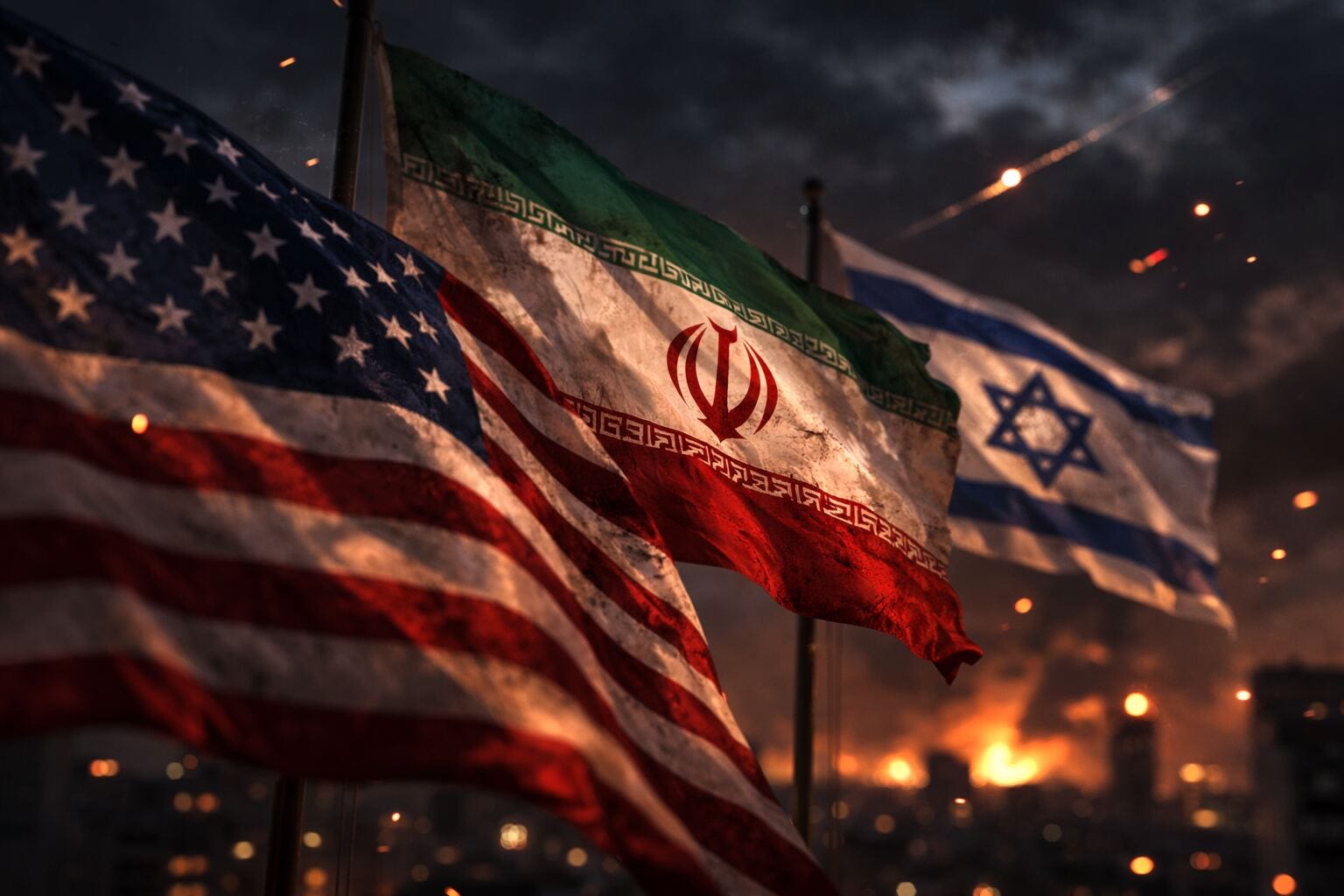
People are dying. Missiles are flying across the sky. Entire regions of the world are being pushed toward a larger war. Yet if you sit down and watch the mainstream news, you would think everything is simple and clear. They always present the same story: one side is evil, the other side is justified, and America is simply trying to keep the peace.
But when you step back and look closely at what is really happening, the story becomes very different.
The truth is that the conflict unfolding in the Middle East is not just about one country or one battle. It is about power. It is about control. And most importantly, it is about whether one nation can continue to dominate the entire planet the way it has for decades.
For years the American public has been told that certain countries are weak, backward, and incapable of standing up for themselves. That narrative has been repeated so many times that many people simply accept it as truth without ever questioning it.
But reality has a way of exposing lies.
And right now, the reality unfolding in front of us is something that the power structure never wanted the public to see.
IRAN IS NOT THE COUNTRY THEY CLAIM IT IS
One of the biggest myths pushed for decades is the idea that Iran is some primitive desert nation that would collapse the moment serious pressure was applied.
That story has been repeated for so long that people stopped questioning it. But the facts paint a completely different picture.
Iran is a massive country with a population of nearly 90 million people. That is larger than many major European nations. It has a long history, a strong national identity, and a population that has endured decades of sanctions and economic warfare.
Despite being under heavy pressure from the outside world for over forty years, the country did not collapse. It did not turn into a failed state. Instead, it built its own industries, developed its own technology, and created one of the most advanced missile programs in the entire Middle East.
Think about that for a moment.
While being economically squeezed and isolated, Iran managed to build weapons systems capable of reaching far beyond its borders. That alone should tell you that this is not some helpless nation waiting to surrender.
This is a country that has prepared for conflict for decades.
THE MISSILE ARSENAL THAT HAS EVERYONE WORRIED
One of the most serious concerns surrounding this conflict is the sheer number of missiles Iran now possesses.
Estimates suggest that Iran has thousands of ballistic missiles and cruise missiles ready for use. Some reports place that number well above three thousand. These are not outdated weapons either. Many of them are modern systems designed to strike targets hundreds of miles away with deadly accuracy.
In recent confrontations, hundreds of missiles have been launched in a short period of time, yet the country still maintained a massive reserve.
That changes the entire equation.
When a nation has the ability to strike military bases, ships, and strategic targets across a wide region, it forces powerful countries to think twice before escalating a conflict.
And now there is another factor entering the equation.
Technology.
THE ROLE OF CHINA AND ADVANCED DEFENSE SYSTEMS
In recent years, Iran has strengthened its relationships with powerful nations that are also tired of living in a world dominated by a single superpower.
China has emerged as one of those partners.
Reports indicate that advanced radar systems and surveillance technology have been supplied that can detect aircraft from hundreds of miles away. These systems are designed to identify even stealth aircraft that were once considered nearly invisible.
If that technology is fully integrated into Iran’s defense network, it means military forces operating in the region can no longer assume they are unseen.
Eyes are now in the sky.
Satellite networks capable of tracking movements in real time are providing information that simply did not exist decades ago. With dozens of satellites monitoring activity, aircraft and ships are far easier to track than they once were.
When intelligence, radar systems, and missile capabilities are combined together, the result is a much stronger defensive position than many analysts expected.
This is why military planners are becoming increasingly cautious.
Because the battlefield is not what it used to be.
A NEW KIND OF GLOBAL POWER STRUGGLE
What we are witnessing is not just another regional conflict. It is part of a much larger shift happening across the world.
For many decades the global system was dominated by one power structure. Decisions about war, trade, and political influence often flowed through a single center of power.
But that era may be changing.
Nations that once stayed quiet are now building alliances, sharing technology, and developing economic partnerships that challenge the old order.
Russia has expanded its military and intelligence capabilities. China has built the largest navy in the world and launched hundreds of satellites into orbit. Other countries are developing stronger ties with each other in ways that reduce their dependence on Western institutions.
This creates something new.
A multipolar world.
In a multipolar system, power is spread across several major players instead of resting in one set of hands. That means decisions become more complicated. Conflicts become more unpredictable. And the ability for one country to control global events becomes far more limited.
For some people, that shift is frightening.
For others, it represents balance.
THE OIL CHOKEPOINT THAT COULD SHAKE THE WORLD
One of the most critical pieces of this entire situation lies in a narrow waterway that many people rarely think about.
The Strait of Hormuz.
This narrow passage is one of the most important oil routes on the entire planet. Every single day, millions of barrels of oil pass through it on tankers heading toward markets across the world.
If that route were ever blocked, the consequences would be enormous.
Energy prices would skyrocket. Global markets would panic. Economies that depend heavily on oil imports would feel the shock almost immediately.
This is why tensions around that region carry such enormous weight.
Because if conflict escalates to the point where that passage becomes unsafe, the ripple effects will spread across the entire global economy.
And when the global economy shakes, everyone feels it.
WHY THIS MOMENT MATTERS
What is unfolding right now may become one of the most important turning points in modern history.
We are seeing countries push back against decades of pressure. We are seeing alliances form that did not exist before. And we are seeing a world slowly shift away from the structure that defined global politics for generations.
Whether that shift leads to stability or chaos is still unknown.
But one thing is clear.
The old narrative that only one power can control the future is beginning to crack.
And once that illusion breaks, the world becomes a very different place.
THE WORLD IS CHANGING FAST
For many people watching from home, these events can feel distant. They can feel like something happening on the other side of the planet that has little connection to everyday life.
But history has shown that global power shifts eventually touch everyone.
Wars affect economies. Economies affect jobs. Jobs affect families.
Everything is connected.
That is why it is so important to look beyond headlines and understand the deeper forces shaping our world.
Because once you understand those forces, you begin to see that the story being told on television is often only a small piece of the truth.
WHAT COMES NEXT
No one can predict exactly how this situation will unfold.
Conflicts can escalate quickly. Alliances can grow stronger. And unexpected events can shift the balance overnight.
But one thing is certain.
The world is entering a new era.
An era where power is no longer concentrated in one place. An era where countries that once stayed silent are now standing up for their own interests.
Whether that leads to cooperation or confrontation remains to be seen.
But the changes are already underway.
And history is being written right in front of our eyes.
My Mother always told me that she would never want to see what I will see in the world in the future. I couldn’t agree with her any more than I do. She was right.
Sincerely,
SCURV
