
THE DIGITAL WORLD IS CHANGING FAST
We are living in a time where technology is moving faster than our ability to think about what is right and what is wrong. Every single day, something new pops up online that makes you stop and say, “Hold on… what is this?” And sometimes, what we see is not just strange—it feels deeply uncomfortable.
I came across something recently that stuck with me. It wasn’t loud or extreme on the surface, but the deeper I looked at it, the more it bothered me. And when something sits on your spirit like that, you have to speak on it.
We can’t just scroll past everything like it’s normal. Because what becomes normal today shapes what we accept tomorrow. And if we don’t check certain things now, we may wake up one day and not even recognize the moral line anymore.
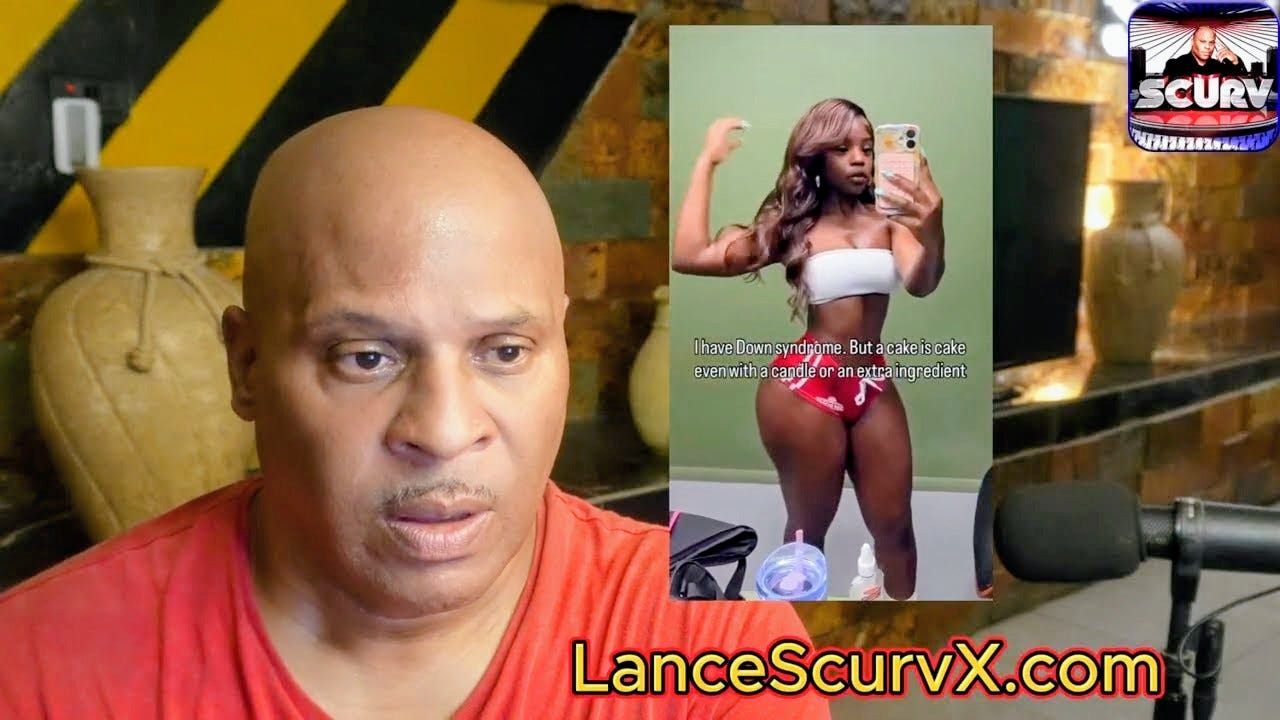
What I saw was an AI-generated image of a young woman dancing in a way meant to grab attention. At first glance, it looked like something many people would not question. But then came the twist—it was being presented as someone with a developmental condition.
That’s where everything changed for me. That’s where the conversation really begins.
UNDERSTANDING WHAT WE ARE REALLY LOOKING AT
Let’s slow this down and get grounded. A developmental condition like this is not a joke, not a trend, and not something to turn into a fantasy tool. It is a real condition that affects real people who live real lives.
People with developmental differences have emotions. They have desires. They form relationships. They can live full and meaningful lives. That part is not up for debate. That part deserves respect.
But here’s where the line gets crossed. When someone creates a digital image, not to show humanity, not to educate, not to uplift—but to sexualize and highlight a condition as the main attraction, something is off.
Now it’s not about the person anymore. It’s not about connection. It’s not about respect. It becomes about the condition itself being turned into a trigger for desire. And that is where things get dangerous.
Because when you remove the humanity and focus only on the label, you are no longer appreciating a person—you are consuming an idea.
THE PROBLEM WITH FETISH THINKING
Let’s talk real. People have preferences. People have things they like. That’s part of being human. But there is a difference between preference and fetish.
A preference is natural attraction. A fetish is when something becomes the main source of desire, often disconnected from the person themselves. It becomes object-focused instead of human-focused.
When someone is drawn to another person because of who they are, that’s one thing. But when someone is drawn to a condition, a limitation, or a perceived vulnerability, that’s a different conversation.
Because now we have to ask: what is really turning you on? Is it the person? Or is it the idea that they are different in a way you can control or dominate?
And when you introduce technology into this, it gets even more complicated. Because now people can create whatever image they want, push whatever narrative they want, and influence minds without accountability.
That’s how normalization begins. Slowly. Quietly. Repeated exposure until nobody questions it anymore.
THE DANGER OF MANIPULATION IN DISGUISE
Here’s the part many don’t want to face. When you highlight a condition that may come with cognitive challenges and turn it into something sexualized, you are stepping into a space where exploitation can exist.
Not always in an obvious way. Not always in a loud way. But in a subtle, creeping way that shapes how people think and behave.
Because if someone starts to associate attraction with vulnerability, with limitation, or with reduced awareness, then what does that say about their intentions?
That’s not just about desire anymore. That’s about power.
And when power gets mixed with desire, especially in a one-sided way, it opens the door to manipulation.
Even if it starts in a digital space, those ideas don’t stay there. They move into real life. They influence how people approach others. They shape decisions, behaviors, and interactions.
So we can’t just brush it off as “it’s just AI” or “it’s just entertainment.” Everything we consume is training our minds in some way.
WHERE DO WE DRAW THE LINE?
We have to start asking harder questions. Not just about what we see, but about what we accept. Because silence is agreement in today’s world.
If something feels off, it usually is. That instinct is there for a reason. And too many people are ignoring it just to go along with what’s trending.
We need to bring humanity back into the center of these conversations. People are not categories. They are not labels. They are not tools for fantasy.
Respect means seeing the whole person, not just the part that stands out or can be used for attention.
And when technology starts blurring those lines, it becomes our responsibility to speak up and say, “No, this is not right.”
CLOSING THOUGHTS
We are standing at a crossroads right now. Technology is giving us power, but it’s also testing our values. What we choose to accept today will define the kind of world we live in tomorrow.
This is not about limiting people’s freedom. It’s about protecting human dignity. There is a difference.
We can support people living full lives without turning their conditions into objects of desire. We can respect differences without exploiting them.
The question is, are we willing to hold that line?
Because once that line disappears, it doesn’t come back easily.
So I’m asking you to think. Really think. Not just react, not just scroll, not just consume. But think about what you’re seeing and what it means.
And most importantly, ask yourself: is this uplifting humanity… or slowly tearing it down?