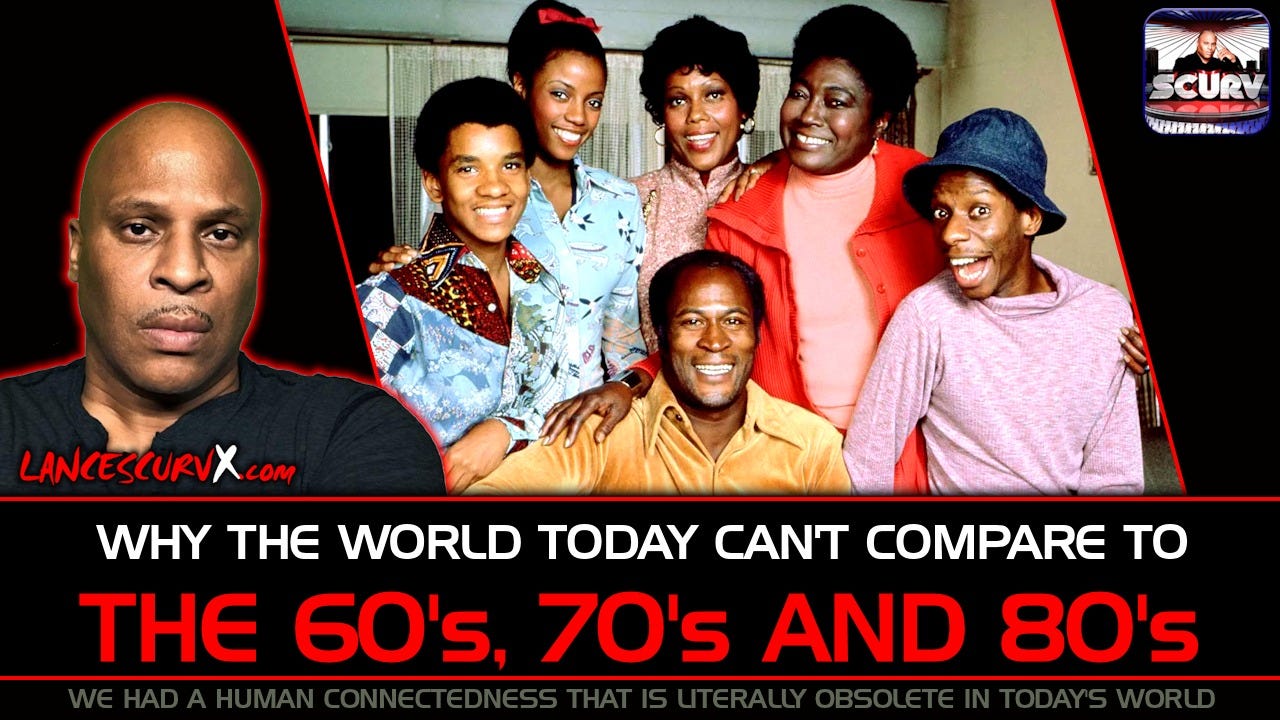

There is a softness to those years that the present cannot recreate, an ease in the air that required no instructions, no passwords, no logins, and no screens. We lived in real time, not digital time, and each hour felt full… so full that years later, the memories still taste like summer wind and transistor radios humming on the windowsill. Even in the busiest cities, life had rhythm, pulse, and unspoken harmony. Kids shouted across streets, neighbors waved from stoops, and block corners were classrooms of laughter and wisdom. You didn’t need an app to connect — you only needed to walk outside.
Music floated through open windows, uncompressed, unfiltered, crafted by human hands that knew passion before software. Back then, a love song was a love song, not a commodity or a viral hook. Lyrics stretched beyond shock value and sexuality. Songs held heart, not algorithm. The needle on the vinyl wasn’t just sound — it was ceremony. You sat, you listened, you felt, and nothing pulled your attention away because nothing had the power to. You weren’t living life while watching yourself live it. You were simply living.
Teenagers found joy in sidewalks, basketball rims nailed to telephone poles, double-dutch ropes slapping pavement, and the smell of dinner drifting out of apartment windows. The neighborhood was not an address — it was identity. You knew every mother, every father, every elder on that block. If you stepped out of line, the news reached home before you did, and discipline came with love, not explanation. Respect didn’t require debate. You didn’t have to defend tradition or justify honor. You simply followed it, because it was the air you breathed.
The city felt alive then — not polished, renovated, or branded — but alive in its imperfection and humanity. The old bodegas with bells on the door, the handwritten signs, the corner store owner who knew your snack before you said a word, the bus driver who recognized your face every morning, the teacher who expected more from you than you thought you had. These weren’t transactions. They were bonds. They were threads of belonging stitched deeply enough to hold you through adulthood.
Love wasn’t instant, nor was it disposable. You called a girl, you waited on her father to answer first, you chose your words, you prepared your voice. Romance took effort, courage, and vulnerability. It wasn’t swiped. It wasn’t scrolled. It grew with intention. And because of that, hearts weren’t as careless or numb. We didn’t have endless access to replace people, so we learned to treasure them instead.
Even the toughest boys on the block had lines they wouldn’t cross. A disagreement might end with fists, but it ended. No digital trail, no viral humiliation, no public cruelty. Life had a way of moving forward without permanent scars from moments that should have faded. Privacy was a gift, and time was generous enough to let us evolve without the world as witness.
There was no constant pressure to perform or to prove yourself. You didn’t need to look successful at 16, wealthy at 20, branded at 25. Dreams unfolded slowly, like records turning under needles, like evenings on the front steps when you had nowhere urgent to be. Our value didn’t come from visibility or curated feeds — it came from presence, character, reliability, laughter that echoed beyond walls because it was shared, not posted.
Families gathered for television shows at the same hour each week, not a personalized algorithm streaming separately in every room. Dinner meant conversation, not charging ports and notification buzz. Silence wasn’t awkward. It was peaceful. A break from life, not a trigger for distraction.
And though danger existed, the world did not feel spiritually unsafe the way it does now. Doors weren’t triple locked. Children rode bikes without tracking devices or panic in their parents’ eyes. We were watched, yes — but by neighbors, by community, by people who cared, not by systems that harvested identity.
It wasn’t perfection that made those decades beautiful. It was humanity — unedited, unmarketed, unmonetized. We didn’t have much, but what we had was ours: our music, our youth, our streets, our language, our connections, our memories, our dignity, our joy. The world was slower, but souls were fuller.
If the present offers efficiency, it has stolen warmth. If it offers access, it has diluted meaning. If it offers convenience, it has stripped away presence.
We remember those years not because we are old, but because those years were alive — and somewhere deep down, we still are too.