

THE SOUNDTRACK OF OUR SURVIVAL
There was a time when our music meant something deeper than entertainment. Music was not just background noise while people danced or drove down the highway. It was medicine. It was therapy. It was resistance. It was prayer. It was the heartbeat of a people trying to survive in a world designed to break them mentally, spiritually, emotionally, and physically. The music carried truth inside of it, and when the songs played, our people felt seen, understood, and uplifted.
Back in the days of the 1950s, 1960s, 1970s, and even parts of the 1980s, the music coming from Black America and Africa had purpose. Every note carried struggle. Every lyric carried hope. Even the love songs had depth and dignity. The artists understood that they were speaking to a wounded people. They understood that music had the power to heal broken minds and inspire broken communities to keep moving forward despite racism, injustice, poverty, police brutality, and discrimination. The music did not run away from the pain. It confronted it directly.
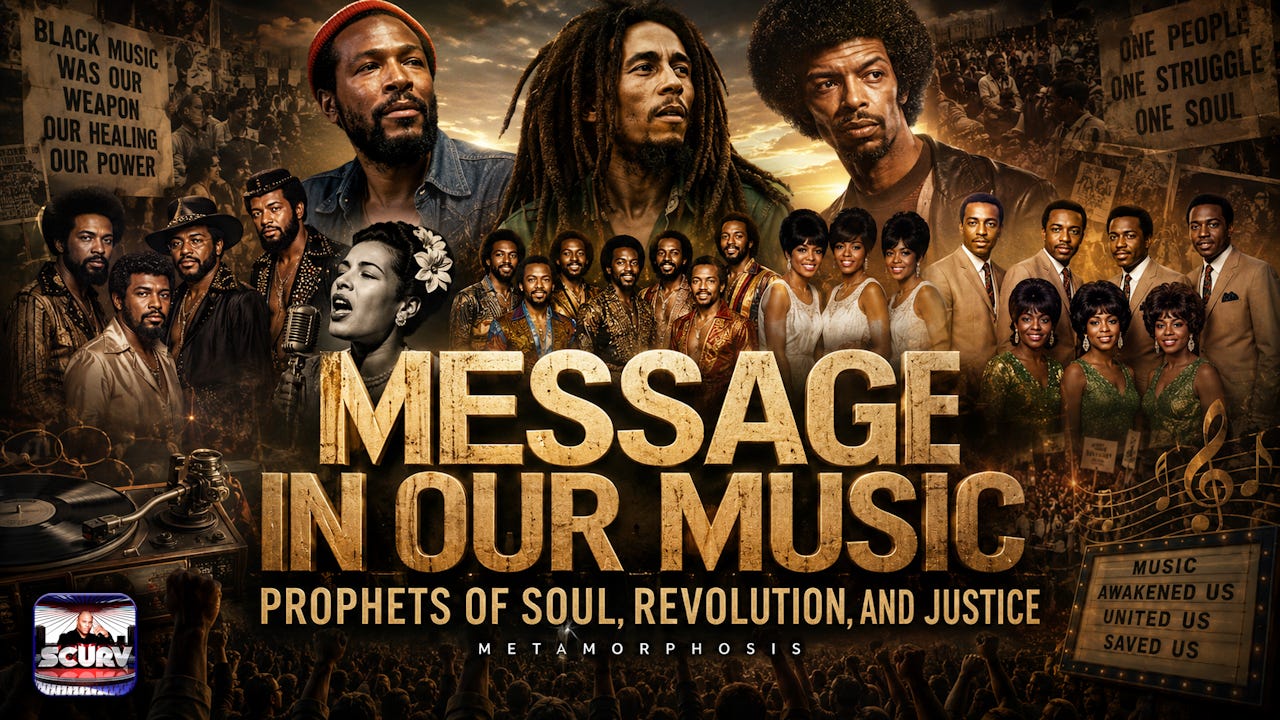
When voices like Bob Marley sang about liberation and mental freedom, it awakened the minds of millions around the world. When Marvin Gaye asked what was going on in society, he was speaking for people who were tired of war, corruption, and oppression. When Gil Scott-Heron spoke truth about politics and social deception, he forced people to think beyond the television screen and beyond the lies being fed to them daily. These artists were more than entertainers. They were messengers. They were prophets with microphones.
Groups like The Isley Brothers, Earth, Wind & Fire, The 5th Dimension, The Impressions, and Martha Reeves & the Vandellas created songs that carried joy, pride, spirituality, and togetherness. Their music reminded us that we were human beings worthy of love and respect. Their sounds were uplifting even when life itself was difficult. The music fed our spirit during times when society tried to starve us emotionally.
And we cannot forget the pain-filled honesty of Billie Holiday, whose voice carried the wounds of a people who had seen horrors most could never imagine. The music from that era was not afraid to expose injustice. It did not hide from truth. It spoke openly about racism, suffering, loneliness, struggle, and the desperate need for humanity. That music became the emotional diary of Black people across the globe.
MUSIC USED TO BUILD US UP
Music once acted as a bridge between generations. Grandparents, parents, and children could sit in the same room and feel connected through the songs. The lyrics carried values. Respect. Family. Loyalty. Community. Faith. Sacrifice. Strength. The music did not teach us to hate ourselves. It taught us to stand taller in a world that constantly tried to push us down. Even when artists spoke about heartbreak, there was still dignity inside of the message.
The music also created unity among Black people globally. Whether you were in America, Jamaica, Africa, the Caribbean, or Europe, there was a common spirit moving through the sound. The music reflected shared struggle and shared hope. It reminded us that we were connected through history, pain, resilience, and survival. We may have spoken with different accents or lived in different countries, but the music reminded us that we were one people fighting similar battles.
Back then, artists understood the responsibility that came with influence. They knew young people were listening closely. They knew communities looked up to them. Many of them took that responsibility seriously. They used their platform to uplift instead of destroy. They challenged the system while still preserving the dignity of the people listening to them. They knew music could either elevate a nation or poison it.
Today, much of the music industry has become disconnected from the needs of the people. The music that dominates mainstream platforms often pushes destruction instead of empowerment. It glorifies materialism over morality. It glorifies violence over wisdom. It glorifies lust over love. It glorifies division over unity. It glorifies ego over community. And while not every modern artist follows this path, the overall direction of popular music has shifted in a dangerous way.
Too much of today’s music trains young minds to chase empty things. Expensive possessions. Toxic lifestyles. Meaningless validation. Reckless behavior. Sexual confusion. Emotional numbness. Self-destruction. Many songs now celebrate the very things that are tearing communities apart. The music no longer feeds the soul. It feeds addiction, insecurity, anger, vanity, and despair.
THE HIJACKING OF THE BLACK MUSICAL SPIRIT
We must ask ourselves an uncomfortable question. Why would an industry constantly promote music that destroys the minds of the very people consuming it? Why are the most destructive messages often rewarded with the biggest promotion, the biggest contracts, and the largest visibility? Why is conscious music pushed to the side while harmful content dominates radio stations, streaming platforms, and social media feeds?
This did not happen by accident.
Music is powerful because sound affects the mind. Repetition affects the subconscious. Lyrics shape beliefs. Rhythms shape moods. Culture shapes behavior. Those who control the music often understand psychological warfare better than the people consuming it. If you can control what a people hear every single day, you can slowly influence how they think, how they behave, how they dress, how they treat each other, and even how they view themselves.
That is why the destruction of meaningful Black music is such a serious issue. When revolutionary music disappears, revolutionary thinking weakens. When uplifting music disappears, hope weakens. When spiritually grounded music disappears, moral discipline weakens. And when truth disappears from the art, confusion enters the culture.
The digital age has made this even more dangerous. Today, people consume music nonstop. Through phones, headphones, social media clips, streaming apps, and short videos, the average person is surrounded by sound every waking moment. But quantity does not equal quality. Just because music is everywhere does not mean it is helping us grow. Much of it is programming people into emotional emptiness without them even realizing it.
In the past, music encouraged us to think deeply. Today, much of it encourages people to stop thinking altogether. The older music challenged listeners to question injustice, respect themselves, value family, and build stronger communities. Now, many songs encourage selfishness, recklessness, and emotional disconnection. We are watching a generation grow up surrounded by noise but starving for wisdom.
THE SPIRITUAL NUTRITION THAT WE LOST
Music once had spiritual nutrition. It nourished the soul the same way healthy food nourishes the body. Songs gave people strength during hard times. Workers sang while enduring exhausting labor. Protesters sang while marching for civil rights. Families sang together in churches and homes. Music was connected to survival and emotional healing.
Today, many people listen to songs for hours yet walk away feeling more anxious, more depressed, more angry, and more disconnected than before. That is because not all music carries healthy energy. Some music drains the spirit instead of feeding it. Some songs normalize dysfunction until dysfunction starts feeling normal.
When you constantly hear messages of hatred, greed, disrespect, violence, and emotional emptiness, those messages eventually shape your reality. This is especially dangerous for young people whose minds are still developing. They begin to believe that toxic behavior is strength. They begin to believe that self-destruction is freedom. They begin to believe that numbness is confidence. And slowly, communities lose their emotional balance.
The music of the past reminded us that we belonged to something bigger than ourselves. It connected us to history, struggle, spirituality, love, and purpose. Even when the beats were upbeat and joyful, there was still substance inside of the message. There was still humanity. There was still dignity.
That is why many people still return to those older songs decades later. The music had soul because it came from lived experience. It came from pain. It came from survival. It came from communities that had to lean on each other in order to endure impossible conditions. The music carried emotional truth that cannot be manufactured in a corporate boardroom.
WE MUST RECLAIM THE SOUND OF OUR PEOPLE
The answer is not to reject all modern music. There are still artists creating meaningful work today. There are still musicians trying to inspire, uplift, and educate. But we must become more intentional about what we allow into our minds and spirits. We cannot blindly consume everything pushed in front of us by industries that profit from confusion and division.
We need music that restores emotional intelligence. We need music that teaches self-respect. We need music that inspires critical thinking. We need music that encourages love, discipline, and unity. We need music that reminds Black people globally that we are more than consumers and entertainers. We are builders. We are creators. We are survivors. We are visionaries.
The younger generation deserves music that strengthens them instead of weakening them. They deserve songs that teach them pride without arrogance, confidence without cruelty, and freedom without self-destruction. They deserve art that expands their minds instead of trapping them inside shallow fantasies.
Our ancestors sang through slavery, segregation, poverty, and oppression because music helped them survive emotionally. The songs carried coded messages, hidden strength, and spiritual endurance. Music became the language of resistance when society tried to silence Black voices. That legacy must never be forgotten.
If we truly want stronger communities, healthier minds, and deeper unity among Black people worldwide, then we must pay attention to the soundtrack shaping our lives. Because music is never just entertainment. Music is energy. Music is influence. Music is memory. Music is culture. Music is power.
And if we do not reclaim the power of meaningful music, someone else will continue using music against us.
CLOSING THOUGHTS…
The music of yesterday was not perfect, but it carried humanity. It carried struggle. It carried love. It carried wisdom. It reminded people that even during oppression, the human spirit could still rise above pain and create beauty.
Today, we stand at a crossroads where technology spreads music faster than ever before, yet meaningful messages are becoming harder to find. We must become more conscious listeners and more protective of our spiritual and emotional health.
The battle for the minds of the people is happening every single day through sound, images, media, and culture. What we repeatedly consume eventually shapes our identity. That is why music matters more than many people realize.
We must stop underestimating the influence of lyrics and rhythms on young minds. We must stop pretending that destructive messages have no consequences. Culture shapes behavior, and music is one of the strongest forces inside culture.
The prophets of soul gave us more than songs. They gave us emotional survival tools during some of the darkest moments in history. Their music still speaks today because truth never dies. And as long as truth lives inside the music, there will always be hope for the people.