

THE MAN WHO CHANGED HOW THE WORLD SENDS A LETTER
Most people walk past a public mailbox without giving it a second thought. It’s simply a piece of metal sitting on a street corner, waiting to receive another letter, another bill, another birthday card, another important document, or another message that connects one human being to another. We see it so often that it becomes invisible. We accept it as something that’s always been there. But almost nobody stops to ask a simple question. Who made this everyday part of life better? Who looked at a problem that millions ignored and came up with a solution that would quietly serve generation after generation?
That’s where the remarkable story of Philip Downing begins. His name doesn’t appear in most history books. His face isn’t recognized by the average person. His accomplishments rarely make the classroom lesson plans that celebrate great inventors. Yet every time people have safely deposited mail into a secure collection box, they’ve benefited from the vision of a man whose contribution helped shape modern communication. His invention didn’t arrive with fireworks or newspaper headlines that made him a household name. Instead, it became something even more powerful. It became part of everyday life.
There’s something both inspiring and heartbreaking about that reality. We often celebrate inventions without remembering the inventors. We admire technology without asking whose imagination made it possible. We enjoy convenience without realizing someone spent countless hours thinking through problems that everyone else accepted as normal. Philip Downing belongs in that conversation because his work reminds us that changing the world doesn’t always require standing on a stage. Sometimes it begins with quietly improving one small part of daily life until millions of people benefit from it.
The story of Philip Downing also tells us something about history itself. History doesn’t always reward those who deserve it. Some names are preserved in giant monuments while others fade into dusty patent records and forgotten archives. That’s especially true when it comes to many Black inventors of the nineteenth century. Their ideas survived. Their inventions survived. Their influence survived. Yet the details of their personal lives often disappeared because society didn’t consider preserving their stories to be important. That’s a loss for all of us because every forgotten life leaves behind unanswered questions.
That’s why this journey isn’t simply about a patent for a mailbox. It’s about restoring attention to a man whose creativity made life easier for millions. It’s about understanding the world he lived in, the obstacles he almost certainly faced, and the importance of recognizing excellence even when history hasn’t given it the spotlight it deserves. Philip Downing’s story deserves more than a paragraph in a textbook. It deserves a closer look because greatness doesn’t become less important simply because fewer people remember the name behind it.
THE WORLD BEFORE PHILIP DOWNING
To understand why Philip Downing’s invention mattered so much, we first have to step into a very different America. This wasn’t a world of smartphones, email, text messages, overnight delivery, or instant communication. If someone wanted to reach a loved one in another city, there was only one dependable option. They wrote a letter.
Letters carried every emotion imaginable. They carried news of births and deaths. They carried business contracts that built companies. They carried military orders during times of war. They carried marriage proposals, family photographs, legal documents, and messages that could completely change someone’s future. The postal system wasn’t simply another government service. It was one of the main arteries that kept the nation connected.
That also meant the process of collecting mail mattered enormously. Before improvements like Downing’s design, depositing letters wasn’t always as simple, secure, or efficient as many people imagine today. Earlier collection boxes often had practical weaknesses. Some designs exposed collected mail to rain and moisture. Others made it more difficult for postal workers to remove letters quickly. Security wasn’t always as reliable as people expected, and every weakness created an opportunity for delays, damaged correspondence, or theft.
Those problems might sound minor until you remember what was inside those envelopes. A delayed letter could postpone a business agreement that affected dozens of workers. A damaged legal document might force someone to begin the process all over again. A stolen letter could mean the loss of money, personal information, or news that a family had waited weeks to receive. Suddenly, what looked like a simple metal box became something much more important. It became a guardian of communication.
Innovation often begins this way. It doesn’t always start with a dramatic invention that no one has ever imagined before. More often, it starts with someone asking a practical question. How can this work better? How can this be safer? How can ordinary people benefit from a smarter design? That’s exactly the kind of thinking that has driven progress throughout history. The people who ask those questions are often the ones who quietly transform society.
THE LITTLE-KNOWN FACTS ABOUT HIS LIFE
Here’s where history becomes both fascinating and frustrating. We know that Philip Downing was an African American inventor living during the nineteenth century. We know that he received United States Patent No. 462,096 on October 27, 1891, for an improved street letter box. Those are documented facts supported by the historical record.
Beyond those verified details, however, the trail grows remarkably thin.
Unlike many famous inventors whose personal letters, diaries, family photographs, and newspaper interviews have survived, very little reliable information remains about Philip Downing’s childhood, his parents, his education, his daily routines, or even the personal experiences that shaped his character. That’s not because his life lacked importance. It’s because the historical record itself is incomplete.
That reality tells its own story. During the late nineteenth century, countless Black Americans made extraordinary contributions in business, science, engineering, agriculture, education, and invention. Yet newspapers often ignored their achievements. Institutions failed to preserve their papers. Local records disappeared over time through neglect, fire, poor storage, or simple indifference. The result is that many remarkable lives became partially hidden from future generations.
Instead of pretending to know what historians cannot verify, we should appreciate what we do know. We know Philip Downing possessed the curiosity to study a common problem. We know he had the discipline to design an improvement. We know he successfully navigated the demanding patent process, which required careful planning, technical understanding, and persistence. We know his idea was considered valuable enough to receive federal patent protection. Those facts alone tell us something important about the man. He wasn’t merely someone with an opinion. He was someone who transformed an observation into a practical solution.
Sometimes history speaks just as loudly through what’s missing as through what’s preserved. The absence of detailed records shouldn’t diminish Philip Downing’s importance. If anything, it challenges us to look even more carefully at the evidence that remains and recognize the lasting influence of a man whose work continues to serve society long after his own lifetime.
THE AMERICA PHILIP DOWNING LIVED IN
To understand the importance of Philip Downing’s achievement, you’ve got to understand the nation that surrounded him. The United States during the second half of the nineteenth century was a country filled with promise, invention, growth, and opportunity on one hand, yet burdened by deep racial injustice on the other. Railroads stretched farther across the land. Factories produced goods at a pace never seen before. Cities grew larger every year as businesses expanded and commerce reached new heights. It looked like a nation racing toward the future, but not everyone was invited to enjoy that future equally.
For Black Americans, freedom on paper didn’t automatically become freedom in everyday life. Even after slavery had officially ended, discrimination touched nearly every part of life. Good jobs were difficult to secure. Educational opportunities were often limited. Financial resources were scarce. Many doors that opened easily for others remained firmly shut for Black citizens. Every step forward required determination, patience, and a willingness to keep moving despite constant obstacles.
That’s what makes Philip Downing’s accomplishment even more remarkable. Inventing something useful wasn’t enough. An inventor had to believe in the value of an idea strongly enough to spend time developing it. He had to study the problem carefully, think through possible solutions, and create a design that actually worked. Then came the challenge of protecting that invention through the patent process. None of those steps were easy, especially during an era when opportunities were far from equal.
It’s also important to remember that inventors during this period didn’t enjoy the luxury of modern technology. There were no computers to create digital drawings. There were no online patent searches to compare existing inventions. There were no video tutorials explaining engineering concepts or software programs that instantly turned ideas into three-dimensional models. Every improvement required careful observation, hand-drawn illustrations, detailed written descriptions, and countless hours of thought.
That’s why we should never underestimate the discipline required to become an inventor in the nineteenth century. Every successful patent represented much more than a clever idea. It represented persistence. It represented careful planning. It represented confidence in one’s own thinking. Philip Downing demonstrated all of those qualities when he successfully secured federal recognition for his improved street letter box.
While many people dream about changing the world, very few take the difficult steps necessary to make those dreams a reality. Philip Downing belonged to that small group of people who looked beyond complaints and focused instead on solutions. He didn’t simply notice a problem. He designed an answer.
WHY HIS STORY ALMOST DISAPPEARED
One of the saddest realities in American history is that many remarkable people quietly slipped into the shadows, not because they failed to accomplish great things, but because society failed to preserve their stories. Philip Downing is one of those individuals.
If you search for information about him today, you’ll quickly notice something unusual. Most biographies are only a few paragraphs long. They repeat the same handful of facts over and over again. They mention his patent, the year it was issued, and perhaps one or two sentences about his invention before the story suddenly ends. That’s frustrating because a life can never be measured by a single patent number.
The truth is that historical records aren’t always complete. Newspapers didn’t consistently document the achievements of Black inventors during that era. Family records were sometimes lost through the passage of time. Personal letters disappeared. Photographs were misplaced. Businesses closed. Entire collections of documents were destroyed by fires, floods, neglect, or simple indifference. History can be fragile when no one makes preserving it a priority.
That’s why so many important figures seem almost invisible today. Their work survived because it became useful to society. Their names, however, often faded because no one invested the same energy into protecting their personal histories. It’s an unfortunate contradiction. The invention remains in plain sight while the inventor slowly disappears from public memory.
Yet there’s another way to look at this. Maybe Philip Downing’s greatest introduction isn’t found in an old newspaper article or a forgotten photograph. Maybe it’s found every single day when millions of people trust a public mailbox with something valuable. Every letter dropped inside represents confidence that it will arrive where it’s supposed to go. Every secure collection reminds us that thoughtful design matters. Every improvement that makes daily life safer and more efficient carries forward the spirit of innovation that inventors like Downing embodied.
There’s something deeply inspiring about that. Recognition is valuable, but lasting usefulness is even greater. Fame can fade within a generation. Headlines are forgotten. Awards collect dust. Public attention shifts from one celebrity to another. But genuine innovation quietly keeps serving people long after the inventor is gone. That’s exactly what happened with Philip Downing. His contribution became woven into everyday life so completely that most people stopped noticing it. Ironically, that’s often the highest compliment an invention can receive. It becomes so dependable that people can’t imagine life without it.
There’s also a lesson here that reaches far beyond one inventor. Too often, society measures success by popularity rather than impact. We celebrate those who dominate headlines while overlooking those whose ideas improve the lives of millions without fanfare. Philip Downing reminds us that true greatness isn’t measured by applause. It’s measured by usefulness. It’s measured by endurance. It’s measured by whether your work continues making life better decades after you’ve left this world.
As I reflect on Philip Downing’s legacy, I can’t help but think about the countless gifted people whose names we’ve never learned. How many inventors solved problems that history barely acknowledged? How many visionaries watched others benefit from their ideas while receiving little recognition themselves? Those questions don’t diminish Downing’s accomplishments. Instead, they magnify them. They remind us that every recovered story helps restore a missing piece of our shared history.
That’s why remembering Philip Downing isn’t merely an exercise in honoring the past. It’s an investment in the future. When young people discover that an ordinary citizen looked at an everyday problem and created a solution that lasted for generations, they’re reminded that greatness doesn’t belong only to the famous. It belongs to anyone willing to observe carefully, think deeply, and refuse to accept that yesterday’s way of doing things is the only way forward.
By preserving Philip Downing’s story, we’re doing more than remembering one inventor. We’re defending the principle that every meaningful contribution deserves recognition, no matter who made it. We’re reminding ourselves that progress often begins quietly, with one thoughtful mind deciding that the world can work just a little bit better than it does today.
The next chapter of this story takes us to the invention itself. We’ll examine the weaknesses of the early mail collection system, explore exactly what Philip Downing changed, and discover why a simple improvement to a street letter box became one of those rare innovations whose influence reached far beyond the object itself. Sometimes history turns not on grand speeches or famous battles, but on the quiet brilliance of someone who simply refused to leave a problem unsolved.
THE PROBLEM THAT NEEDED TO BE SOLVED
It’s amazing how often the greatest inventions come from problems that most people simply accepted as normal. People tend to adjust to inconvenience. They complain about it for a while, shrug their shoulders, and then continue living with it as though nothing can ever change. That’s human nature. We become so accustomed to the flaws around us that we stop seeing them. Fortunately, inventors see the world differently. They notice what everyone else overlooks, and instead of accepting the problem, they begin asking questions.
That’s exactly the kind of thinking that Philip Downing brought to the American postal system. He understood that communication wasn’t just about writing a letter. It was about protecting that letter from the moment it left the sender’s hand until it reached the person it was meant for. Every weak link in that journey created the possibility of delay, damage, confusion, or loss. If one part of the system could be improved, then the entire system became stronger.
Today, we live in an age of instant communication. We can send photographs across the world in seconds. We can hold video conversations with people living on another continent. We can sign documents electronically without ever touching a sheet of paper. It’s so convenient that younger generations sometimes struggle to imagine a world where none of those options existed.
But in the nineteenth century, the written letter was the heartbeat of communication. Families depended on it. Businesses depended on it. Banks depended on it. Lawyers depended on it. Government offices depended on it. Military personnel depended on it. Newspapers depended on it. Merchants depended on it. Entire communities depended on the reliability of the mail.
When someone dropped a letter into a collection box, they weren’t simply mailing an envelope. They were placing their trust in an entire system. They trusted that strangers would protect their private correspondence. They trusted that weather wouldn’t destroy important documents. They trusted that theft wouldn’t interrupt the journey. They trusted that the letter would arrive where it was supposed to go. That trust was priceless, and every improvement to the system strengthened that confidence.
Imagine a merchant waiting for payment from another city. Imagine parents anxiously waiting to hear whether their son arrived safely after moving hundreds of miles away. Imagine someone receiving news about an inheritance, a job opportunity, or a life-changing business agreement. Every one of those moments depended on a postal system that worked efficiently and securely. That’s why something as ordinary as a street mailbox was actually an extraordinary piece of public infrastructure.
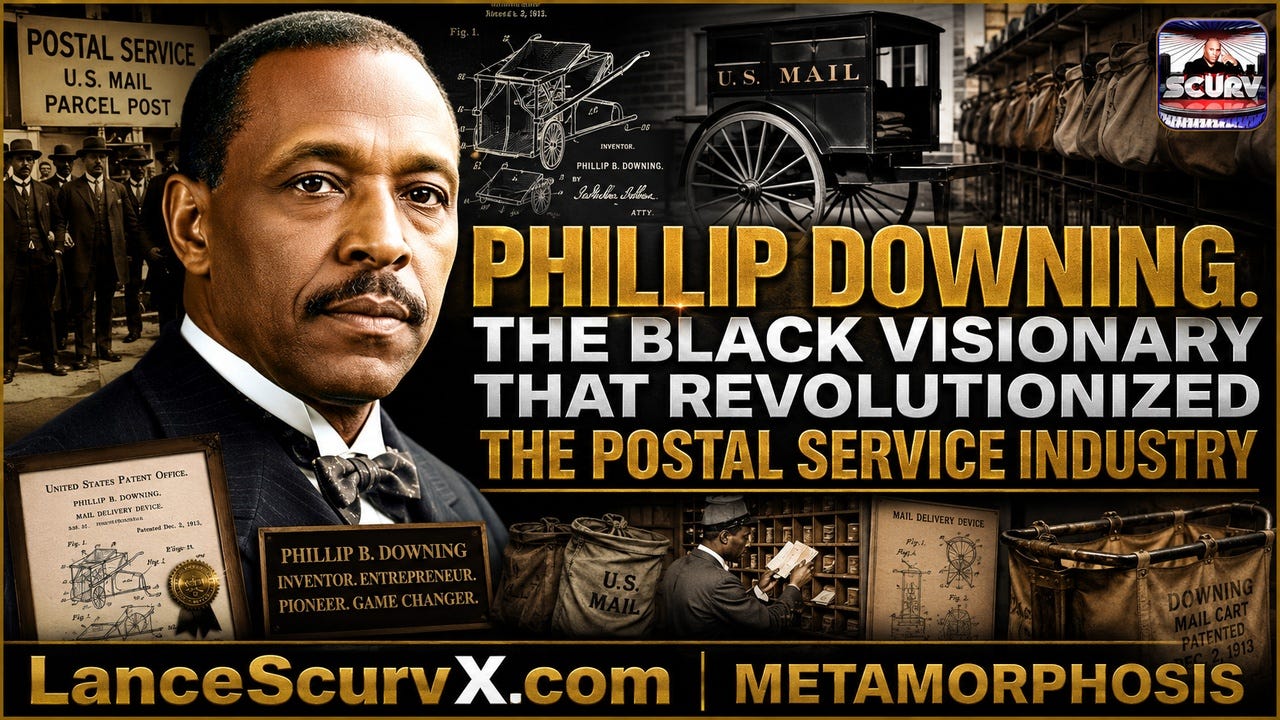
HOW THE EARLY MAIL COLLECTION SYSTEM WORKED
Many people assume the blue collection boxes we see today have always existed in roughly the same form. That’s far from the truth. The postal system evolved over many decades, with countless improvements made along the way. Before standardized designs became common, mail collection could vary from one location to another.
Some collection boxes were mounted on buildings. Others stood along busy streets. Their construction depended on the technology and manufacturing methods available at the time. While they served their purpose, they weren’t perfect. Like most early public equipment, weaknesses became apparent through everyday use.
One concern involved protecting collected mail from the elements. Rain, moisture, dust, and debris could find their way into poorly designed collection boxes. Paper may seem sturdy when it’s dry, but moisture can quickly damage handwriting, blur ink, weaken envelopes, and destroy important documents. A single storm had the potential to create enormous inconvenience if valuable correspondence became unreadable.
Security presented another challenge. Public collection boxes naturally attracted attention because they contained valuable items. Some letters included money. Others contained legal documents, contracts, financial records, or personal information. The more secure a mailbox became, the greater the public’s confidence in using it.
Postal workers also needed a practical way to collect mail efficiently. Every unnecessary step wasted valuable time. Every awkward movement slowed the collection process. Every design flaw multiplied itself hundreds or even thousands of times as postal employees repeated the same task day after day. Small improvements in design could save enormous amounts of labor over the course of a year.
That’s one of the fascinating truths about engineering. Sometimes an invention doesn’t completely replace an existing object. Instead, it improves that object so effectively that people wonder why it wasn’t designed that way from the beginning. Those improvements rarely attract dramatic headlines, yet they often produce tremendous long-term benefits.
Philip Downing recognized that reality. Rather than trying to reinvent the entire postal system, he focused on making one important part of it better. That’s the hallmark of practical genius. He concentrated on solving a real problem instead of chasing attention.
THE GENIUS OF THE 1891 PATENT
On October 27, 1891, Philip Downing received United States Patent No. 462,096 for what was officially described as an improvement in a street letter box. At first glance, those words may sound modest. They don’t suggest a world-changing invention. They don’t hint at dramatic technological breakthroughs. Yet that’s often how history works. Revolutionary ideas sometimes arrive wrapped in ordinary language.
Downing’s design focused on improving both security and efficiency. His patented street letter box included features intended to better protect the contents while making mail collection easier for postal workers. His improvements addressed practical concerns that affected thousands of people every single day.
What’s remarkable isn’t simply that he designed a better mailbox. It’s that he understood the relationship between small improvements and massive public impact. One improved collection box served hundreds of people. Hundreds of improved collection boxes served entire cities. Thousands of improved collection boxes strengthened communication across a growing nation.
That’s how meaningful innovation spreads. One thoughtful improvement becomes many improvements. One successful design becomes a standard. One inventor quietly influences millions of lives without ever meeting the people who benefit from his work.
Unfortunately, many people misunderstand what inventors actually do. They imagine inventors constantly creating objects that have never existed before. In reality, many of history’s greatest inventors earned their place by improving existing technology. They looked carefully at everyday tools, identified weaknesses, and designed practical solutions. That’s exactly what Philip Downing accomplished.
His genius wasn’t found in creating complexity. It was found in simplifying a public service while making it safer, more dependable, and more efficient. That’s a lesson that remains just as valuable today as it was in 1891. The greatest innovations aren’t always the loudest. They’re often the ones that quietly become part of everyday life.
As I study Philip Downing’s achievement, I’m reminded that progress doesn’t always arrive with fanfare. Sometimes it arrives disguised as a better hinge, a stronger lock, a safer container, or a more efficient design. Those improvements may appear ordinary, but when multiplied across millions of people and countless years, they become extraordinary. That’s exactly what happened with Philip Downing’s contribution to the postal service. He didn’t simply improve a mailbox. He strengthened one of the most important systems connecting people across America.
HOW HIS INVENTION CHANGED DAILY LIFE
The true value of an invention isn’t measured by how exciting it looks. It’s measured by how many lives it quietly improves. That’s exactly what makes Philip Downing’s contribution so remarkable. His improved street letter box wasn’t created to impress people with flashy technology. It was designed to solve real problems that affected ordinary men and women every single day.
Think about the mother waiting for news from her son who had moved hundreds of miles away in search of work. Every day that passed without a letter brought another day of uncertainty. A reliable postal system meant peace of mind. It meant knowing that important messages had a better chance of reaching the people who needed them.
Consider the small business owner trying to expand beyond the local community. Orders, invoices, contracts, and payments all traveled through the mail. Every improvement that protected those documents helped businesses operate more smoothly. It wasn’t simply about envelopes and stamps. It was about commerce, opportunity, and economic growth.
Now picture the student applying to a distant college or trade school. Imagine someone mailing legal papers that could determine ownership of property or settle an estate. Think about soldiers writing home to reassure anxious families. Every one of those letters represented hope. Every one carried information that mattered deeply to someone’s life.
That’s why the mailbox itself became much more than a metal container. It became a place where trust was deposited alongside every letter. People expected that once their correspondence disappeared through the slot, it would remain protected until postal workers collected it. Downing understood that trust wasn’t something to take lightly.
His improvements strengthened that confidence. They reflected careful thought about both security and practicality. The average person probably never stopped to admire the engineering behind a collection box, but they certainly appreciated a postal system they could depend upon. Sometimes the greatest compliment an inventor receives is that people stop noticing the invention because it simply works.
THE RIPPLE EFFECT ACROSS A GROWING NATION
One of history’s greatest lessons is that small improvements often create enormous consequences over time. Imagine dropping a pebble into a quiet pond. The splash lasts only a moment, but the ripples continue moving outward long after the stone disappears beneath the surface. Innovation works in much the same way.
Philip Downing’s improvement to the street letter box represented one of those ripples.
As American cities continued growing during the late nineteenth and early twentieth centuries, millions of additional letters entered the postal system. Businesses expanded into new markets. Families moved farther apart in search of opportunity. Railroads connected regions that had once seemed impossibly distant. The demand for dependable communication increased year after year.
A stronger mail collection system helped support that growth. Better protection for collected correspondence meant greater confidence in using the postal service. Greater confidence encouraged more people to rely on the mail for personal, financial, and commercial communication. Every improvement contributed to a system that became increasingly dependable as the nation expanded.
What’s fascinating is that many of history’s most influential inventions operate quietly in the background. People notice airplanes because they’re dramatic. They notice skyscrapers because they’re enormous. They notice locomotives because they’re powerful.
But they rarely stop to appreciate the everyday systems that make modern civilization function smoothly.
Street lighting.
Water systems.
Road signs.
Traffic signals.
Public libraries.
Mailboxes.
None of these usually become the subject of exciting conversation, yet imagine trying to live comfortably without them. Civilization depends just as much on reliable everyday infrastructure as it does on spectacular technological breakthroughs.
Philip Downing contributed to that hidden foundation. His work reminds us that society advances not only through grand inventions but also through thoughtful improvements to ordinary things.
WHY HIS IMPACT STILL MATTERS TODAY
Some people might wonder why a nineteenth-century mailbox deserves attention in the age of smartphones, email, and artificial intelligence. It’s a fair question, but it misses the deeper lesson.
Technology changes.
Human needs do not.
People still need secure communication.
They still need confidence that important information will reach its destination.
They still depend upon systems they rarely think about until something goes wrong.
That’s why Philip Downing’s story continues to matter.
His invention teaches us that trust is built into every successful system. Whether we’re talking about physical mail, digital banking, cloud storage, encrypted messaging, or online commerce, the same principle applies. People must believe their information is protected.
Downing understood that principle long before the digital age.
He recognized that protecting communication wasn’t merely a mechanical problem. It was a human responsibility.
That’s a remarkably modern way of thinking.
The technologies have changed beyond anything he could have imagined, yet the challenge remains exactly the same. Build systems people can trust.
When trust grows stronger, society grows stronger.
When trust weakens, everything else begins to suffer.
That’s why inventions like Downing’s deserve far more appreciation than they usually receive. They remind us that progress isn’t simply about speed. It’s about reliability.
THE LESSON FOR EVERY CREATOR
Perhaps the greatest gift Philip Downing leaves behind isn’t the patent itself. It’s the mindset that produced it.
He looked where everyone else looked.
He saw what everyone else saw.
Yet he noticed something everyone else accepted.
Then he decided that “good enough” wasn’t good enough.
That’s the difference between consumers and creators.
Consumers adapt to the world they’re given.
Creators imagine the world as it could become.
Every entrepreneur should understand that lesson.
Every inventor should understand that lesson.
Every artist, engineer, teacher, writer, business owner, and dreamer should understand that lesson.
You don’t have to invent something that has never existed before.
Sometimes all it takes is improving something millions already use.
History repeatedly rewards people who solve ordinary problems in extraordinary ways.
Philip Downing didn’t need to reinvent communication.
He simply made one important part of it better.
More than a century later, we’re still talking about his work.
That’s the power of practical genius.
It’s quiet.
It’s humble.
It doesn’t always receive immediate applause.
But when it truly improves people’s lives, time itself becomes the greatest witness to its value.
Long after headlines have faded, after speeches have been forgotten, and after generations have come and gone, useful ideas continue serving humanity. Philip Downing may not have become one of the most famous inventors in American history, but he became something arguably more important. He became one of those rare visionaries whose work blended so naturally into everyday life that countless people benefited from it without ever realizing whose imagination helped make it possible.
That’s a legacy worth remembering, worth teaching, and worth celebrating—not because it belongs to the past, but because it continues reminding us that the next world-changing idea may begin with someone quietly asking a simple question: “How can this be done better?”