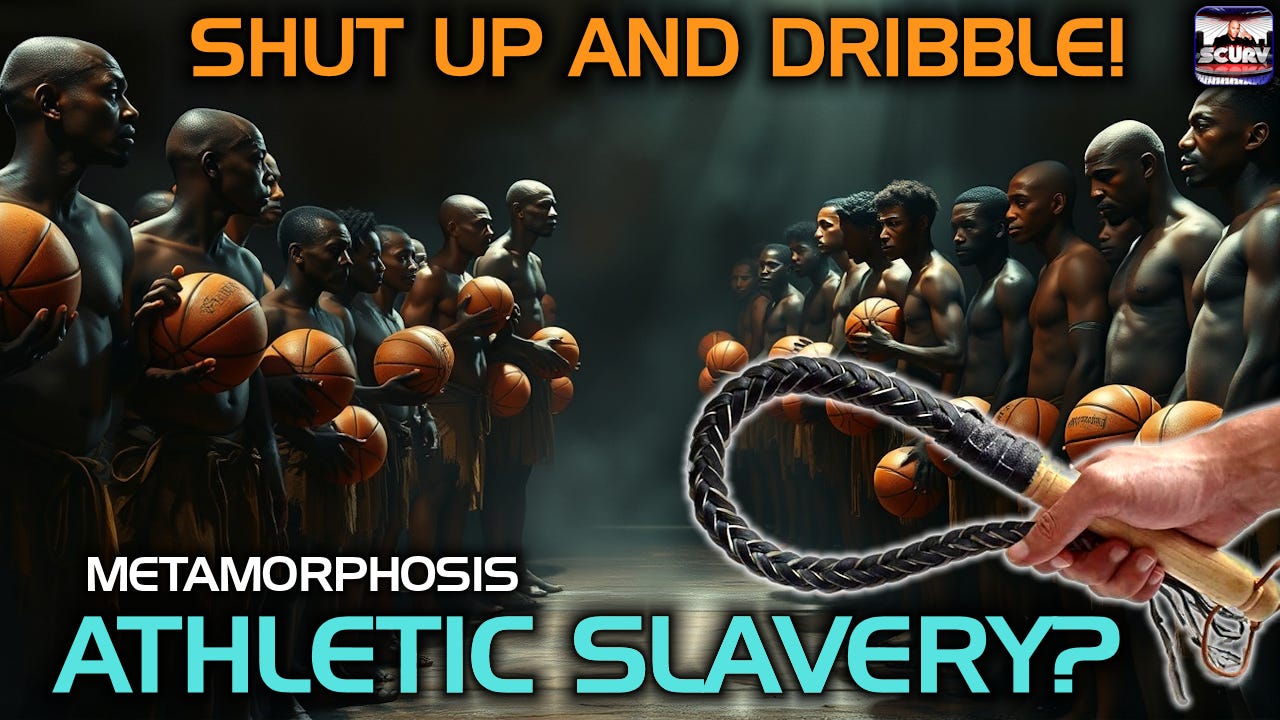

There was a time in America when Black bodies were openly inspected, priced, and sold in public spaces. Strength was measured. Size was praised. Aggression was valued. The strongest were separated from the weak and labeled “valuable.” This was the slave auction. It was brutal, direct, and honest about what it was doing. Today, America claims that era is over, but the system simply changed its clothes.
Modern athletics has become one of the most polished and celebrated industries in the world. Stadiums are massive. Contracts are flashy. Cameras follow every move. But behind the lights, the structure feels very familiar. Young Black men are still evaluated by their bodies. They are still drafted, owned, restricted, and controlled by contracts they did not write.
Many people believe money equals freedom. They assume that because athletes are paid well, they are free men. But freedom is not just income. Freedom is speech. Freedom is choice. Freedom is control over your own body, labor, and future. When those things are limited, money becomes a leash, not liberation.
The phrase “Shut up and dribble” did not come from nowhere. It reflects a deep belief that athletes exist to entertain, not to think, speak, or challenge power. As long as they perform, they are celebrated. The moment they step outside the role assigned to them, punishment follows swiftly and publicly.
This article is not about denying success or ignoring progress. It is about exposing uncomfortable parallels. From the slave auction to the draft combine, from plantation control to contract clauses, the proximity is closer than most people want to admit.
During slavery, the auction block was a marketplace of bodies. Enslaved Africans were stripped down, inspected, tested, and judged. Buyers looked for durability, obedience, strength, and aggression. These traits meant profit. Weakness meant loss. Humanity was irrelevant. Performance was everything.
Fast forward to modern sports, and the language has changed, but the process feels familiar. Young athletes are tested at combines. Their speed, strength, vertical jump, endurance, and injury history are documented. Their value is ranked. Their future is decided by men in suits who will never take a hit, throw a punch, or risk their bodies.
College sports act as a holding pen. Athletes generate billions of dollars while being told they are “students first.” Many live under strict rules that control their speech, movement, and behavior. They are warned not to say the wrong thing, not to offend sponsors, not to disrupt the image. Education becomes secondary to performance.
Recruitment often begins early. Promises are whispered. Gifts move quietly. Cars, money, and favors flow under the table. Families are courted. Loyalty is demanded before adulthood even begins. Once signed, the athlete is no longer a prospect. He is an asset.
Professional contracts look glamorous, but the fine print tells another story. Performance clauses hang like a noose. Injury can erase value overnight. A single bad season can end a career. Guaranteed money is rare. Control is constant. The organization owns the schedule, the image, the body, and often the voice.
Athletes are told what they can say publicly. Political opinions are dangerous. Criticism of power is risky. Speaking against protected groups or corporate interests can mean lost sponsorships, canceled contracts, and public smearing. Free speech exists in theory, but consequences enforce silence.
This is where the comparison becomes uncomfortable. Slavery was violent, physical, and openly cruel. Modern sports is psychological, contractual, and polished. But the pressure remains. Obedience is rewarded. Resistance is punished. Entertainment is demanded regardless of pain.
The Black athlete becomes a court jester. He dances, jumps, fights, and performs while hiding injuries, trauma, and exhaustion. Fans cheer the spectacle but rarely ask what it costs. Pain becomes part of the show. Sacrifice is expected. Gratitude is demanded.
Ownership may not be literal, but control is real. Trades happen without consent. Cities change overnight. Families are uprooted. Loyalty flows one way. When usefulness ends, so does protection. The system moves on without remorse.
Many athletes retire broken, physically and mentally. The money fades. The applause stops. Few are prepared for life after performance. The same system that praised them offers little support once the body can no longer deliver.
This is not accidental. Systems built on extraction do not prioritize long-term well-being. They prioritize output. Just as plantations exhausted labor, modern leagues exhaust talent. The cycle continues because it is profitable.
Fans play a role, even unknowingly. Consumption without awareness feeds the machine. Jerseys sell. Tickets sell. Broadcasts thrive. The court jester must keep performing because the crowd demands it.
The illusion of freedom is powerful. Wealth hides chains well. But chains do not disappear just because they shine.
OUR CLOSING PERSPECTIVES…
Understanding this comparison is not about guilt or shame. It is about clarity. When history is ignored, patterns repeat with better branding. The auction block became the draft stage. The overseer became the manager. The plantation became the franchise.
Real freedom begins with awareness. Athletes must understand the systems they enter. Fans must question the entertainment they consume. Conversations must move beyond paychecks and into power.
The Black court jester is not weak or foolish. He is skilled, disciplined, and talented. But talent without control is still exploitation. Celebration without protection is still harm.
America loves Black performance but struggles with Black autonomy. That truth has not changed. It has only evolved.
Until athletes are seen as full human beings instead of assets, the echoes of the auction block will remain loud, no matter how modern the stage looks.