

We are living in a time where something feels deeply off in the human spirit. It’s not just politics, not just economics, and not just technology. It’s something deeper. Something personal. Something emotional. Something that touches the way we see each other, talk to each other, and even feel about each other.
There was a time when people greeted each other in the morning without thinking twice. A simple nod. A simple “good morning.” A simple smile that said, “I see you, I acknowledge you, you exist.” That world feels like it’s fading fast. Now, silence has replaced warmth.
We are surrounded by people but somehow more alone than ever. Even in crowded spaces, even in busy cities, even in places designed for social interaction, there is a strange emotional distance that nobody can ignore anymore.
This is not just about technology. It’s about the human condition changing right in front of us. And we have to be honest about what we are becoming before we lose what makes us human.
We are no longer just disconnected from each other. We are learning how to function without each other. And that is where the danger lies.
THE DIGITAL WALL BETWEEN US
Social media was supposed to bring us together. But in many ways, it built invisible walls between us. We scroll past each other’s lives instead of living with each other in real time. We react with emojis instead of emotions. We type instead of talk. We observe instead of engage.
What used to be a conversation is now a performance. What used to be community is now content. People don’t connect deeply anymore because everything is filtered through a screen, a feed, or an algorithm.
Even in person, people are mentally elsewhere. You can sit across from someone and still not reach them. Their attention is locked into a device, a notification, or a digital world that feels more important than the real one right in front of them.
This creates a silent distance that grows over time. It is not loud. It is not obvious. But it is powerful.
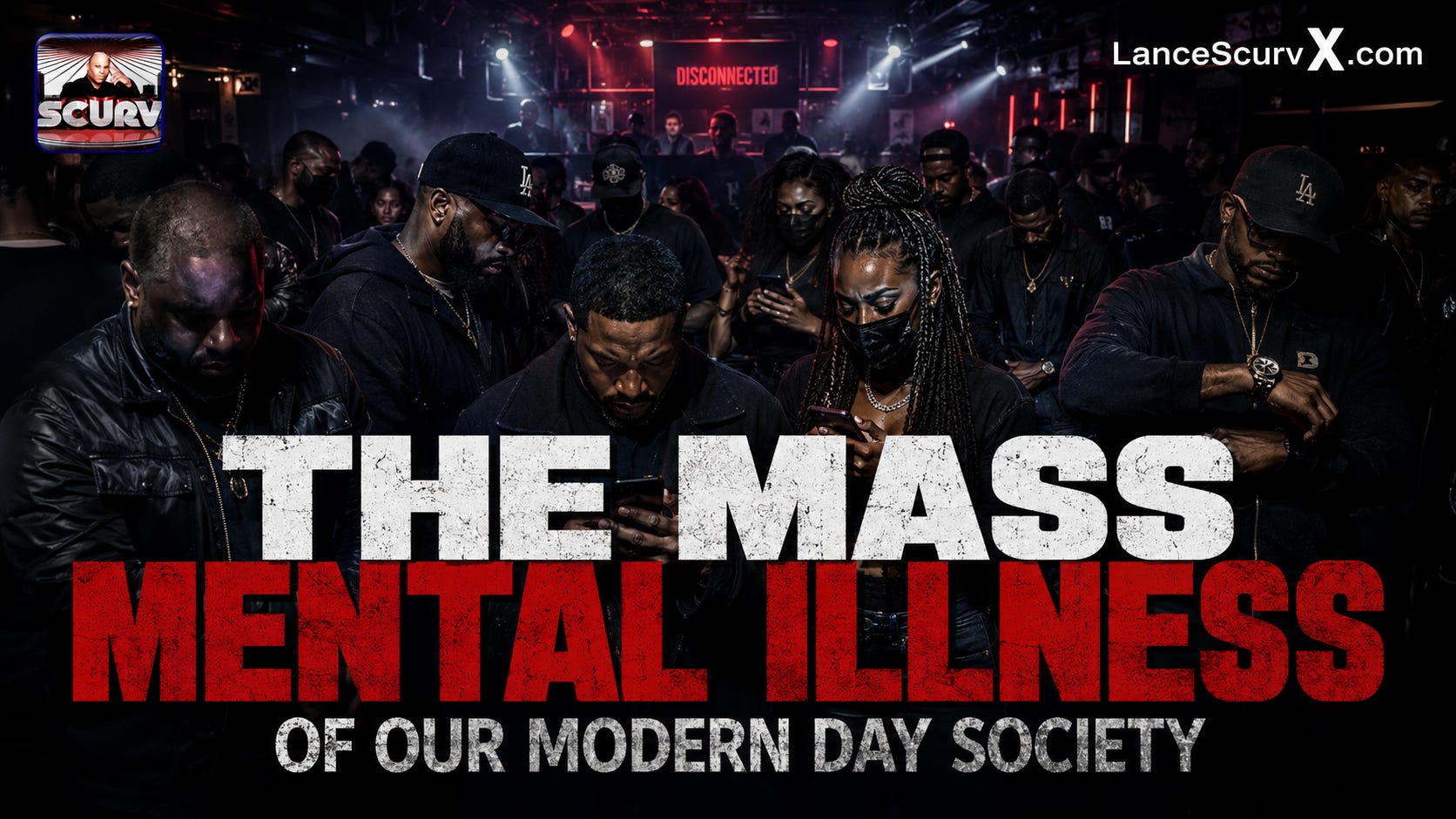
THE SHIFT IN HUMAN BEHAVIOR AFTER SOCIAL DISTANCING
The pandemic years added another layer to this transformation. Social distancing, masks, and fear of contact changed how people saw each other. For a long time, being close to someone meant danger instead of comfort.
That shift did not fully disappear. Even after the restrictions ended, something remained in the human psyche. People became more cautious, more guarded, and more emotionally distant.
We learned how to avoid each other in the name of safety. But now, in many ways, we are still avoiding each other out of habit.
The result is a society where closeness feels unfamiliar again. Where touch, conversation, and eye contact don’t come as naturally as they once did.
THE DISCONNECTION IN COMMUNITY AND FAMILY LIFE
In many communities, especially within the Black community, where culture has always been rooted in shared experience, storytelling, music, and togetherness, we are now seeing a painful shift.
Children are growing up in a world where conversation is shortened into text slang. Where emotional expression is replaced with quick messages. Where patience is replaced with instant reactions. Many are losing the natural rhythm of face-to-face communication.
Manners, listening skills, and real dialogue are weakening. Not because people are less intelligent, but because they are less practiced in real human engagement.
Families are still present, but even within families, everyone can be in the same room and still be mentally isolated. One person on a phone, another on a tablet, another in a separate digital world entirely.
We are together, but not really together.
THE LOSS OF HUMAN TOUCH AND EMOTIONAL DEPTH
There is something sacred about human interaction that cannot be replaced by technology. A real laugh. A real hug. A real conversation where you feel heard and seen. These things build emotional strength.
But when human touch is reduced, something inside begins to weaken. People become more emotionally guarded. More impatient. Less understanding of each other’s feelings.
Relationships also begin to suffer. Romance becomes shallow. Connection becomes rushed. Expectations become low. And instead of building something meaningful, many settle for surface-level interaction.
We are losing the art of connection, and we are feeling the consequences in our mental and emotional well-being.
A GENERATION RAISED IN DIGITAL DISTRACTION
Children today are growing up in an environment where screens are often their first teachers, their first friends, and their first escape. Outdoor play, community interaction, and face-to-face bonding are no longer the default experience.
This affects development in ways we are still beginning to understand. Attention spans shorten. Emotional expression becomes limited. Social confidence weakens. And the ability to navigate real-world interactions becomes more difficult.
We are not just raising a digital generation. We are raising a disconnected generation.
MY CLOSING THOUGHTS…
We are at a turning point in human behavior. What we are experiencing is not just a phase. It is a transformation. And the question is whether we are aware enough to correct course before the damage becomes permanent.
We must begin to value real conversation again. We must begin to rebuild community again. We must begin to look up from our devices and see the people around us again.
Because if we don’t, we risk building a society where everyone is connected digitally but isolated emotionally.
And that is not living. That is existing.
We cannot continue down this road and expect our mental health, our families, and our communities to remain strong.
Something has to change. And it begins with us choosing to reconnect in real time, in real life, with real people.