


WHEN THE FACE CHANGES, BUT THE BUSINESS STAYS THE SAME
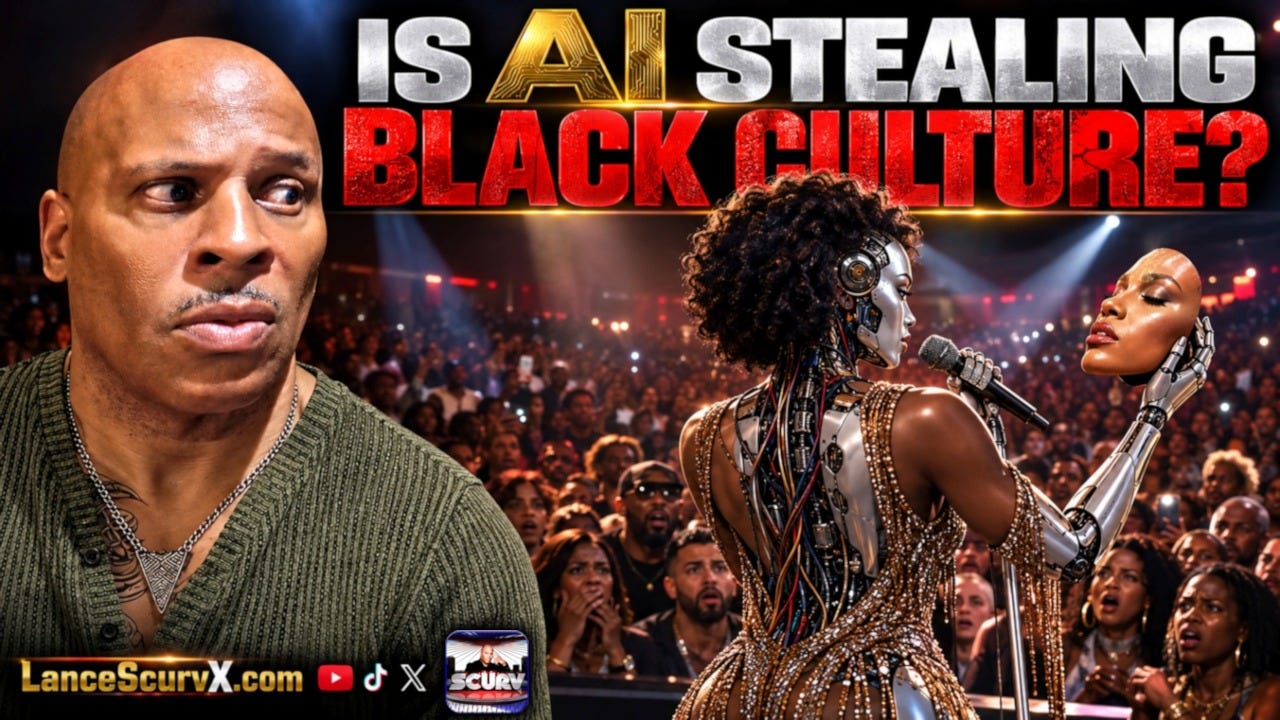
Imagine discovering an artist on a major music streaming platform whose songs sound like the kind of soulful music you grew up listening to, whose image reflects the face of a Black woman, and whose voice carries the emotional weight that you have come to associate with Black musical expression. You hear the music, you connect with the sound, and you might even begin to follow the artist because something about the presentation feels familiar. You assume there is a real human being behind the voice, somebody who has spent years developing a talent, struggling to get noticed, and finally finding an audience. But what happens when you discover that the person you thought you were supporting might not exist as a real performer at all? What happens when the image, the voice, and even the identity you believed in turn out to be part of a carefully packaged artificial creation?
That’s the question I want to put on the table because the growing controversy surrounding AI-generated music opens up a much bigger conversation than whether a particular song sounds good or whether a computer can produce a catchy melody. Reporting in early 2026 raised serious questions about a digital music persona that reportedly attracted millions of monthly listeners while being presented through different racial identities. Music streaming services have also identified AI-generated material associated with such projects. These developments raise a troubling question: if an artificial identity can be packaged to look and sound like a Black artist, attract an audience, and potentially generate income, who benefits from the public’s belief in that identity? And what does this mean for the real human beings whose culture helped make that music commercially attractive in the first place?
Now, let me make my position clear from the beginning. I’m not saying that every white person is involved in cultural exploitation, and I’m not saying that people from other backgrounds have no right to enjoy, study, perform, or be inspired by Black music. Music has always traveled across borders, and genuine cultural exchange can bring people together in beautiful ways. But there is a difference between appreciating a culture and building a profitable imitation of that culture while the people who created its foundations continue to struggle for recognition, ownership, and fair compensation. There is a difference between being inspired by a sound and turning an entire people’s identity into a commercial costume. We need to stop pretending those differences are too complicated to understand.
What bothers me most is the possibility that Black identity itself is becoming another tool in a business strategy designed to capture attention. The face is Black because the audience recognizes something in that face. The voice sounds soulful because that sound has emotional power. The music draws from traditions that carry decades of struggle, innovation, heartbreak, resistance, love, and survival. Yet the people who built those traditions may have no meaningful connection to the profits, decisions, or ownership behind the finished product. We could be looking at a digital version of an old arrangement in which the culture remains valuable, but the people who gave it value are treated as replaceable.
And that’s why I see this issue as bigger than artificial intelligence. Technology may be new, but the underlying question is old: who gets to take something valuable from Black people, package it for public consumption, and decide who deserves the money and the recognition? We have seen that question surface in music, fashion, entertainment, business, labor, and the historical record. Now we have to ask it again in a world where a machine can generate a convincing voice, a believable face, and an entire artistic identity without the public necessarily knowing what it is looking at.

DIGITAL BLACKFACE IS MORE THAN A COMPUTER-GENERATED FACE
When I use the phrase digital blackface, I’m talking about more than a computer producing a Black-looking image. I’m talking about the use of Black identity, appearance, voice, style, or cultural expression as a manufactured character for commercial or social purposes, especially when that identity is used without meaningful transparency, accountability, or a fair relationship with the people whose culture is being represented. The term has different meanings in different discussions, and not every AI-generated Black character automatically fits every definition. But when a company or creator deliberately uses a simulated Black identity to make a product more appealing, we have every reason to examine the motives, the business model, and the consequences.
Think about what this means. A real Black woman who wants to become a successful singer has to deal with an industry that may judge her appearance, her age, her body, her accent, her background, her marketability, and whether executives believe she fits the image they want to sell. She may spend years developing her voice, paying for studio time, building connections, promoting her music, and trying to convince somebody with power to give her a chance. She has to eat, sleep, travel, pay bills, protect her health, and live with the personal consequences of pursuing her dream. She is a human being with needs and limitations. An artificial performer, on the other hand, can be designed, revised, reproduced, and promoted without the ordinary human demands of a living artist.
That difference creates a disturbing possibility. A business could imitate the appearance and musical style of the very people who face barriers in the entertainment industry, then use that imitation to compete for the same audience and commercial opportunities. The artificial performer does not have to experience discrimination to benefit from the audience’s recognition of Black culture. The real artist does not automatically receive a royalty because a digital character borrows the cultural language that she grew up hearing. And the audience may never know that the person they believe they are supporting is not the person they imagined.
I want people to understand that this isn’t simply about whether an AI-generated song is good or bad. It’s about whether the public is being told the truth. If a digital performer is presented as a real Black woman, a real Black man, or a real musician from a particular community, the audience deserves to know what kind of creation they are supporting. If the performer is fictional, say so. If the voice is generated, explain that. If the visuals are artificial, disclose that information. Transparency does not destroy creativity. It allows people to make informed choices.
And let’s not hide behind the argument that technology has always changed music. Of course it has. Recording equipment, electronic instruments, sampling, digital editing, and music software have all changed how songs are made. But the ability to create a sound is not the same as the right to mislead an audience about who created it. A synthesizer does not need a false biography. A drum machine does not need to pretend to be a Black woman who has spent years singing in church. A computer-generated character can exist as an artistic concept without being marketed in a way that encourages people to believe a fictional human story.
BLACK CULTURE HAS ALWAYS BEEN COMMERCIALLY VALUABLE
One of the greatest contradictions in American life is how often Black culture is celebrated in public while Black people themselves are denied the same level of respect, opportunity, and economic power. The music is wanted. The dances are wanted. The fashion is wanted. The slang is wanted. The style, the attitude, the rhythm, the humor, the physical presence, and the ability to influence what becomes popular are all valuable when they can be turned into a product. Yet the people who develop these cultural expressions can find themselves fighting to receive the same attention that others receive after adopting, repackaging, or imitating what they created.
This pattern did not begin with AI. Black Americans developed and transformed musical traditions that helped shape blues, jazz, gospel, rhythm and blues, rock and roll, funk, hip-hop, and countless other forms of popular music. These genres were built through human creativity, community traditions, technical skill, and lived experience. They did not appear out of nowhere. They came from people who experimented, performed, taught one another, built local scenes, and passed musical knowledge across generations. Their work helped change the sound of the world.
But cultural influence and economic reward have never been distributed equally. Throughout the history of American music, Black performers have faced barriers to ownership, access to major business networks, fair contracts, and control over their recordings. Some artists were paid poorly for work that later generated enormous value. Others lost control of their catalogs or discovered that the business arrangements they accepted early in their careers limited the money they could earn later. There have also been Black entrepreneurs, musicians, producers, and independent labels who built successful businesses and fought for ownership. We must recognize both the achievements and the injustice because the complete story teaches us more than either silence or exaggeration ever could.
The issue is not that nobody outside the Black community has ever made an honest contribution to Black music. The issue is that the commercial system has often rewarded people according to their access to capital, distribution, publicity, and business power rather than according to the full value of their creative contribution. The person who develops the sound may not be the person who owns the recording. The person who writes the song may not control the rights. The person who creates the movement may not own the company that eventually profits from it. And the person whose community makes the product culturally meaningful may have little influence over the decisions that determine how the money is divided.
That’s why I refuse to accept the idea that a successful cultural product automatically proves that the people who inspired it have received justice. A song can reach millions of listeners while its creators remain financially insecure. A dance can become a worldwide sensation while the person who made it popular struggles to get credited. A style can become a fashion trend while the community that developed it is mocked for wearing the same thing. Popularity does not guarantee ownership, and visibility does not guarantee wealth.
Now imagine adding artificial intelligence to that history. Instead of simply borrowing a musical style, a creator can potentially manufacture an entire performer around it. Instead of hiring a singer, building a working relationship, negotiating a contract, and sharing the proceeds, a business can use AI tools to produce a virtual identity that appears to fill the same role. The technology itself does not determine whether the arrangement is fair. But when it enters an industry that already has a history of unequal access and unequal rewards, we have to ask who is likely to benefit most from its use.
FROM EXPLOITED LABOR TO EXPLOITED IDENTITY
I cannot discuss the commercial exploitation of Black creativity without acknowledging the history of enslaved African labor in America. Enslaved people were treated as property under a brutal system that denied them freedom, compensation, legal rights, and control over their own labor. Their work helped build wealth for enslavers and institutions connected to the system. They cultivated land, produced goods, built infrastructure, and performed countless forms of labor under conditions they did not choose. Their skills, knowledge, and physical effort created value, but the people who performed that work were denied the right to claim the full benefit of what they produced.
The connection I’m drawing here is not that AI music is identical to slavery. It is not. Enslavement involved the violent denial of human freedom and dignity on a scale that cannot be casually equated with a modern entertainment controversy. The connection is the larger economic question of who controls the value produced by somebody else. When a system allows one party to benefit while the people whose work or culture made that benefit possible have little control over the outcome, we should examine that arrangement carefully.
After emancipation, the end of legal slavery did not automatically bring equal access to wealth, land, education, business ownership, or economic security. Black Americans faced generations of discriminatory laws and practices, including racial segregation, exclusion from opportunities, and barriers to building and passing down wealth. These conditions affected the ability of Black families and communities to protect the fruits of their labor. They also shaped the entertainment and business systems that developed around Black talent.
The lesson is not that every modern business transaction repeats the past in exactly the same way. The lesson is that historical inequality can leave behind structures that continue to influence who owns the machinery of profit. If one group has greater access to investment, distribution, legal support, and powerful industry relationships, it may be better positioned to turn another community’s creativity into a successful business. Even when the law permits a transaction, the larger question of fairness does not disappear.
That’s where I want this discussion to go. We cannot limit our examination of exploitation to the moment when somebody copies a song or creates a digital face. We must look at the entire chain of value. Who developed the original cultural tradition? Who has access to the tools? Who controls the platforms? Who owns the recordings and the images? Who receives the royalties? Who gets promoted? Who gets left behind? And when the money begins to flow, who has enough power to negotiate a fair share?
If we refuse to ask these questions, we risk treating every new technology as though it exists outside history. But technology does not enter an empty world. It enters a society with existing inequalities, existing business interests, and existing habits of deciding whose contributions matter. Artificial intelligence may change the speed and scale of production, but it does not automatically correct the imbalance of power between the people who create culture and the people who control its commercial distribution.
THE INVISIBLE INVENTORS AND THE PEOPLE WHO CONTROL THE CREDIT
The exploitation of Black creativity extends beyond music. Black Americans have contributed to science, engineering, agriculture, transportation, medicine, manufacturing, sports, and many other areas of human achievement. Some Black inventors and innovators received patents and recognition, while others worked in environments where their opportunities were restricted or their contributions were poorly documented. There are cases in which people had to fight to be recognized for their work, and there are cases in which later generations have had to recover stories that were neglected or forgotten.
We must be careful not to claim that every invention was stolen or that every achievement credited to someone else was secretly created by a Black person. History requires evidence, and the truth is strong enough without exaggeration. But we also cannot ignore the effects of slavery, segregation, discrimination, and exclusion on the ability of Black people to protect their intellectual work and receive fair recognition. When people are denied equal access to education, capital, patents, professional networks, or legal support, their ability to benefit from their own ideas is weakened.
Ownership is one of the most important lessons in this entire discussion. An idea may begin with one person, but the economic value of that idea can depend on who has the money to develop it, who has the connections to market it, who can secure legal protection, and who can distribute it to the public. The same principle applies to music. Talent may create the foundation, but business control often determines who captures the largest share of the final reward.
Artificial intelligence makes this issue even more urgent because the line between inspiration, imitation, and unauthorized use can be difficult to see. AI systems may be trained on large collections of existing material, and questions about permission, compensation, and ownership depend on how the systems were built, what material was used, and the laws that apply. A generated song does not automatically prove that a particular artist’s recording was copied. At the same time, the fact that a new song is generated by a machine does not settle every question about the rights of the people whose work may have influenced the system.
We need serious public discussion about these distinctions. Artists deserve clearer information about how their recordings, voices, compositions, and images may be used. Audiences deserve honest labels. Platforms should take reasonable steps to prevent deception, and businesses should be held accountable when they misrepresent the origin of their products. The goal should be to create rules that support innovation without treating human creativity as an endless resource that anyone can take without consequences.
And let me be blunt: Black talent cannot continue to be treated as a cultural gold mine while Black ownership is treated as an optional extra. If a community creates something that becomes valuable across the world, the people in that community should have real opportunities to own businesses, control intellectual property, negotiate licensing agreements, and build lasting wealth from their work. Recognition matters, but recognition without economic power can become another way of giving people applause while somebody else takes home the money.
WHY DOES THE INDUSTRY KEEP REWARDING THE IMAGE?
One of the hardest questions we must confront is why certain images receive attention so quickly while many genuinely talented people struggle to break through. The entertainment industry has always involved more than talent alone. Marketing budgets, industry relationships, distribution deals, audience research, playlist placement, publicity, and the ability to attract attention all play a role in determining who becomes visible. Sometimes a remarkable artist receives an opportunity that changes everything. Other times, equally talented people spend years working without gaining access to the same doors.
The rise of AI-generated performers adds another layer to this imbalance. A digital artist can be designed around an audience profile, given a carefully selected image, and supplied with music that follows familiar commercial patterns. Its public identity can be adjusted when a different look or sound appears more profitable. A fictional performer does not need to explain a controversial statement, cancel a tour because of illness, negotiate the demands of a long career, or maintain the personal life expected of a public figure. Depending on how the project is managed, the business behind that performer may be able to produce and release content at a speed that would be difficult for an individual musician to match.
But we should not pretend that every AI project succeeds or that human artists are guaranteed to lose every opportunity. Listeners can still value live performance, genuine artistic identity, songwriting, musicianship, and the human experiences that give music depth. AI can also be used by real musicians as a creative tool. The concern is what happens when artificial performers are presented in ways that mislead audiences or gain commercial advantages without the transparency and accountability expected of human artists.
What I find particularly troubling is the possibility that the appearance of a Black artist becomes a marketing feature that can be switched on whenever it serves a business purpose. If a digital identity can be made to look white today and Black tomorrow, what does that say about the way the market views identity? Does the culture become something to respect, or does it become a costume that can be selected according to the audience a business wants to reach? The concern is not that artists should be forced into a single racial category. The concern is the deliberate use of racial identity as a commercial disguise.
A real Black artist carries a life that cannot be reduced to an image. That artist may have family responsibilities, personal struggles, cultural memories, community ties, and experiences that shape the music. An artificial character can imitate the visible signs of identity without living the reality behind them. It can appear to have a history without having experienced one. It can project the emotional language of a community without bearing any responsibility to that community. When the audience is not told the difference, the performance becomes more than a creative experiment; it becomes a question of trust.
And this is why I want the music industry to stop treating the audience as a group of people who do not need to know how the products they consume are made. If an artist is fictional, tell us. If AI creates the voice or a substantial part of the music, disclose it clearly. If a real performer contributed the singing, songwriting, instrumentation, or production, credit that person accurately. The public can decide what it wants to hear, but that decision should be based on honest information rather than a carefully constructed illusion.
WHEN BLACK CULTURE BECOMES A COSTUME
There is a deeper psychological issue here that I believe deserves attention. Black culture has often been treated as something that can be separated from Black people. A person can imitate the clothing, adopt the slang, copy the dance, borrow the sound, and reproduce the visual style while ignoring the history and social conditions that shaped those expressions. The product becomes desirable, but the people behind the culture are not always treated with the same respect.
This separation allows a strange contradiction to survive. The same society that may criticize Black people for their appearance, speech, music, or behavior can celebrate those same traits when they are repackaged by someone else. A style may be described as unprofessional when worn by a Black person and fashionable when adopted by a different audience. A musical sound may be dismissed as too urban or too raw until it becomes commercially useful. A cultural expression may be treated as a problem in one setting and a valuable brand in another.
We should not assume that every example has the same motive, and we should not reduce every cultural exchange to racism. People borrow from one another, and culture changes through contact. But when the same pattern repeatedly produces unequal recognition, unequal opportunity, and unequal financial rewards, we have a legitimate reason to question the system.
Digital blackface can intensify this problem because the imitation no longer requires a human performer to take on the appearance of another race. A system can generate the face, the hair, the voice, the clothing, and the performance. It can create the impression of a Black artist without involving a Black person in the public-facing identity at all. If the image is designed to attract an audience because it looks culturally familiar, Black identity itself has become part of the product’s marketing strategy.
Let’s be honest about what that could mean. A real Black singer might spend years trying to convince the industry that her music deserves attention, while an artificial singer with a carefully manufactured image could gain access to listeners through algorithms and promotional systems. The digital creation may not be responsible for the inequality, but the people operating it can still benefit from an environment where some artists receive opportunities that others never get. The question becomes whether the new technology will widen those gaps or help create more fair opportunities for everyone.
I want Black audiences to think about the difference between supporting a culture and simply consuming an image of that culture. When you hear a song, ask yourself who made it, who wrote it, who performed it, who owns it, and whether the people being represented are actually involved. Those questions are not an attack on technology. They are a way of becoming a more informed audience in an industry where appearances can be manufactured with extraordinary ease.
WHO IS MAKING THE MONEY WHEN THE MACHINE SINGS?
Let’s move from the image to the money, because that’s where the conversation becomes especially important. A music streaming service may count plays, measure listener activity, and use algorithms to recommend songs. Depending on the platform, rights agreements, and distribution arrangements, streams can contribute to revenue for the people or companies entitled to receive it. But the existence of millions of listeners does not tell us who ultimately receives the money or how much any individual participant earns.
If an AI-generated artist attracts a large audience, the people controlling the project may have a commercial opportunity. They may control the artist identity, the release schedule, the associated artwork, and the business arrangements through which the music is distributed. But without verified financial information and the relevant contracts, we cannot assume a specific person earned a particular amount or that every stream produced a fixed payment. The important point is that a digital persona can create commercial value, and the distribution of that value deserves scrutiny.
Now compare that possibility with the position of an independent Black musician. That musician may have to pay for equipment, studio sessions, mixing, mastering, artwork, promotion, travel, and distribution. They may need to work another job while trying to build a musical career. They may have to spend years finding an audience. If the musician owns the recordings and controls the rights, they may have a better chance of building long-term value, but ownership alone does not guarantee success. If the musician signs away important rights under an unfavorable contract, the rewards may be limited even when the music becomes popular.
The question is not whether AI should be banned from music simply because it can create competition. The question is whether the industry will establish fair standards for transparency, ownership, compensation, and promotion. If an AI-generated persona is allowed to compete for attention, audiences should be able to identify it as such. If an artist’s voice or recordings are used to generate new material, the relevant questions of permission and compensation should be addressed. If a company uses AI to produce music at scale, it should not be allowed to mislead the public about the nature of the performer or the origins of the work.
We also need to be realistic about the role of streaming platforms. They are not just neutral windows through which people discover music. Their recommendation systems, playlists, search results, and promotional choices can influence what listeners encounter. The platforms therefore have a responsibility to consider how AI-generated material is labeled and distributed, particularly when audiences may mistake a fictional performer for a real human artist. Clear labeling and consistent policies would help listeners make informed choices and give human artists a fairer chance to compete.
The larger point is simple: we cannot measure fairness by counting streams alone. We must examine who owns the work, who receives the income, who controls the platform, and who has the ability to build a sustainable career. If Black culture helps make a digital product appealing, that fact alone does not establish a legal right to a share of its revenue. But it does make the broader ethical questions of cultural borrowing, consent, recognition, and fair opportunity impossible to dismiss.
THE DANGER OF NORMALIZING THE FAKE
One of the most dangerous aspects of this trend is how easily people can become accustomed to deception when the finished product is entertaining enough. If a song sounds good, some listeners may decide they do not care whether the singer exists. If the artwork looks attractive, they may ignore whether the person depicted is real. If the music appears on a respected platform, they may assume the platform has verified the artist’s identity and the origins of the work. Gradually, the difference between an authentic human performance and a manufactured persona can become less important to the public.
But the consequences extend beyond music. We are entering a period in which artificial identities can be used in advertising, social media, political messaging, customer service, entertainment, and other areas of public life. Images and voices can be generated to resemble real people, and convincing digital characters can be given detailed personalities and invented biographies. These tools can support useful forms of creativity, but they can also make deception easier and more difficult to detect.
When people lose the ability to trust what they see and hear, the damage reaches far beyond a single industry. A fictional singer may be a relatively harmless experiment if the audience knows what it is. A fabricated identity presented as a real person can raise questions about consent, representation, and the deliberate manipulation of public belief. The same technology can be used for legitimate art or for dishonest marketing. That’s why the standards governing its use matter so much.
I also worry about the effect on younger people who are still learning how the entertainment business works. They may see an artificial performer become popular and conclude that the path to success is simply a matter of manufacturing the right face, voice, and personality. They may fail to understand the years of practice, collaboration, discipline, and creative development behind real musical achievement. They may also become more willing to accept a system in which the appearance of talent matters more than the human being who develops it.
That’s not a reason to romanticize every human artist or dismiss every artificial creation. Real artists can mislead audiences, and AI-generated work can be inventive. The issue is whether the audience is given the information needed to understand what it is consuming. Honest presentation protects the public and helps establish the difference between an artistic experiment and a commercial deception.
We should never allow convenience to become an excuse for abandoning our standards. If the industry can label explicit content, identify advertisements, and provide information about rights holders, it can work toward clearer ways of identifying synthetic performers and AI-generated music. The details will take time, and detection methods are not perfect. But the need for transparency will only grow as the technology becomes more convincing.
WHAT BLACK COMMUNITIES MUST DO NOW
I believe one of the most important responses is to take ownership seriously. Black musicians, producers, songwriters, filmmakers, visual artists, and other creators need access to practical education about copyrights, licensing, contracts, trademarks, and the commercial use of their work. Talent is essential, but talent should not have to operate blindly in a business environment where other people understand the contracts, control the distribution, and make the decisions.
We also need stronger networks that help independent Black creators build sustainable businesses. That means supporting independent labels, production companies, publishing operations, community-based creative projects, and educational programs that teach people how to protect their intellectual property. It means encouraging artists to understand what they are signing before they sign it and to seek qualified legal advice when significant rights are at stake. It means recognizing that ownership is not merely a technical detail at the end of a creative process; it can determine whether the creator benefits from the work for years to come.
Black audiences have a role to play as well. We should support real artists, investigate unfamiliar projects when their presentation raises reasonable questions, and avoid assuming that a large following proves authenticity. We can ask platforms to label AI-generated material clearly and demand that streaming services explain how their policies protect listeners and human performers. We can share information responsibly rather than spreading unverified accusations about the individuals behind a project.
And we must avoid falling into the trap of believing that Black creators have to reject all technology to protect their culture. AI can help musicians explore new sounds, improve workflows, experiment with arrangements, and develop ideas. Black artists should have access to the same tools as everyone else. The goal is not to close the door on innovation. The goal is to ensure that innovation does not become another excuse to take creative value from people without giving them meaningful control over their work.
Ultimately, we need a shift in how we think about cultural power. We cannot keep treating visibility as the final measure of success. A Black artist may be famous and still lack ownership. A Black community may influence the entire world and still struggle to build lasting wealth from its influence. We need to move beyond celebrating how much the world loves Black culture and begin asking how much power Black people have to shape, own, and benefit from the industries built around it.
THIS IS ABOUT MORE THAN ONE DIGITAL ARTIST
The controversy surrounding AI-generated music is a warning about what can happen when technology makes it easier to manufacture identities and commercialize cultural expression. The details of any particular project must be examined through reliable evidence, and allegations about the people behind it should not be treated as proven facts without verification. But the broader concern is real: artificial performers can attract human audiences, and the use of a Black appearance or Black musical style can raise serious questions about representation, fairness, and the economic treatment of Black creativity.
I do not want people to walk away from this discussion believing that every person outside the Black community is an enemy or that cultural exchange is inherently dishonest. That would miss the point. The issue is not the race of every person involved in music production. The issue is whether a business uses Black identity as a marketing tool while disregarding the people, histories, and creative traditions that give that identity its meaning. The question is whether the arrangement is honest, whether the work is properly represented, and whether the people involved are treated fairly.
We must also remember that Black culture is not a single product owned by one person or one group of executives. It is a living collection of traditions, ideas, expressions, and innovations developed across generations. People can learn from it, participate in it, and create something new through genuine exchange. But the ability to participate in culture should never be used as an excuse to mislead audiences or ignore the rights of individual creators. Respectful exchange and commercial exploitation are not the same thing.
What concerns me is the possibility that Blackness itself can be treated as an interchangeable asset, something that can be generated when useful, marketed when profitable, and discarded when the next trend arrives. A culture built through human experience becomes a visual setting. A musical tradition built through generations becomes a sound profile. A person becomes a synthetic face. And the audience may be encouraged to accept the entire arrangement without ever asking who is represented, who is responsible, and who is benefiting.
That’s why I believe this conversation needs to continue. We must look beyond the novelty of artificial intelligence and examine the systems that determine who receives credit, who gets paid, who owns the work, and who has the power to tell the story. We should demand transparency from platforms, accountability from businesses, and better protection for human creators. We should also invest in the education, ownership, and independence that allow Black talent to thrive on its own terms.
THE FACE MAY BE ARTIFICIAL, BUT THE QUESTION IS REAL
At the end of the day, I want people to understand that the central issue is not whether a computer can sing a beautiful song. The central issue is whether the people behind these projects are honest about what they are selling and whether the rise of artificial performers will deepen the inequalities that have long affected Black creators. We cannot answer those questions simply by looking at an album cover or listening to a few seconds of music. We must examine the credits, the disclosures, the ownership arrangements, and the evidence surrounding the project.
If a digital character is clearly presented as fictional and the music is produced within fair and lawful arrangements, audiences can decide whether they want to support it. If an artificial performer is presented as a real person in a way that misleads listeners, that deserves scrutiny. If a real artist’s voice, image, or recordings are used without appropriate permission, that raises another set of serious concerns. These distinctions matter because accountability must be based on what actually happened, not merely on what we suspect.
But let’s not allow the technical details to distract us from the larger history. Black creativity has shaped the world, yet Black creators have often had to fight for the recognition, resources, and ownership that should accompany their contributions. The arrival of AI gives us another reason to examine whether the systems that distribute cultural rewards are fair. If the technology makes it easier to reproduce a familiar sound and face, then protecting the people behind the culture becomes even more important.
I want Black people to recognize the value of what we bring to the world, not just emotionally or culturally, but economically. Our music, ideas, art, language, and innovation are not disposable decorations that exist for other people to turn into money. They reflect the work of human beings who deserve respect, fair opportunity, and the chance to build something lasting from their talents. We should never confuse being imitated with being compensated, or being popular with having control.
And that brings me back to the question that started this entire discussion: what happens when the world wants the image of Black creativity but does not need a real Black person to stand behind it? My answer is that we must pay closer attention, demand honest representation, protect creative rights, and build the economic power that allows our communities to benefit from what we create. The machine may be able to manufacture a face, a voice, and a musical identity, but it cannot erase the history that made those cultural expressions meaningful. The face may be artificial, but the question of who profits from Black culture is as real as ever.


