

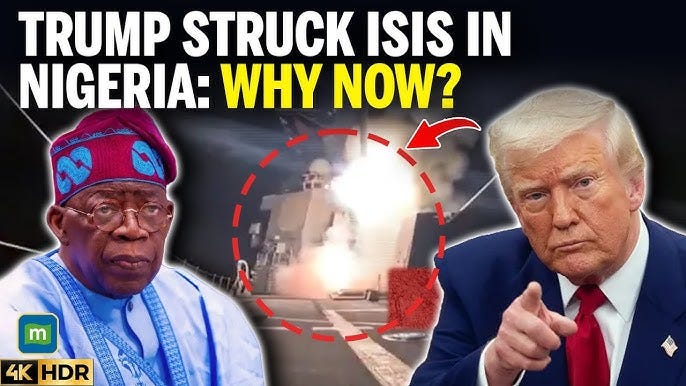
Many people are confused about what is really happening in parts of West Africa right now. They hear about violence, instability, or attacks, but they are not told the deeper meaning behind it. What looks random or chaotic on the surface is actually part of a much bigger pattern that has been repeating for generations.
The northwest region of Nigeria sits close to Niger and Burkina Faso, an area that has become very important in today’s global power struggle. This region is not just land on a map. It is a doorway. Whoever controls it gains influence over movement, trade, resources, and political direction across West Africa.
For years, African people have been told the same simple story: “They want the resources.” That line has been repeated so much that many have become numb to it. It no longer shocks the mind or stirs urgency. It sounds like background noise instead of a warning.
But the situation today goes far beyond resources. What is unfolding is about control, obedience, and breaking the spirit of independence before it fully rises. It is about stopping African self-determination before it becomes contagious.
This is also not about political parties. It is not about left or right, Democrat or Republican. Those labels distract people from the deeper truth. Power systems do not change when party names change. The same interests operate behind different masks, using different faces at different times.
MY DETAILED ANALYSIS…
What we are seeing in parts of West Africa is pressure being applied where independence is growing. When African nations begin to tighten their borders, protect their sovereignty, and limit outside influence, resistance appears quickly. That resistance does not always come openly. Often, it comes through instability, proxy conflicts, or indirect attacks.
Burkina Faso has become a symbol of this shift. Its leadership has taken a firm stance on self-rule, national dignity, and limiting foreign interference. Instead of chasing approval, it has focused on internal strength, food growth, security, and control over its own decisions. That kind of independence makes powerful systems uncomfortable.
History shows this pattern clearly. When African leaders focused on unity, self-reliance, and true independence, they were isolated, undermined, or removed. Not because they attacked anyone, but because they refused to be controlled. Many learned the hard way that infiltration often comes before force.
In the past, infiltration came through culture, entertainment, money, and influence. It did not always look like invasion. Sometimes it looked friendly. Sometimes it looked like opportunity. Sometimes it even looked like support. But it weakened structure from the inside.
That is why tightening borders and limiting outside access is not about fear. It is about learning from history. When a house keeps getting robbed, the solution is not to leave the doors open and hope for kindness. The solution is to secure the house.
Nigeria plays a complicated role because of its size and influence. It has the population, the economy, and the reach to shape the region. But internal pressure, political weakness, and outside influence limit its ability to act freely. This creates tension between what the people feel and what leadership does.
Across Africa, many ordinary citizens understand this. They may disagree on religion, culture, or politics, but they recognize when outside powers are pushing division. Unity does not mean perfection. It means refusing to be used against one another.
One of the most dangerous distractions is convincing Black people to fight each other over foreign political labels. When people argue over which outside political system is “better,” they forget that neither was built with them in mind. That argument keeps attention away from power, land, and independence.
It becomes like arguing over which master is kinder instead of questioning the system itself. That mindset keeps people trapped emotionally and mentally. True freedom begins when people stop defending systems that were never designed for them.
Another issue is emotional numbness. When people hear constant bad news, they stop reacting. The phrase “they want Africa’s resources” no longer hits the soul. It sounds routine. But what is really happening is deeper: control of direction, leadership, identity, and future.
Africa is not under attack because it is weak. It is under pressure because it is valuable and because its independence threatens global power balances. A self-directed Africa changes trade, politics, and influence across the world.
What makes this moment different is awareness. More people now see patterns. More people question narratives. More people understand that unity does not mean sameness, and resistance does not always require violence.
The real battle today is mental. It is about perception, division, distraction, and confusion. If people can be kept arguing over personalities, parties, and symbols, they will never unite around principles.
This is why attacks near strategic borders matter. This is why destabilization appears near growing independence movements. And this is why silence or confusion is not accidental.
Africa’s future does not depend on approval from outside powers. It depends on clarity, unity, and the refusal to be divided by artificial lines. The goal is not chaos. The goal is control. And control always begins by weakening unity.
MY CLOSING THOUGHTS…
What is happening in West Africa should wake people up, not scare them into silence. Awareness is the first form of protection. Once people understand patterns, those patterns lose power.
This moment calls for clear thinking, not emotional reactions. It calls for maturity, not political cheering. It calls for understanding that freedom is never handed out—it is defended through awareness and unity.
The real danger is not disagreement. The real danger is being distracted while decisions are made over your head. Division among the people always benefits those who profit from disorder.
Africa does not need saviors. It needs space to govern itself, protect itself, and grow without interference. Independence should not be treated as a threat.
If people can see beyond party labels, beyond noise, and beyond fear, they will recognize what this moment truly represents: a struggle over direction, dignity, and self-rule. And that struggle deserves serious attention.

Ase Brother Lance ✊🏿✊🏿✊🏿