
For many years, people believed that hard work would lead to a better life. We were told that if we worked hard, stayed out of trouble, got an education, and followed the rules, we could build a comfortable future. That promise became the foundation of modern society. It gave people hope and a reason to keep pushing forward even during difficult times.
Today, however, many people are beginning to question whether that promise still exists. They look around and see rising prices, shrinking opportunities, increasing debt, and a growing gap between those who have everything and those who struggle just to survive. The ladder that once helped people climb upward appears to be missing several rungs.
What makes this situation even more concerning is that these changes are not happening overnight. They are taking place gradually. Many people are so busy trying to survive from day to day that they do not have the time to step back and examine the larger picture. Yet when all of the pieces are viewed together, a disturbing pattern begins to emerge.
Across many nations, power appears to be concentrating into fewer hands. Wealth is becoming increasingly centralized. Large corporations continue to grow larger while small businesses struggle to survive. Technology is changing the workforce at a rapid pace. Entire industries are being transformed, leaving many workers uncertain about their future.
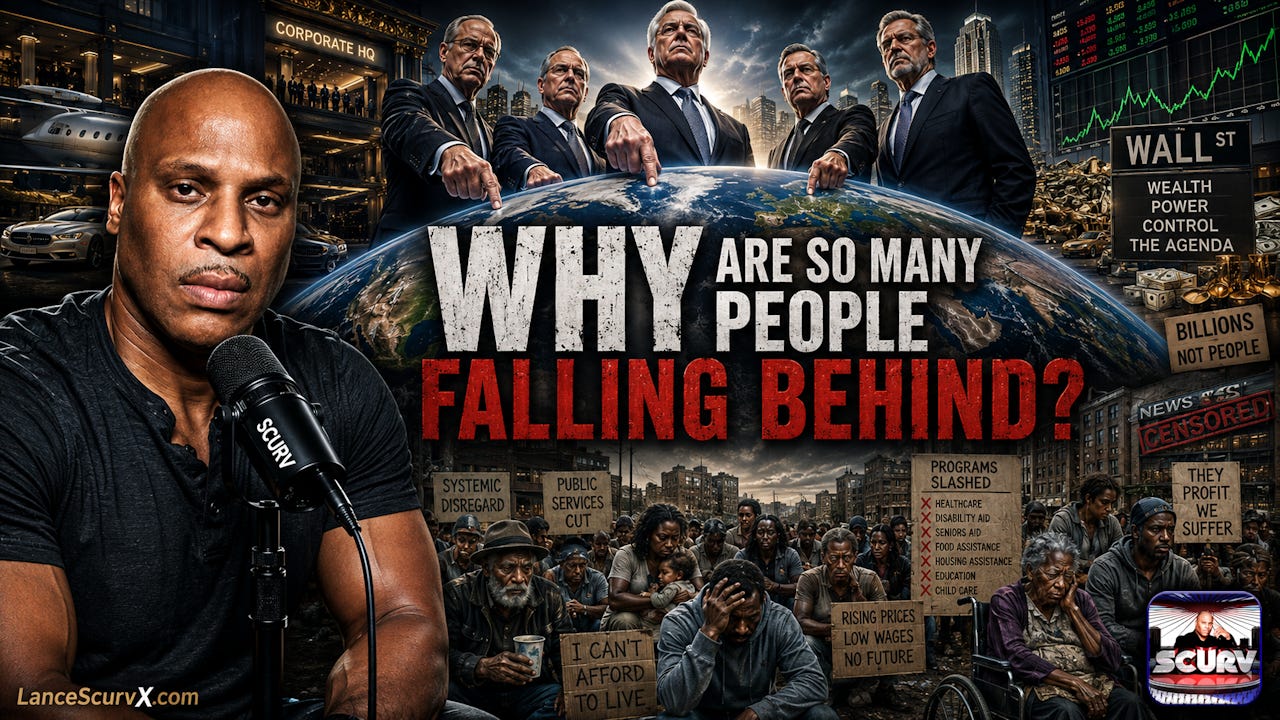
The question that more people are beginning to ask is simple: Are we witnessing the emergence of a two-tier society? A society where a small group controls most of the wealth, resources, influence, and opportunities while the majority of people are left competing for what remains? Whether intentional or accidental, many believe the signs are becoming impossible to ignore.
THE DISAPPEARING MIDDLE GROUND
One of the strongest signs of a two-tier society is the shrinking middle class. Historically, the middle class acted as a stabilizing force. It represented people who owned homes, raised families, started businesses, and passed wealth and opportunities to future generations.
Today, many families find themselves working harder while gaining less. Wages often fail to keep pace with inflation. Housing costs continue to rise. Healthcare expenses grow larger. Education becomes more expensive. Everyday necessities consume a greater percentage of household income than ever before.
As a result, many people who once considered themselves financially secure now feel vulnerable. They may have jobs, but they are one emergency away from financial disaster. A medical bill, a job loss, or a major repair can quickly create a crisis.
At the same time, enormous wealth continues to accumulate at the top. The concentration of resources within a small percentage of society has reached levels that many believe threaten economic balance. The distance between the wealthy and the average citizen appears to grow wider each year.
When the middle ground disappears, society often becomes divided between those with extraordinary privilege and those who are struggling to maintain stability. That is the foundation of a two-tier system.
THE CONSOLIDATION OF POWER
Wealth and power often travel together. As economic resources become concentrated, influence tends to follow.
Large corporations possess significant influence over markets, media, technology, and public discussion. Financial institutions shape economies. Technology companies control communication platforms that billions of people use daily. The people who lead these institutions often have access to decision-makers that ordinary citizens do not.
Many observers worry that democratic systems become weaker when economic power becomes too concentrated. The concern is not merely about money. It is about who gets to shape the future.
When average citizens feel disconnected from major decisions affecting their lives, frustration grows. Trust in institutions declines. People begin to believe that their voices no longer matter.
Whether these fears are fully justified or not, the perception itself has become increasingly widespread.
THE VALUE OF HUMAN BEINGS IN A PROFIT-DRIVEN WORLD
Another concern often raised involves how society treats those who are considered less economically productive.
The elderly, the disabled, the sick, and vulnerable populations frequently depend on social support systems. These programs often become targets during budget debates and political battles.
Supporters of cuts may argue that governments must reduce spending. Critics argue that reducing assistance places the greatest burden on those least able to carry it.
This debate raises an uncomfortable question. In a society increasingly focused on profit, productivity, and efficiency, what value is placed on people who cannot generate economic output at the same level as others?
The answer to that question says a great deal about the moral character of any civilization.
EDUCATION AND THE FUTURE
Education has long been considered one of the most powerful tools for upward mobility.
For generations, public education helped create opportunities for millions of people. It served as a bridge connecting children from modest backgrounds to greater possibilities.
Yet concerns continue to grow about the quality, accessibility, and future of public education. Budget challenges, political conflicts, and unequal resources have created significant disparities between communities.
When educational opportunities become unequal, social mobility declines. Those born into wealth maintain advantages while those born into struggling households face greater obstacles.
A two-tier society becomes easier to sustain when opportunities are distributed unevenly from the very beginning.
TECHNOLOGY, AUTOMATION, AND THE NEW ECONOMY
Technology has created incredible advancements. It has connected the world, improved efficiency, and opened doors that previous generations could never imagine.
At the same time, automation and artificial intelligence are transforming labor markets. Jobs that once provided stable incomes may disappear or require entirely different skills.
This transition creates uncertainty for millions of workers.
If the benefits of technological advancement are shared broadly, society may prosper. If those benefits remain concentrated among a small group, economic divisions could deepen even further.
The future will depend largely on how societies choose to distribute opportunity in an increasingly automated world.
THE CULTURE OF DISTRACTION
While major economic and social changes occur, many people remain focused on daily distractions.
Entertainment, political theater, celebrity scandals, and endless online debates often dominate public attention. Meanwhile, larger structural shifts continue in the background.
A distracted population may fail to recognize significant changes until those changes become difficult to reverse.
This is why critical thinking remains so important. Citizens must be willing to ask difficult questions and examine long-term trends rather than focusing only on daily headlines.
Awareness is often the first step toward meaningful action.
THE CHOICE BEFORE US
The emergence of a two-tier society is not necessarily inevitable. History shows that societies constantly evolve. Policies change. Priorities shift. Citizens organize. New ideas emerge.
The future is not written in stone.
However, meaningful solutions require honest conversations. People must be willing to discuss wealth inequality, economic opportunity, education, healthcare, technological change, and the role of democratic institutions without fear or distraction.
Ignoring these issues will not make them disappear.
THE WARNING SIGNS CANNOT BE IGNORED
When ordinary people begin to feel locked out of opportunity, social tension increases. When wealth becomes concentrated beyond reason, instability often follows. When institutions lose public trust, confidence erodes.
These warning signs have appeared throughout history in many forms.
The question is whether we are willing to recognize them while there is still time to address them.
THE FUTURE BELONGS TO THOSE WHO PAY ATTENTION
The greatest danger may not be the existence of powerful interests. Powerful interests have always existed.
The greatest danger may be widespread apathy.
When citizens stop paying attention, decisions are made without them. When people become disconnected from their communities, their institutions, and their responsibilities, power naturally concentrates elsewhere.
The future belongs to those who remain informed, engaged, and willing to participate in shaping society.
MY CLOSING THOUGHTS
The idea of a two-tier society may sound extreme to some and obvious to others. Regardless of where one stands, the conversation deserves serious attention.
The signs of growing inequality are visible across many parts of modern life. The shrinking middle class, rising costs, concentrated wealth, educational challenges, and technological disruption are realities that affect millions of people every day.
Whether these developments represent a temporary phase or the foundation of a new social structure remains to be seen.
What cannot be denied is that the choices being made today will shape the opportunities available tomorrow.
The time to pay attention is not after the transformation is complete. The time to pay attention is now.
This is not the time to be sticking your head in the sands of your so called smart phone!
Sincerely,
SCURV