

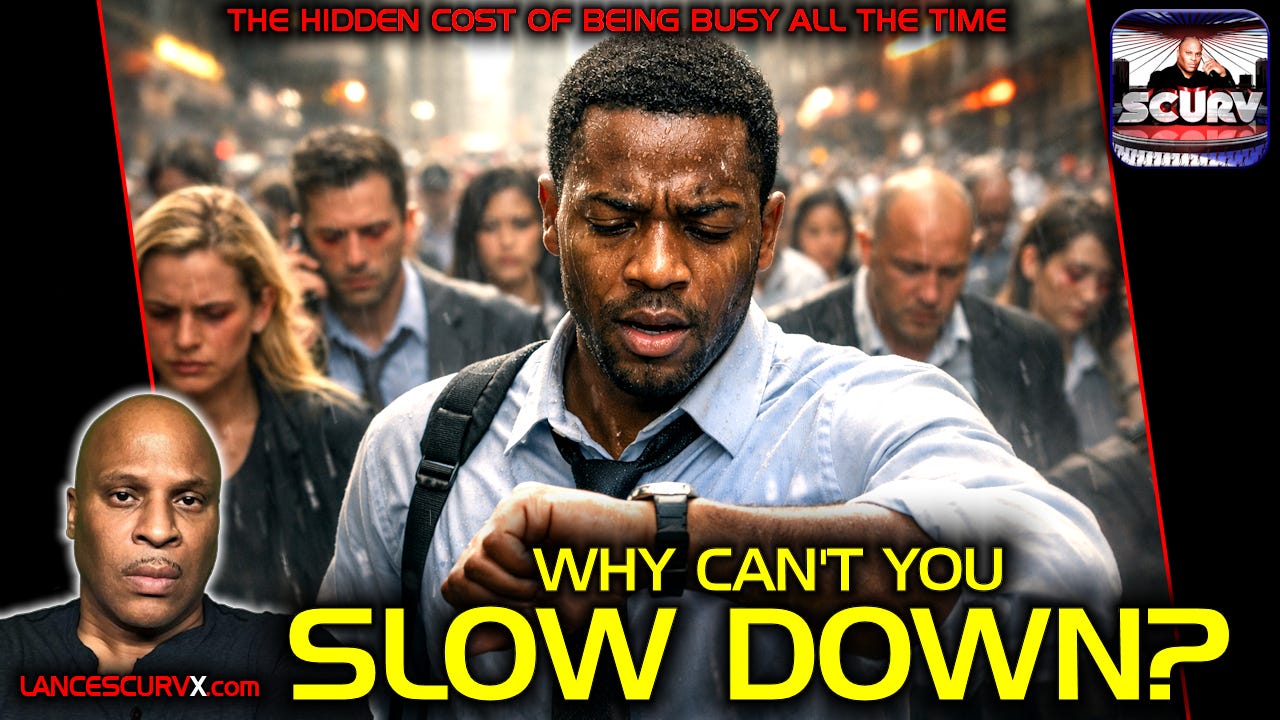
ARE YOU LIVING OR JUST RUNNING?
You wake up already behind. The alarm feels like an attack. Your phone is glowing with messages before your eyes are fully open. There is a meeting coming. Deadlines are waiting. And that voice in your head is already pushing you to move faster.
So you rush. You drink coffee instead of water. You skip breakfast. You scroll while brushing your teeth. You call it discipline. You call it ambition. You tell yourself this is what responsible adults do.
By the standards of modern culture, you are winning. You are productive. You are reachable. You are reliable. But let me ask you something honestly. Are you living, or are you just accelerating toward burnout?
Many people in their late twenties, thirties, forties, fifties, and even sixties believe stress is normal. They believe sleep can wait. They believe slowing down means falling behind. But what if the very pace you are proud of is slowly tearing your body apart?
You think you have adapted. You think your body is used to it. But adaptation is not the same as resilience. What feels normal may actually be damage happening quietly in the background.
YOUR BODY THINKS YOU ARE IN DANGER
Every time you rush, multitask, or jump at a notification, your brain reacts as if something is wrong. Deep inside your head, your nervous system activates a survival response. Your heart beats faster. Your muscles tighten. Stress hormones flood your bloodstream.
This response was designed to save your life. If a wild animal were chasing you, this surge would help you run. It would sharpen your focus and give you strength. But here is the problem. Your body does not know the difference between a lion and an email.
When you check your phone during dinner, your body reacts. When you worry about tomorrow at midnight, your body reacts. When you sit in traffic angry and tense, your body reacts. The same chemicals that were meant for short emergencies now drip into your system all day long.
Over time, this constant stress changes you. It weakens your immune system. It raises your blood pressure. It damages your memory. It makes sleep harder. It affects your mood and shortens your patience. You may not feel it all at once, but it builds year after year.
In your forties it may show up as burnout. In your fifties it may show up as heart problems or high blood pressure. In your sixties it may show up as memory decline. You will say you were just working hard. But your body will tell a different story.
THE ZEBRA KNOWS HOW TO STOP
Imagine an animal in the wild. It grazes calmly. Suddenly danger appears. It runs with full force. Its heart pounds. Its muscles fire. But once the threat is gone, it returns to calm. It goes back to eating. Its system shuts down the alarm.
Now look at your life. You wake up and check your phone before your feet hit the floor. Your stress response is already active. You rush through your morning. You think about work during breakfast. You scroll at night instead of resting. Your body never gets the signal that the danger is over.
The animal stops running. You do not.
The difference is not strength. It is rhythm. The body was designed for cycles. Effort followed by rest. Stress followed by recovery. But modern life has removed the recovery part. You are sprinting without ever reaching safety.
When you never return to calm, something deeper begins to fade. You stop tasting your food. You stop hearing people fully. You stop feeling the moment you are in. Life becomes a checklist instead of an experience.
THE COST OF CONSTANT SPEED
Living fast feels intense, but intensity is not the same as depth. Filling every hour does not mean you are living fully. It often means you are overstimulated and exhausted.
Chronic stress does more than make you tired. It increases the risk of heart disease. It speeds up aging. It harms the parts of your brain responsible for memory and emotional control. It makes you more reactive. That is why you snap at loved ones. That is why you feel numb some days and overwhelmed on others.
Many people wear exhaustion like a badge of honor. They brag about how little they sleep. They take pride in always being busy. But being busy is not the same as being meaningful. You can accomplish more each year and still feel empty inside.
When you are always in motion, you lose your connection to yourself. You may smile in public but feel hollow in private. You may achieve goals but not remember the journey. You may be surrounded by people and still feel alone.
That is the hidden cost. Not just health problems. Not just stress. But the loss of presence, joy, and connection.
HEALING BEGINS WITH STOPPING
The good news is your nervous system can recover. But it will not happen by accident. You must send your body a new message. You must show it that you are safe.
This begins with simple actions. Slow breathing that moves your belly, not your chest. Five quiet minutes without a screen. Eating one meal a day without multitasking. Walking without a phone in your hand. Sleeping seven to nine hours instead of five.
Multitasking may feel powerful, but it fractures your focus and drains your energy. Doing one thing at a time lowers stress and improves clarity. Turning off notifications reduces the constant spikes of tension. These are not luxuries. They are biological necessities.
Moderate daily movement helps calm the system. Gentle walks, stretching, or swimming support recovery better than extreme workouts when you are already stressed. Real conversation with someone you trust lowers stress more than endless scrolling ever will.
But the hardest step is giving yourself permission to slow down. Many people feel guilty when they rest. They believe peace must be earned. It does not. Peace is required for survival.
CHOOSING A DIFFERENT PACE
If you are honest, you already know you cannot keep living at this speed. You may tell yourself it is just a busy season. But for many adults, the season never ends.
When your identity is built around urgency, slowing down feels like losing yourself. But what you may actually lose is the version of you that is exhausted, anxious, and disconnected.
You were not designed to live in constant emergency mode. You were built for rhythm. Work and rest. Effort and recovery. Engagement and stillness. When you finally stop running, you do not fall apart. You begin to heal.
Your memory sharpens. Your mood stabilizes. Your relationships deepen. You start to feel life again instead of just managing it.
The question is not whether this fast life will cost you. The question is how long you will wait before choosing differently.
You do not have to run forever. You can stop. And when you do, you may discover that life was never meant to be a race at all.
This life is a gift that was made to be enjoyed. Don’t let this hectic world rob you of that gift.
Sincerely,
SCURV
