

WHEN MACHINES OUTTHINK MAN
We are standing at the edge of something that most people do not fully understand yet. Artificial intelligence is not just another tech trend. It is not just faster computers or smarter phones. It is a system that is beginning to think, analyze, and create at levels that once belonged only to human beings.
For years, automation replaced factory workers. Then software replaced clerks. Now AI is coming for writers, designers, coders, analysts, and even doctors in certain areas. The fear is no longer about physical labor. It is about mental labor.
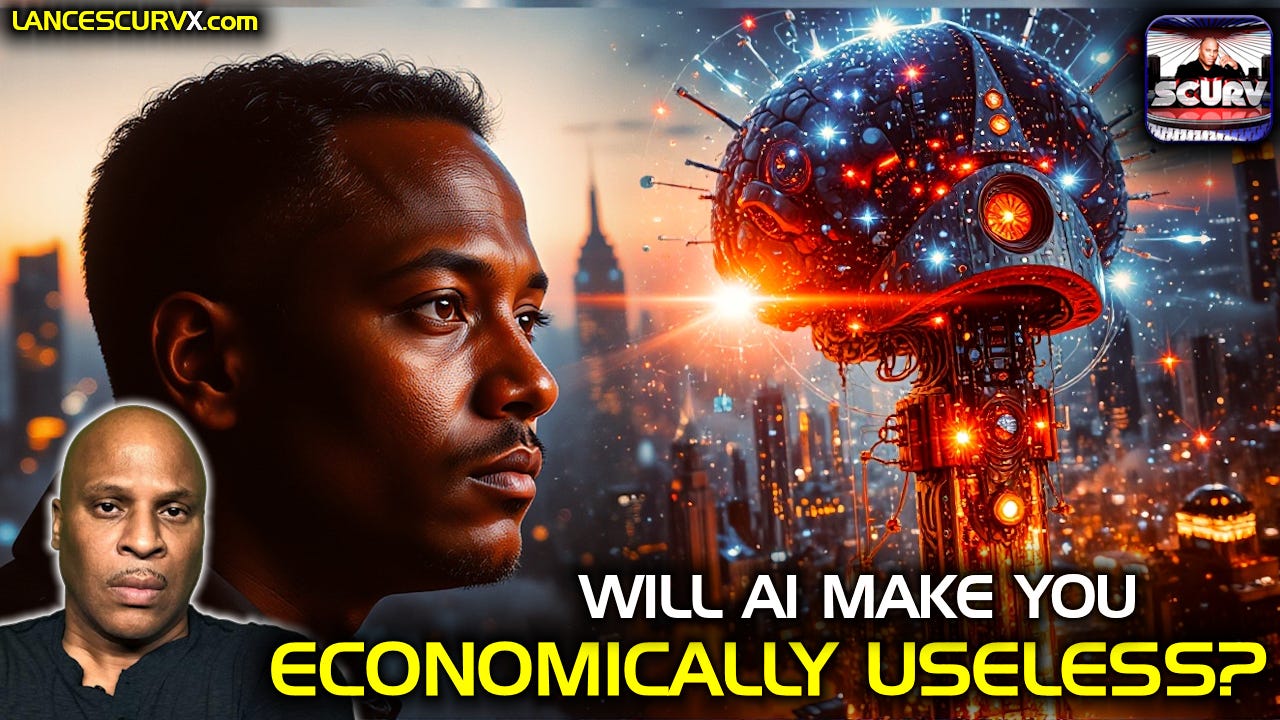
Many people quietly wonder the same thing. When AI becomes super intelligent, will any of our jobs be safe? Or are we building something that will make us economically unnecessary?
The surface answer is simple. Some jobs will disappear. Some jobs will change. New ones will appear. That has always been the pattern in history. But this time feels different because AI is not just replacing muscle. It is replacing thought.
The deeper issue is not about jobs alone. It is about power, ownership, and control. That is where this conversation becomes serious.
THE ECONOMIC SHIFT NO ONE IS READY FOR
Every major technological revolution reshapes the economy. The Industrial Revolution moved wealth from farmers to factory owners. The rise of the internet created billionaires out of programmers and platform builders. AI may create an even sharper divide.
If AI systems can write reports, create art, diagnose illness, trade stocks, manage logistics, and even design new inventions faster than humans, then companies will rely less on human labor. Labor has always been how most people earn money. If labor is no longer needed at the same scale, income patterns change.
The danger is not that work disappears overnight. The danger is that ownership becomes more important than skill. If a small group owns the most powerful AI systems, they control productivity. And if they control productivity, they control wealth.
In the past, workers could bargain because businesses needed them. But if machines can do most cognitive tasks, bargaining power weakens. That could shrink the middle class over time. It could increase inequality in ways we have never seen before.
Some argue that new industries will rise, just like they always have. That may be true. But AI attacks the one thing humans believed was uniquely theirs: advanced thinking. That makes this shift more personal and more disruptive.
WORK, PURPOSE, AND HUMAN IDENTITY
Work is not just about money. It is about identity. It is about pride. It is about feeling useful.
If AI performs most high-level thinking tasks better than humans, people may start to question their value. For someone in their late twenties building a career, or someone in their fifties who has worked decades to master a profession, this question hits hard. What happens if a machine can do it faster and cheaper?
This is where the philosophical side begins. Human beings are not only economic units. We are conscious. We experience meaning. We build relationships. We create culture.
Even if AI surpasses human intelligence in problem solving, it does not experience life. It does not feel struggle. It does not love. It does not carry moral responsibility. Those qualities still matter deeply in leadership, trust, and community life.
But society may need to redefine value. Instead of asking, “What can you produce?” we may have to ask, “What can you contribute to the human experience?”
That is a massive shift.
THE POWER STRUCTURE QUESTION
The real issue is not intelligence. It is control.
Who owns the most advanced AI systems? Corporations? Governments? Military institutions? A handful of tech leaders?
If AI becomes super intelligent, it will influence finance, defense, healthcare, infrastructure, and media. That means it will influence reality itself. It will shape what people see, what they believe, and how decisions are made.
If control is centralized, power becomes concentrated. And when power concentrates, freedom shrinks.
On the other hand, if AI tools are widely distributed and accessible, they could increase productivity for small businesses, independent creators, and everyday workers. The same tool can either widen inequality or reduce it. The difference is governance.
This is why the future of AI is not just a tech issue. It is a political and economic issue. Laws, ownership models, and public awareness will shape the outcome more than raw intelligence levels.
WHAT JOBS MAY SURVIVE AND WHY
Some roles are harder to replace because they depend on human trust and physical presence. Skilled trades in unpredictable environments are difficult to automate. Leadership roles still require accountability. Communities still look to human figures for moral guidance.
But even these roles will evolve. AI will assist electricians, doctors, teachers, and managers. The safest position will not be a specific job title. It will be adaptability.
The people who thrive will not compete directly against AI in speed or memory. They will learn to direct it, guide it, and combine it with human creativity and emotional intelligence.
The shift may move society from a labor-based identity to an ownership-based system. Those who own productive tools, whether AI systems or digital assets, may have more stability than those who rely only on selling their time.
That is a hard truth, but it is one we must face.
THE POSSIBILITY OF A NEW SYSTEM
There is also another possibility. If AI can produce goods and services at extremely low cost, society could rethink how income works. Some talk about universal income systems. Others imagine shorter work weeks. Some believe creative and community-based work could rise in value.
But these ideas depend on leadership and public pressure. Technology does not decide fairness. People do.
If citizens remain passive, systems may tilt toward concentrated wealth. If citizens demand balanced systems, new economic models may form.
The future is not written yet. It will be shaped by awareness, participation, and courage.
THE HUMAN EDGE
Even in a world of super intelligent systems, humans still hold something unique. We carry lived experience. We understand suffering from the inside. We build families. We form cultures. We create meaning from chaos.
AI may outperform us in calculation. But it does not replace consciousness.
The question is not whether every job will be safe. Many will not be. The real question is whether humans will remain central to the structure of society.
That answer depends less on technology and more on how we choose to design our systems of power and ownership.
MY CLOSING THOUGHTS
We are not powerless in this shift. Fear is natural, but awareness is stronger.
The safest position in the age of AI will not be a fixed career. It will be flexibility, learning, and strategic thinking.
The deeper battle will not be human versus machine. It will be centralized power versus distributed power.
If AI becomes super intelligent, it will change everything. But it does not automatically erase human value.
The future will belong to those who understand that intelligence is only part of the equation. Ownership, structure, and human purpose will decide the rest.
Even with that being said, always keep your head and your mind on a swivel…
Sincerely,
SCURV
