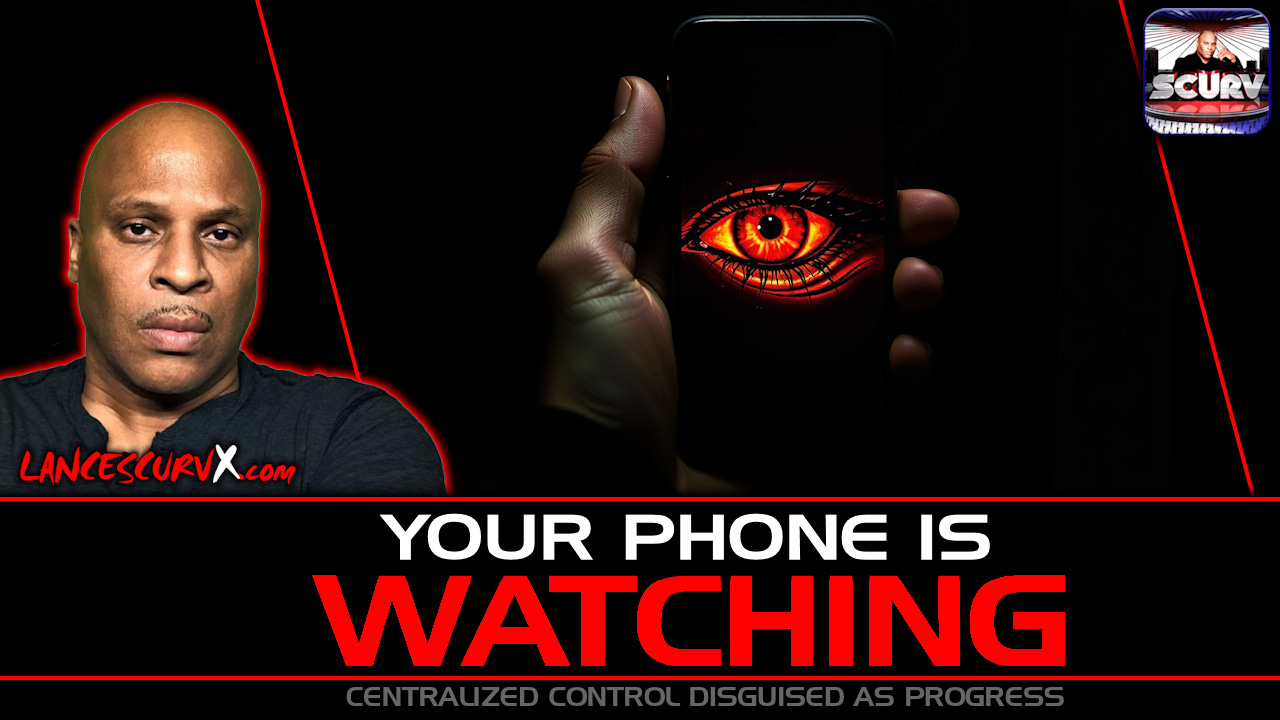

Most people believe their smartphone belongs to them. They paid for it, they carry it everywhere, and they rely on it for nearly every aspect of daily life. But ownership and control are not the same thing. Modern smartphones are deeply integrated into systems that monitor behavior, location, communication patterns, and habits. This isn’t conspiracy talk—it’s how the technology is designed.
Today’s phones are not just communication tools. They function as sensors. They log movement, record usage, scan content, and transmit data constantly, often without the user being fully aware of when or how it’s happening. Many people assume that adjusting privacy settings protects them, but most tracking occurs at levels the average user cannot see or meaningfully control. The real issue isn’t one app or one feature. It’s the entire ecosystem that modern phones operate within.
Even when a phone appears idle, it is rarely inactive. Independent research has shown that smartphones regularly communicate with company servers every few minutes. This communication can include location signals, device identifiers, system activity, and behavioral data related to how the phone is used. Many apps are built on centralized cloud infrastructure, which means information often passes through third-party systems before it ever reaches its final destination. Over time, this creates a detailed behavioral profile rather than isolated pieces of information.
Messaging is often assumed to be private, especially when apps advertise encryption. While message content may be encrypted in transit, metadata still exists. Information such as who you communicate with, how often, when, and from where is routinely collected. Phones also grant apps access to microphones, cameras, and motion sensors. Once permission is given, enforcement depends largely on corporate policy rather than transparency. In many cases, data is shared or accessed quietly, and users are never informed. Privacy rarely fails loudly. It erodes silently.
Artificial intelligence has added another layer to this issue. Modern phones increasingly scan photos, messages, and stored content using AI systems. These features are often enabled by default and hidden deep within system settings. Personal images stored locally may still be analyzed for objects, locations, or patterns that feed larger databases. Once this kind of scanning becomes normalized, meaningful control has already been lost.
The deeper concern is that most major smartphones are designed to be remotely managed. If a device can install updates without notice, enable features automatically, or alter settings by default, then the user is not truly in control. In practice, many phones function more like leased devices than owned property. When companies control the operating system, they control the rules. If those rules are violated—intentionally or not—access to services, accounts, or even the device itself can be restricted instantly.
Centralization is where the real danger lies. When communication, navigation, payments, identity, storage, and authentication are all tied to the same systems, failure becomes total rather than partial. People have already experienced situations where access to their accounts was revoked without warning, resulting in the loss of contacts, messages, files, and services all at once. When data exists by permission rather than by right, it can disappear just as easily.
True privacy improves when data stays local, when updates come from transparent sources, and when systems are designed to give users real control instead of simulated choice. Some technologies now allow people to separate different aspects of their digital lives into isolated environments, reducing exposure rather than pretending to eliminate risk entirely. The goal isn’t perfection—it’s distance.
Convenience is the trade-off that makes all of this possible. Features like tap-to-pay, automated navigation, smart assistants, and constant cloud syncing make life easier, but each layer of convenience removes another layer of independence. Over time, awareness fades, skills weaken, and reliance increases. Technology should support life, not replace awareness or responsibility.
This isn’t about panic or abandoning technology altogether. It’s about preparation. Understanding how systems work gives people options before pressure arrives. The future will favor those who control their data, understand their tools, reduce unnecessary dependency, and think ahead. Preparation is calm. Panic is always late.
Your smartphone reflects a larger shift toward centralized control disguised as progress. Surveillance doesn’t arrive with sirens—it arrives through software updates. The question isn’t whether tracking exists. It already does. The real question is how much of yourself you’re willing to exchange for comfort. Real freedom begins with awareness, followed by deliberate choice.