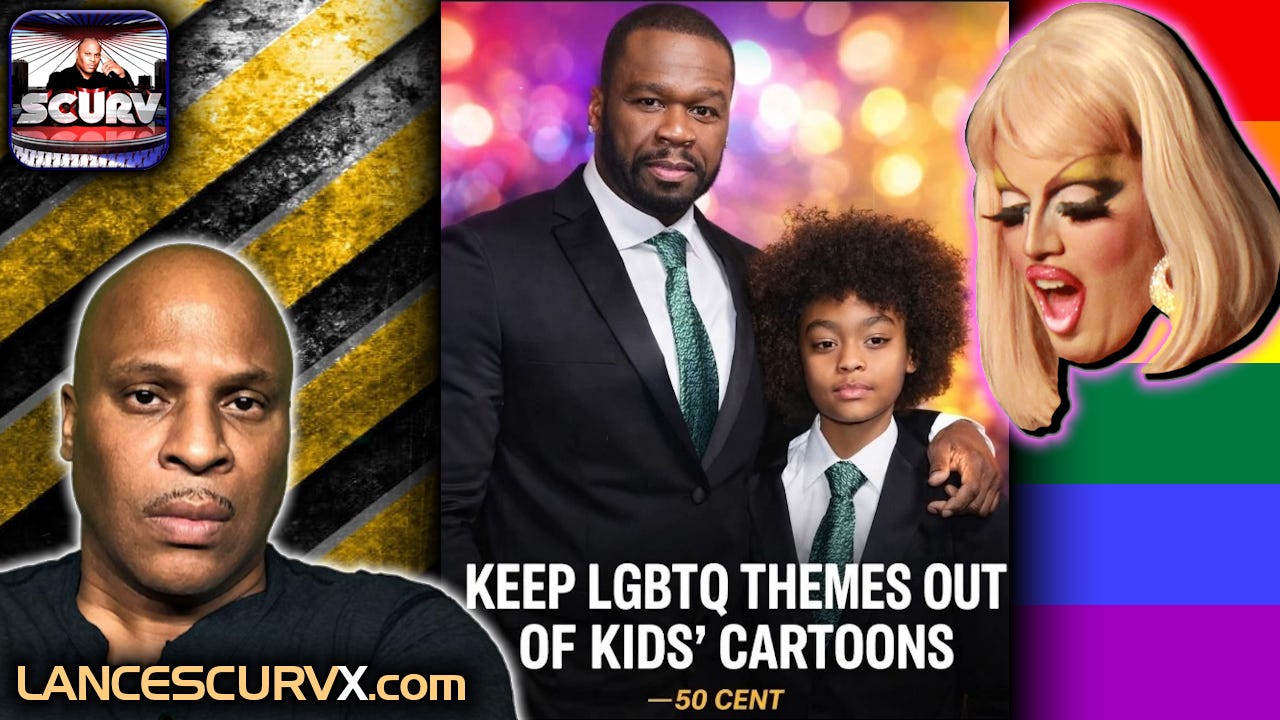

LET CHILDREN BE CHILDREN
There are certain things in life that should be simple. Childhood is supposed to be one of them. When you think about being a child, you think about laughter, imagination, toys, cartoons, games outside, and the innocent joy that comes with discovering the world for the first time. A child’s mind is not supposed to carry the weight of adult issues. That season of life is meant for growth, protection, and learning the basics of how to be a good human being.
But in today’s world, many people feel like that natural order is being disturbed. Conversations are happening about whether adult themes should appear in cartoons and other forms of media made for children. When adults debate these topics, it often becomes heated. People get emotional. Lines get drawn in the sand. But the core issue is actually very simple.
Children are children.
They are not adults. They do not think like adults. They do not understand the complex world of adult relationships, adult identities, and adult behaviors. Their brains are still forming. Their emotional understanding is still developing. Their focus should be on school, play, creativity, and healthy social development.
Recently, comments made by a major figure in the entertainment world stirred up a lot of discussion about this issue. The basic point raised was that LGBTQ themes and other adult topics should not be placed inside children’s cartoons or media designed for young audiences. That statement alone caused reactions from every direction. Some people supported it strongly. Others criticized it heavily.
But when we step away from the shouting and look at the heart of the conversation, the real issue is not hate, anger, or discrimination.
The real issue is childhood.
CHILDHOOD IS A PROTECTED STAGE OF LIFE
Childhood is supposed to be a protected space. It is the training ground for life. During this time, children are learning how to communicate, how to treat others, how to handle emotions, and how to understand right from wrong.
They are also learning how to see themselves.
This is a fragile stage. The mind of a five-year-old or six-year-old is like fresh soil. Whatever is planted there grows. That is why parents and families have always been careful about what children are exposed to.
For generations, cartoons were simple. They were about adventure, imagination, friendship, humor, and problem solving. They were colorful worlds filled with characters that made children laugh and dream. The purpose was entertainment and light lessons about kindness and courage.
But many people now feel that cartoons are beginning to carry messages that belong in adult conversations.
Not because children asked for them.
But because adults are putting them there.
And this is where the concern begins.
ADULT THEMES ARE ADULT FOR A REASON
There is something that people must understand clearly.
Sexual topics are adult topics.
It does not matter whether those topics involve heterosexual relationships or homosexual relationships. The key word here is sexual. Anything connected to sexuality belongs in the adult world because it deals with emotional maturity, personal identity, and physical behavior that children are not ready to process.
A five-year-old does not need to understand sexual attraction.
A seven-year-old does not need to analyze adult relationships.
A child should not be sitting in front of a cartoon trying to decode messages about identity and sexuality when they are still trying to learn basic math and spelling.
That does not mean children should grow up hateful or judgmental toward anyone. Respect for all people should always be taught. But there is a difference between teaching respect and introducing adult themes too early.
Children do not need to be rushed into adult thinking.
Childhood is not a race.
THE RUSH TO GROW UP IS HURTING CHILDREN
One of the biggest problems in modern culture is the pressure placed on children to grow up too fast.
Look around and you will see it everywhere. Kids are dressing like adults earlier. They are using social media earlier. They are exposed to violent content earlier. They are hearing adult conversations earlier.
The result is confusion.
Children are trying to process things their minds are not ready to understand. Their innocence gets chipped away piece by piece. The carefree spirit of childhood begins to disappear sooner than it should.
Cartoons used to be a safe zone.
Parents could turn on the television and know that their child was simply watching a harmless story about heroes, adventure, and funny characters. Now some parents feel like they must constantly monitor what their children watch because the lines between adult themes and children’s entertainment are becoming blurred.
And when those lines blur, trust disappears.
PARENTS SHOULD HAVE THE FINAL SAY
At the center of this conversation is a powerful truth that should never be ignored.
Parents should have the final say in how and when their children learn about adult topics.
Families have different beliefs, different values, and different ways of raising their children. That diversity is part of what makes society function. But when adult messages are inserted into media aimed at children, it removes that choice from parents.
It introduces ideas to children before many families feel the time is right.
That is where the frustration begins.
This conversation is not about attacking any group of people. It is not about spreading hate. It is about timing. It is about age. It is about protecting the natural stages of growth that every child deserves to experience.
Children deserve the freedom to discover the world slowly.
Not to be pushed into adult conversations before their minds are ready.
THE VALUE OF AN INNOCENT CHILDHOOD
There is something powerful about an innocent childhood. It builds emotional stability. It builds imagination. It builds confidence. It allows children to grow into adulthood without carrying unnecessary confusion or pressure.
When kids are allowed to be kids, they develop stronger foundations. They learn who they are through experiences with friends, family, school, and the world around them.
They do not need media guiding them into adult territory early.
They need laughter.
They need creativity.
They need safe environments where they can explore life step by step.
MY CLOSING THOUGHTS
In today’s world, almost every topic becomes a battlefield. People argue, attack, and divide themselves into opposing sides. But sometimes we have to step back and ask a very simple question.
What is best for the child?
Children are not political pieces on a chessboard. They are human beings at the very beginning of life. Their minds are open, their emotions are forming, and their understanding of the world is still growing.
Protecting childhood should not be controversial.
It should be common sense.
There will come a time when every child grows into adulthood and begins to understand the complex issues of the world. That is a natural process. It has always happened, and it always will.
But rushing that process does not help them.
It harms them.
Let children laugh. Let them imagine. Let them play. Let them grow at the pace nature intended. Because once childhood is gone, it never comes back.
And that is something worth protecting.
Sincerely,
SCURV