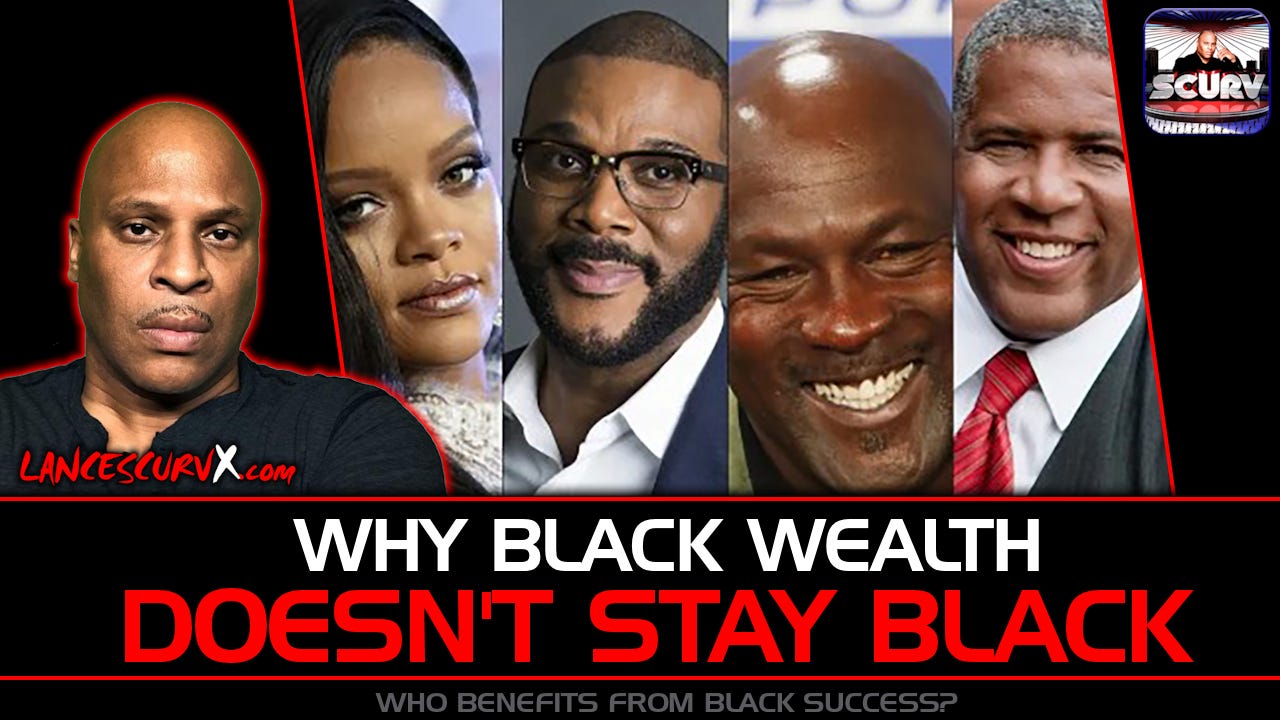

There is a question that keeps coming up whenever I look at wealth inside the Black community. It is not asked out of jealousy or bitterness, but from a place of concern. With so much money being made, especially at the highest levels, why does so little of it turn into long-term structures that protect and uplift our people?
I am not talking about charity events or short-term giveaways. I am talking about real infrastructure. Schools that prepare our children for the future. Businesses that employ our people at scale. Systems that create value instead of dependency. These are the things that last beyond headlines and social media praise.
Across history, other groups have used their wealth to build safety nets for their own. They invest in education, housing, healthcare, and industry. These investments strengthen the next generation and keep wealth circulating internally. Yet when I look at our situation, that same pattern seems absent.
Even more troubling is that Black wealth often comes from industries that pull heavily from Black talent and Black consumers. Sports, entertainment, culture, and labor generate enormous profits. Still, the communities that fuel these industries often remain underdeveloped and underserved.
This leads to an uncomfortable but necessary question. Is there an unwritten rule that keeps us from collectively investing in ourselves? And if so, where did it come from, and why does it still hold so much power?
THE CORE ISSUE: WEALTH WITHOUT FOUNDATIONS
Black wealth today is often highly individual. It rises fast, shines brightly, and stands alone. There is nothing wrong with individual success, but problems arise when that success never connects to a larger mission. Without structure, wealth becomes fragile and temporary.
Infrastructure is not glamorous. Schools, training centers, factories, research hubs, and land ownership do not always trend online. But these are the things that quietly shape the future. When children grow up surrounded by opportunity, they do not need saving later. They are already prepared.
One major issue is trust. Collective projects require shared vision and long-term thinking. Many of us have seen partnerships fail or resources misused. That history creates fear. People protect what they have instead of risking it for something bigger than themselves.
Another factor is conditioning. For generations, success was defined as escape. Leaving the neighborhood. Leaving the struggle behind. When wealth is framed as a personal exit, there is little motivation to turn back and rebuild what was left behind.
There is also pressure to conform. Wealthy Black figures often operate in spaces where supporting Black-led infrastructure is discouraged, questioned, or quietly punished. Staying acceptable can feel safer than standing firm.
Yet none of these explanations remove responsibility. If wealth never creates systems, it dies with the individual. If money does not educate the next generation, it disappears into consumption and taxes. Real power comes from ownership and continuity.
The truth is that it would not take everything. Even a small percentage of collective wealth, directed toward focused goals, could transform communities within a decade. The absence of this effort is not accidental. It reflects priorities.
WHAT REAL INVESTMENT WOULD LOOK LIKE
True investment is not about saving people. It is about building environments where people can thrive. Schools focused on science, trades, technology, and critical thinking. Training programs that match modern economies. Businesses designed to scale and hire locally.
It also means patience. Infrastructure does not pay back overnight. It takes years to mature. That kind of thinking runs against a culture built on fast returns and public applause.
Real investment requires stepping outside comfort zones. It means funding leadership that may never be famous. It means trusting systems instead of personalities. And it means accepting that the reward is not praise, but stability.
Most importantly, it requires a shift in mindset. Wealth should not only change lifestyles. It should change outcomes for those who come next.
MY CLOSING THOUGHTS…
The question is not whether Black wealth exists. It clearly does. The question is whether that wealth has a shared purpose beyond individual success.
Communities do not rise from motivation alone. They rise from systems that protect children, train adults, and reward contribution. Without those systems, progress stays fragile.
If we continue to build only for ourselves, the cycle will repeat. A few will rise, many will struggle, and nothing will be passed down strong enough to last.
Breaking the unwritten rule starts with honesty. It starts by asking whether comfort has replaced responsibility, and whether fear has replaced vision.
The future will not be built by handouts or speeches. It will be built by quiet, disciplined investment in structures that make us stronger long after the spotlight fades.