

THE CITY THAT MANY CAN NO LONGER AFFORD
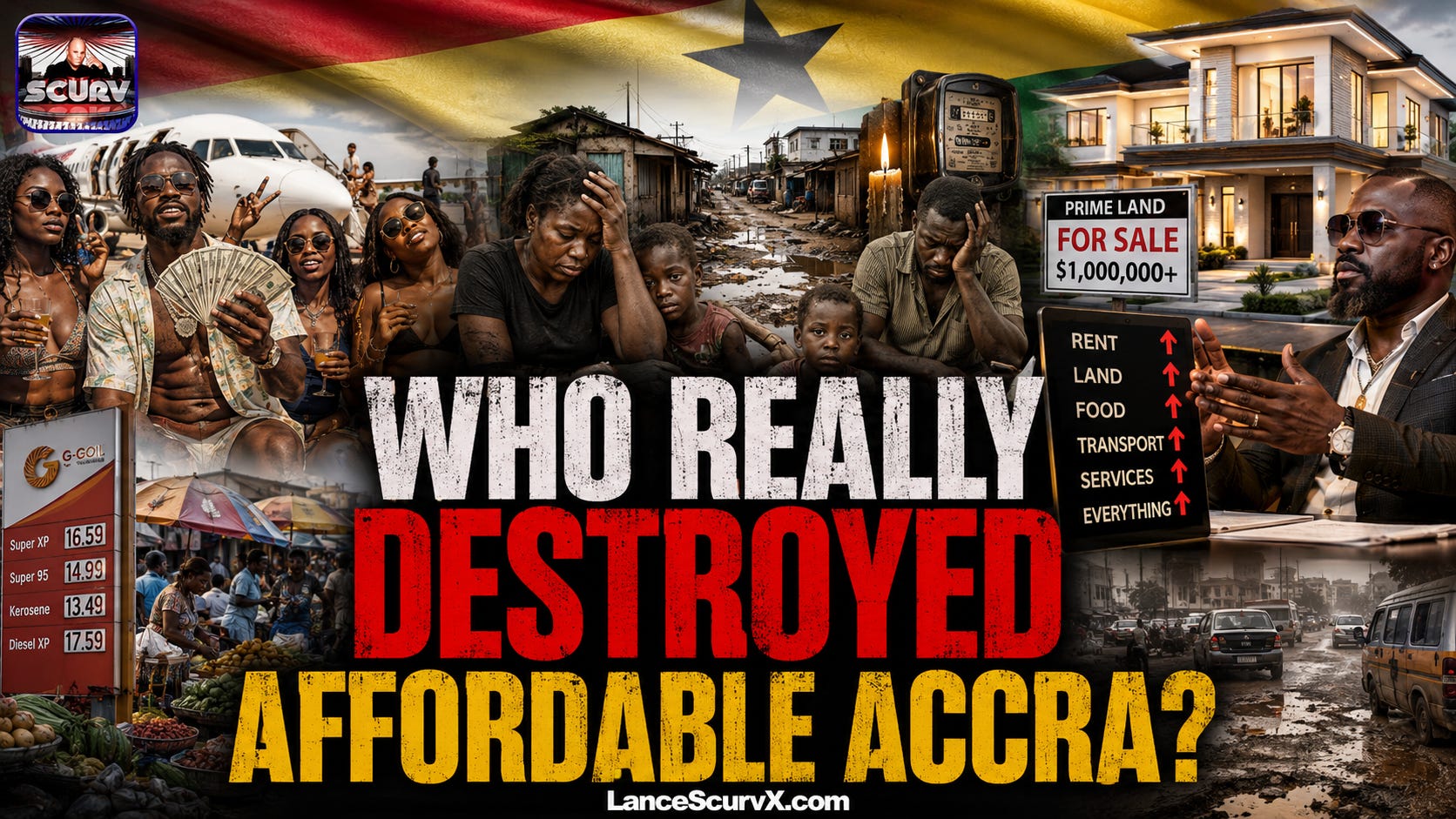
Accra has become one of the most talked about cities in Africa for all the wrong reasons when it comes to the cost of living. Everywhere you turn, somebody is complaining about rent, food prices, transportation costs, electricity bills, overpriced restaurants, expensive land, and the overall struggle just to survive in a city that many once believed was affordable. The conversations are everywhere. On social media. On YouTube. In taxis. In barber shops. In markets. In homes. Everybody has an opinion about why Accra has become so expensive, but very few people are willing to dig deep enough to talk honestly about the many layers behind this issue.
One side says the foreigners and diasporans are responsible. They point fingers at African Americans, Black British citizens, and other people from outside Ghana who moved here looking for peace, opportunity, healing, investment opportunities, or simply a better quality of life away from the stress of Western society. Many locals believe that because these outsiders are willing to pay higher prices, landlords, business owners, and developers became greedy and pushed prices higher than what the average Ghanaian can afford. To many struggling locals, it feels like their own city is slowly slipping away from them.
But the story is not that simple. Most diasporans coming to Ghana are not millionaires. Many are regular working-class or middle-class people who saved money for years just to relocate. Some came with retirement savings. Some sold modest homes abroad. Some escaped stressful lives filled with racism, police violence, depression, high rent, loneliness, and economic pressure in America and Europe. Many people came to Ghana not because they were rich, but because they were tired. Tired of surviving in systems that drained their souls every single day.
The truth that many people ignore is that nobody from outside Ghana forced landlords to raise their prices. Nobody forced developers to suddenly label unfinished neighborhoods as “luxury areas” while basic infrastructure still struggles. Nobody forced restaurants with poor customer service to charge prices that compete with cities overseas that offer much higher standards. Somewhere inside this entire situation is a dangerous mix of greed, perception, opportunity, insecurity, and economic desperation that nobody wants to fully confront.
And while everybody debates who is to blame, another truth sits quietly in the background. There are many people surviving peacefully outside of Accra. There are people living in the Eastern Region and other areas who realized early that trying to maintain a flashy lifestyle in Accra would eventually become emotionally and financially draining. Some chose peace over appearance. Some chose ownership over image. Some realized that the real freedom in Ghana may not be inside the expensive neighborhoods everybody fights to impress people with.
THE FALSE IMAGE OF WEALTH
One of the biggest problems in Ghana today is the illusion of wealth. Many locals see diasporans arriving during Detty December spending money freely, partying, renting luxury Airbnbs, buying bottles in clubs, eating in expensive restaurants, and throwing money around. What they do not see is the full story behind that spending. Many of those same people spent an entire year saving money for that one vacation experience. Many are not rich at all. They simply prepared themselves financially before traveling.
Nobody usually goes on vacation planning to appear broke. People naturally save money so they can enjoy themselves. But when locals witness this temporary spending spree, some begin believing that all Americans and foreigners are wealthy. That misunderstanding becomes dangerous because it changes pricing behavior. Suddenly landlords double rent prices. Drivers charge inflated transportation fees. Sellers increase prices for goods. Restaurants create inflated menus. Everybody begins chasing the “diaspora dollar.”
The sad part is that the average Ghanaian worker cannot compete with these inflated prices. Salaries remain painfully low compared to the rising cost of living. A person can have an education, a degree, and even a respectable profession and still struggle financially in Accra. That reality creates resentment. And when resentment grows, people look for somebody to blame.
But blaming every diasporan is unfair and intellectually lazy. Many diasporans themselves struggle with the same high prices. Many are shocked after moving to Ghana because they expected a lower cost of living. Some quietly suffer financially while trying to maintain appearances. Others eventually leave because the reality did not match the dream they were sold online.
THE GREED FACTOR NOBODY WANTS TO DISCUSS
Let us speak honestly. Greed is part of this conversation. There are people who saw an opportunity to make more money and they took advantage of it aggressively. Land prices that once seemed reasonable suddenly exploded. Rent prices jumped beyond logic. Areas that lacked sidewalks, stable water systems, dependable electricity, drainage systems, and proper roads somehow became labeled as elite luxury zones.
How can a place be called luxury when the lights go out regularly? How can a place be called luxury when flooding becomes common during heavy rain? How can a place be called luxury when basic customer service remains poor in many establishments charging premium prices? These are questions that many people are afraid to ask openly because everybody is chasing money.
Some businesses want American-level profits while providing substandard service. Some workers are undertrained yet expected to function in environments demanding excellence. Some restaurant experiences in Accra cost more than restaurants overseas while delivering far lower quality. Some apartments are priced like they belong in major world-class cities while lacking basic consistency in utilities and maintenance.
The truth hurts, but it must be said. Some people are charging prices based on hype, image, and opportunity rather than actual value.
THE PAIN OF THE LOCAL WORKING CLASS
While social media often highlights wealthy lifestyles and glamorous experiences in Accra, there is another Ghana that many people do not see. There are hardworking locals waking up before sunrise every day trying to survive. There are mothers struggling to feed children. There are young graduates unable to find stable employment. There are workers earning salaries that disappear before the month even reaches the middle.
These people are not benefiting from luxury apartments. They are not benefiting from overpriced cafés. They are not attending expensive rooftop parties. Yet they are the ones feeling the pressure the most when prices rise across the board.
Transportation costs rise. Food prices rise. Rent rises. Utilities rise. But salaries do not rise at the same speed. That creates emotional frustration. And when frustration builds, people naturally search for targets to blame.
Some blame government policies. Some blame foreign investors. Some blame diasporans. Some blame corruption. Some blame greed. The reality is that all these issues are connected together like chains.
THE AFRICAN AMERICAN DREAM OF RETURNING HOME
For many African Americans, moving to Ghana represents more than relocation. It represents healing. It represents reconnecting with African identity. It represents escaping racial tension in America. It represents breathing without constantly feeling targeted or psychologically exhausted.
But many African Americans arrive in Ghana carrying unrealistic expectations. Some believe Ghana will instantly solve all emotional wounds. Some expect paradise. Some expect unity. Some expect automatic acceptance. Then reality arrives.
They discover that Ghana has its own economic struggles, class divisions, frustrations, and social pressures. They discover that some locals see them as opportunities for financial gain instead of brothers and sisters returning home. They discover that some people assume they are wealthy simply because they came from America.
At the same time, some diasporans arrive behaving arrogantly. Some flash money carelessly. Some disrespect local culture. Some overpay for things without understanding market value, which unintentionally encourages price inflation. Some create lifestyles online that distort reality and make Ghana appear like a giant playground for wealthy foreigners.
Both sides contribute to misunderstandings.
WHY MANY PEOPLE SHOULD LOOK OUTSIDE ACCRA
One of the most ignored solutions in this entire conversation is simple. Everybody does not need to live in Accra. Many people are emotionally trapped by image, status, and social validation. They want to say they live in East Legon, Cantonments, Airport Residential, Osu, or another expensive area because these locations represent status.
But status can become a prison.
There are peaceful places outside Accra where life can be far more affordable and far less stressful. In places throughout the Eastern Region and other developing areas, people can buy land at better prices, build homes gradually, grow food, and create a calmer existence away from the nonstop pressure of city life.
Too many people sacrifice peace trying to maintain appearances in Accra.
Some people are drowning financially just to look successful online. Some are trapped in expensive rental cycles that never end. Some are chasing lifestyles that are unsustainable.
Meanwhile, there are people living modestly outside the city who sleep peacefully at night because they are not enslaved by image.
SOCIAL MEDIA HAS MADE EVERYTHING WORSE
Social media has amplified the problem tremendously. Everybody wants to appear successful. Everybody wants luxury aesthetics. Everybody wants validation. Everybody wants to look rich even when they are struggling privately.
This pressure affects locals and diasporans alike.
A person sees luxury apartments online and suddenly believes that is normal life. A young person sees wealthy-looking influencers and feels like a failure for living modestly. Landlords see flashy content and believe they should charge more. Developers see foreigners posting glamorous videos and raise prices further.
Perception becomes reality.
The problem is that social media rarely shows the debt, stress, anxiety, loneliness, and financial pressure hiding behind these images.
THERE IS NO SINGLE VILLAIN
The biggest mistake people make is trying to reduce this issue to one villain. The rising cost of living in Accra is not caused by one group alone. It is a complicated mixture of greed, economic inequality, tourism, social media influence, foreign investment, weak infrastructure planning, low wages, unrealistic expectations, class divisions, and the global rise in living costs happening almost everywhere around the world.
Yes, some diasporans unintentionally contribute to rising prices by paying inflated costs without negotiating. Yes, some landlords and business owners aggressively exploit opportunities for profit. Yes, some locals suffer deeply because wages remain too low. Yes, some people exploit foreigners because they assume all outsiders are rich.
All these truths can exist at the same time.
THE REAL QUESTION IS ABOUT BALANCE
The deeper question Ghana must ask itself is this. What kind of future does the country want? Does it want development that only benefits the wealthy? Does it want cities where ordinary working people can no longer survive? Does it want a system where appearances matter more than quality of life?
Because real development is not just expensive buildings and luxury branding. Real development means stable electricity, dependable water, good roads, strong healthcare systems, quality education, fair wages, professional customer service, affordable housing, and opportunities for ordinary people to thrive.
Without those things, expensive neighborhoods are just expensive illusions.
WE MUST STOP ROMANTICIZING STRUGGLE
Another dangerous issue is how people romanticize struggle. Some people wear suffering like a badge of honor while refusing to seek smarter solutions. There is nothing wrong with living modestly. There is nothing wrong with moving outside expensive areas. There is nothing wrong with building slowly over time instead of trying to impress people immediately.
Too many people destroy themselves financially trying to maintain lifestyles that do not match their income.
Peace is more valuable than image.
Ownership is more valuable than appearances.
Freedom is more valuable than validation.
THE FUTURE OF ACCRA DEPENDS ON HONEST CONVERSATIONS
If Ghana wants a healthy future, honest conversations must happen without emotional finger-pointing. Locals must understand that not every diasporan is wealthy. Diasporans must understand local economic realities and stop behaving carelessly with money in ways that distort pricing. Business owners must improve service quality if they expect premium prices. Leaders must address infrastructure issues seriously instead of focusing only on image and branding.
And most importantly, people must stop measuring success only through luxury lifestyles.
A peaceful life with lower stress, lower expenses, ownership, and emotional balance may be worth far more than chasing an expensive illusion inside Accra.
MY CLOSING THOUGHTS…
The truth about Accra’s rising prices is uncomfortable because it forces everybody to look in the mirror. There is enough blame to spread across many different groups, but there is also enough responsibility for everybody to become more conscious moving forward.
The local struggling worker is not the enemy. The middle-class diasporan trying to reconnect with Africa is not automatically the enemy either. The deeper enemy may very well be unchecked greed, unrealistic expectations, social pressure, and the obsession with appearances over substance.
Many people came to Ghana searching for peace, healing, opportunity, and freedom from the mental exhaustion of Western society. But if Ghana follows the same path of extreme greed and materialism that damaged many Western societies, then eventually people will begin asking themselves what exactly they escaped from.
There is still hope because Ghana still has something powerful that many places in the world are losing rapidly. Human connection. Community. Simplicity. Spiritual grounding. But those things can slowly disappear when money becomes the center of everything.
The future of Accra and Ghana overall should not become a battle between locals and diasporans. It should become a serious discussion about balance, fairness, development, opportunity, affordability, and protecting the soul of a nation before it becomes consumed by unchecked commercialism and class division.
Let us continue this very important conversation. I look forward to hearing from you in the comment section. I will answer all…
Sincerely,
SCURV